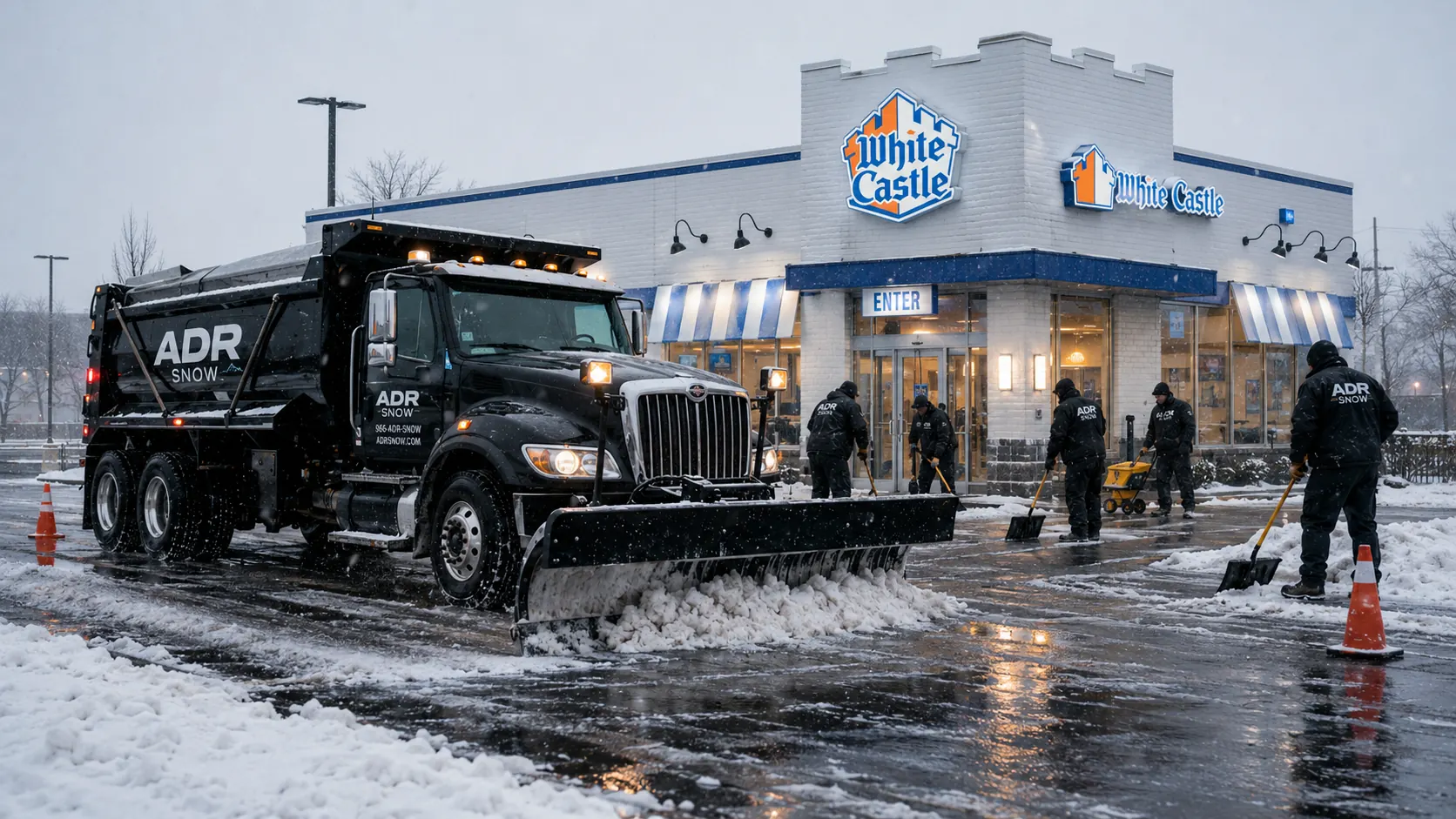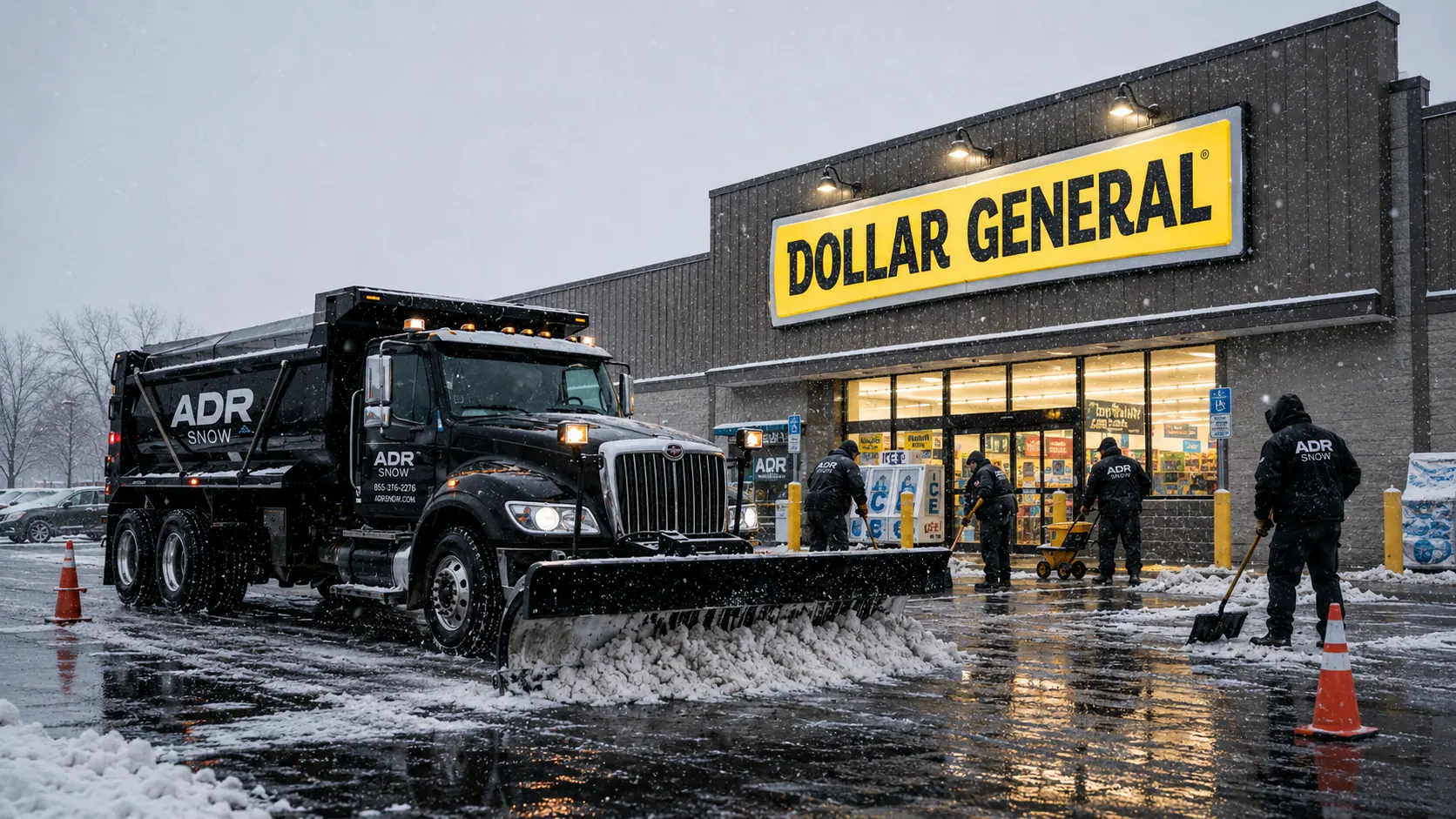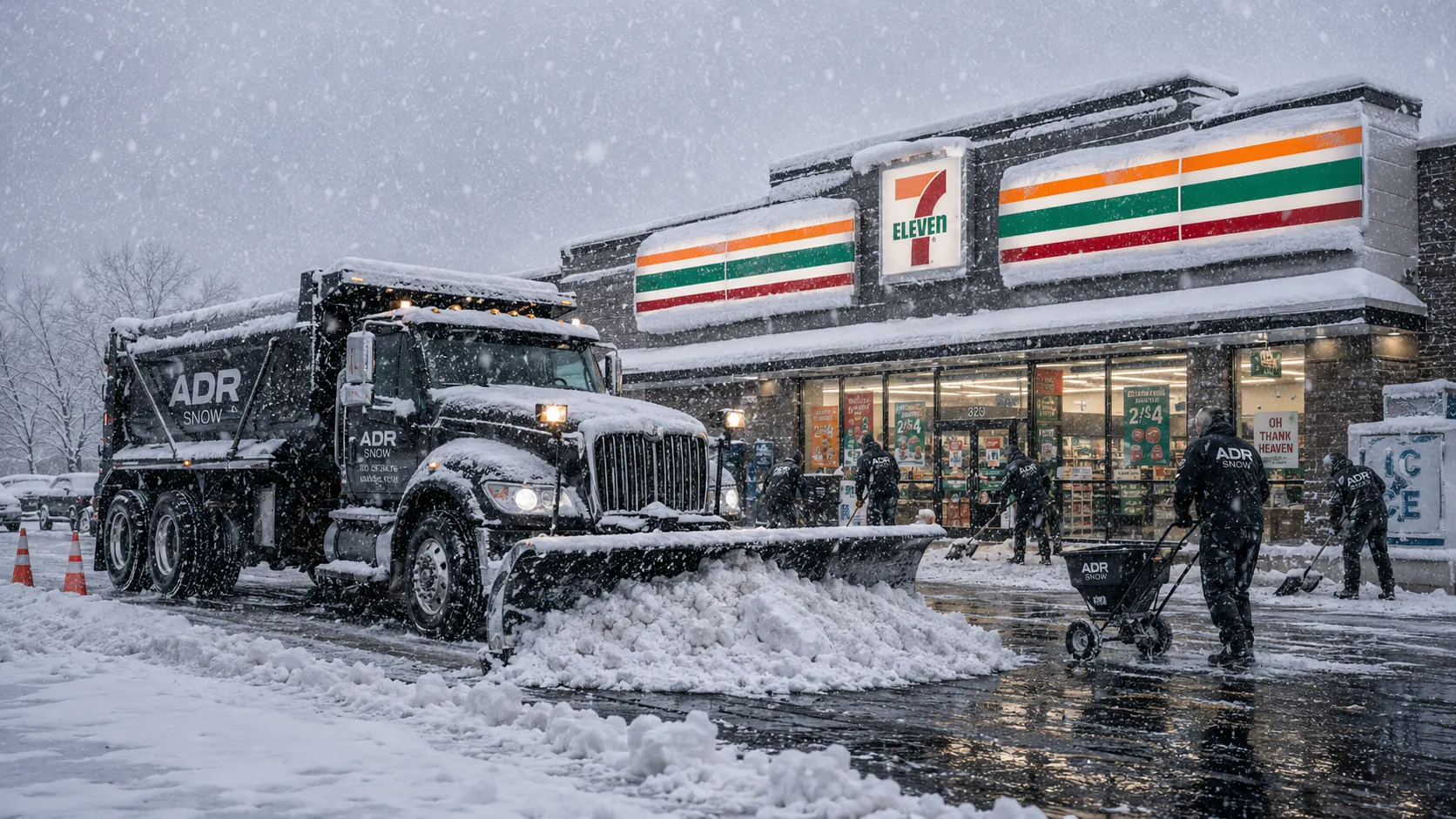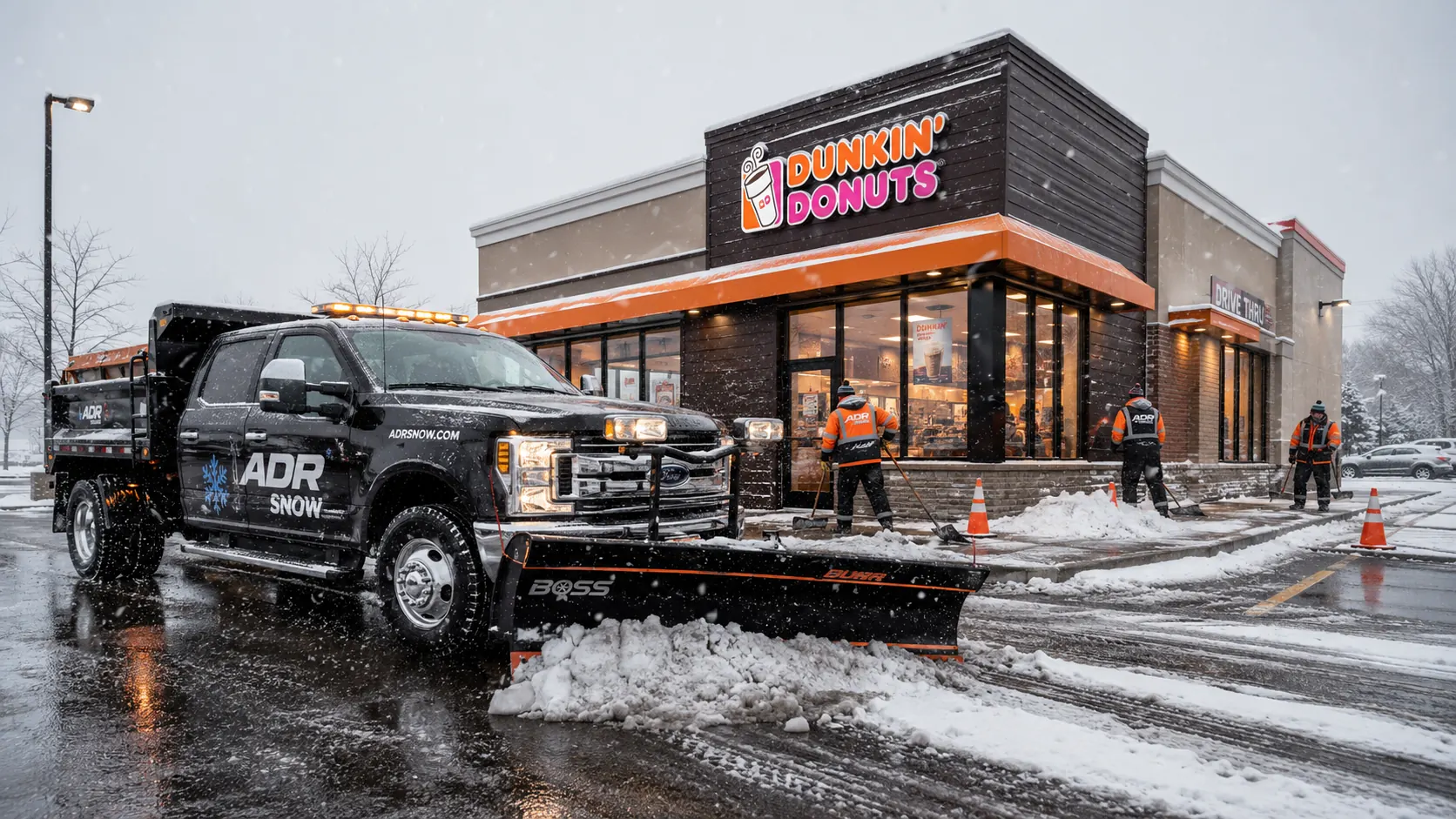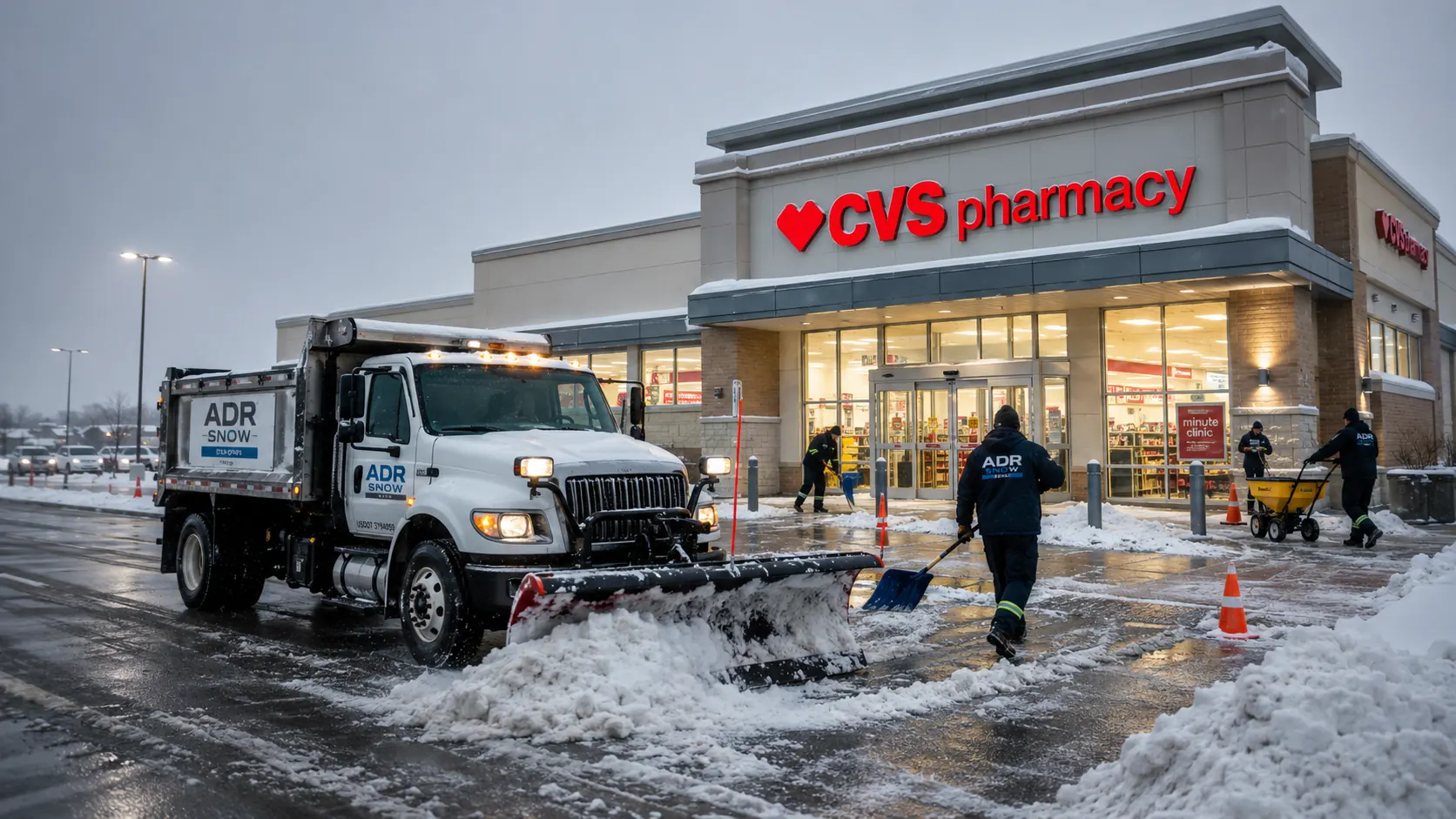
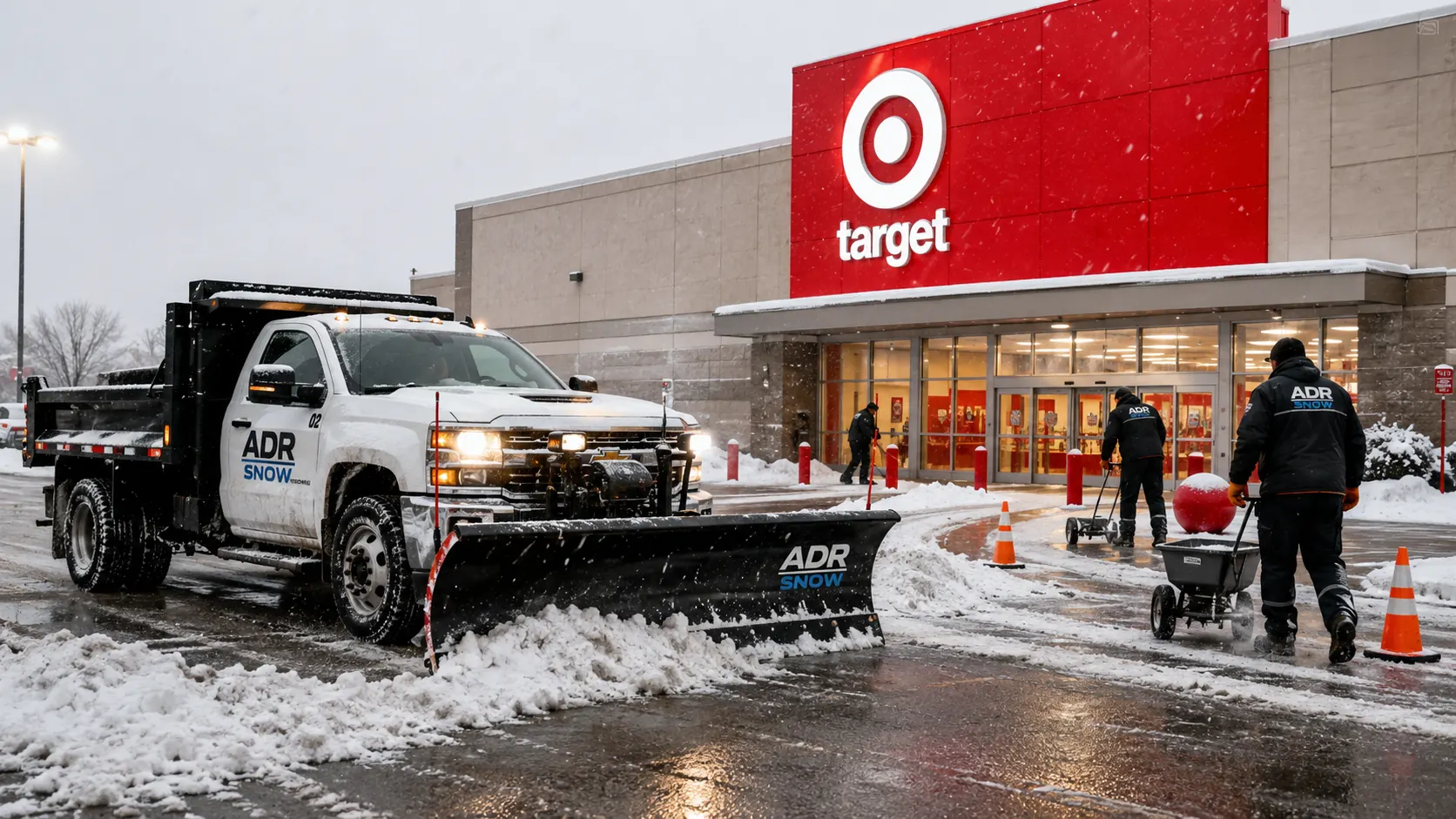
Every winter season, commercial properties absorb a measurable share of preventable accidents. A storefront with an uncleared entrance, a parking lot that refroze overnight, a sidewalk slick from runoff and missed de-icing. The property managers we work with rarely lose sleep over the snow itself. They lose sleep over what happens between the storm and the contracted service window.
This guide is the operational map of how to keep that gap small. It covers the three categories of winter risk that drive most commercial property incidents: accumulation that has not been cleared, surfaces that look clear but are not, and pedestrian routes that are technically compliant but practically unsafe. Every article in this pillar is written for the gap between regulation and reality.
What this guide covers
- How slip-and-fall incidents actually start, and where the documentation makes the difference.
- How to recognize and respond to black ice before it produces an incident.
- How prevention routines compress into a small number of operational rules.
- How commercial properties stay defensible inside winter incident litigation.
Read in order if you are new to commercial winter operations. Jump to a topic if you already run a portfolio and want the specific framework on one risk.
Why this matters for property managers and procurement teams
Commercial winter safety is not strictly a vendor problem. It is a procurement and operations problem. The vendor delivers the work; the property management organization owns the standard, the documentation cadence, the audit profile and the insurance file. Every framework in this pillar is written from that perspective.
For property management groups, REITs and corporate real estate teams running multi-site portfolios, safety performance gets evaluated against internal vendor scorecards, risk reviews and insurance carrier expectations. The articles below are the substrate for the conversations procurement teams have with the operations side of the property management business through the season.
The framework applies the same way to a single retail anchor and to a two-hundred-site REIT portfolio. The vocabulary, the documentation cadence and the operating discipline scale to portfolio size; the underlying principles do not change. The procurement-grade discipline a property management group expects from its plumbing, security and waste vendors is the same discipline ADR is contracted to deliver on snow.