

Commercial snow plowing for lots, lanes and access points before tenants, employees and customers arrive.
Heavy-duty plowing for parking lots, access lanes and loading zones across retail centers, managed properties and multi-site commercial portfolios. Crews on site during the storm, event report in your inbox the next morning. Same trigger depth across every property under the contract.
Selected by national accounts for snow plowing across the Northeast





What it is
Snow Plowing for commercial properties.
Snow plowing is the frontline workstream of any commercial snow management master agreement. It clears bulk accumulation off pavement so parking inventory, access lanes and tenant entrances stay open during and after the storm. For property managers and facilities directors, it is the service that determines whether tenants open their doors on time the morning after a storm.
Read the full explanation
Commercial plowing is not a single-pass job. Lots, lanes and entry zones require staged routes, defined stacking areas, GPS-tracked equipment and trigger depths that match traffic profiles. A retail anchor with morning deliveries has a different plowing plan than a corporate office park with shift-based parking turnover. Vendors that scope every property the same way miss the operational fit your team is paying for.
Our plow fleet is configured by property class. Heavy trucks with straight blades for open lots, V-plows for entry geometry and curb-cut access, pusher-equipped loaders for high-volume sites and large-format retail. Property type drives equipment selection at the site plan stage, not at the storm stage.
Inside the master agreement, plowing integrates with the rest of the contract. Plowing routes coordinate with shoveling routes so walkways are not cleared before adjacent lots get plowed. Salt applications follow plow passes so refreeze does not start the moment the truck leaves. Each pass is time-stamped and photographed for the documentation file your procurement and legal teams reference later.
For multi-site portfolios, plowing is the workstream that proves whether a vendor delivers consistency. Same trigger depth across every site. Same documentation cadence. Same single point of accountability. Same invoice format across all properties. The procurement evaluation lives here.
Who it is for
Property types where snow plowing is the contract.
Big-box retail and shopping centers
Anchors, strips and lifestyle centers with morning openings and tight delivery windows. Routes calibrated to opening hours and loading dock schedules. CAM-friendly invoicing for multi-tenant common areas.
Banking, financial and corporate office
Branch parking, ATM access, corporate campuses with predictable shift turnover. Documentation cadence built for liability defense across pedestrian-heavy zones.
Distribution, logistics and industrial
Trailer aprons, loading docks and freight access on a twenty-four-hour clock. Dispatch coordinated around shift change windows and SLA commitments to downstream carriers.
Hospitality, healthcare and education
Properties with patient flow, guest flow and academic-calendar timing. ADA-compliant clearing on every event, plus on-call response for the freeze-thaw cycles between events.
Multi-tenant office and mixed-use
Tenant entries, shared parking and shared lanes covered under one shared agreement. CAM cost allocation built into the contract so property managers can pass-through cleanly.
Quick-service and convenience
Drive-thrus, fuel canopies and high-frequency turnover lots. Routes scaled for the property footprint without inflating the contract for over-engineered service.
How we do it
The operating protocol behind every snow plowing contract.
The same standard operating procedure runs across every account, from a 50-property portfolio down to a single branch.
- 01
Pre-season site plan and walk-through
Every property walked before the season starts with the assigned crew chief. Routes documented, stacking zones marked, trigger depths confirmed in writing, COI issued per property. The output is a per-site operating plan that survives turnover at the vendor or the property side.
- 02
Pre-positioned equipment and dedicated crews
Equipment staged regionally before the forecast event. Crews assigned to each property in advance, not pulled from a pool the night of. The same operator runs the same property for the season, so the documentation file references one consistent crew identifier instead of a rolling cast.
- 03
In-storm execution against the contract
Plowing begins at the contracted trigger depth and runs at the contracted cadence. GPS-tracked, time-stamped per pass. Property managers can pull the run record at any time during the storm through the account portal without calling dispatch.
- 04
Post-storm verification and documentation cadence
Final clear-down passes, photo documentation, application logs for salt and de-icing, event report delivered to the property file within twenty-four hours. The cadence is fixed in the contract, not chased for after the post-storm review.
Client platform
Property teams follow crew activity and site updates during active events.
At the client, in the storm
Commercial properties across the Northeast where ADR Snow crews work during winter events.
Field work at national accounts and managed properties, captured during real snow events.
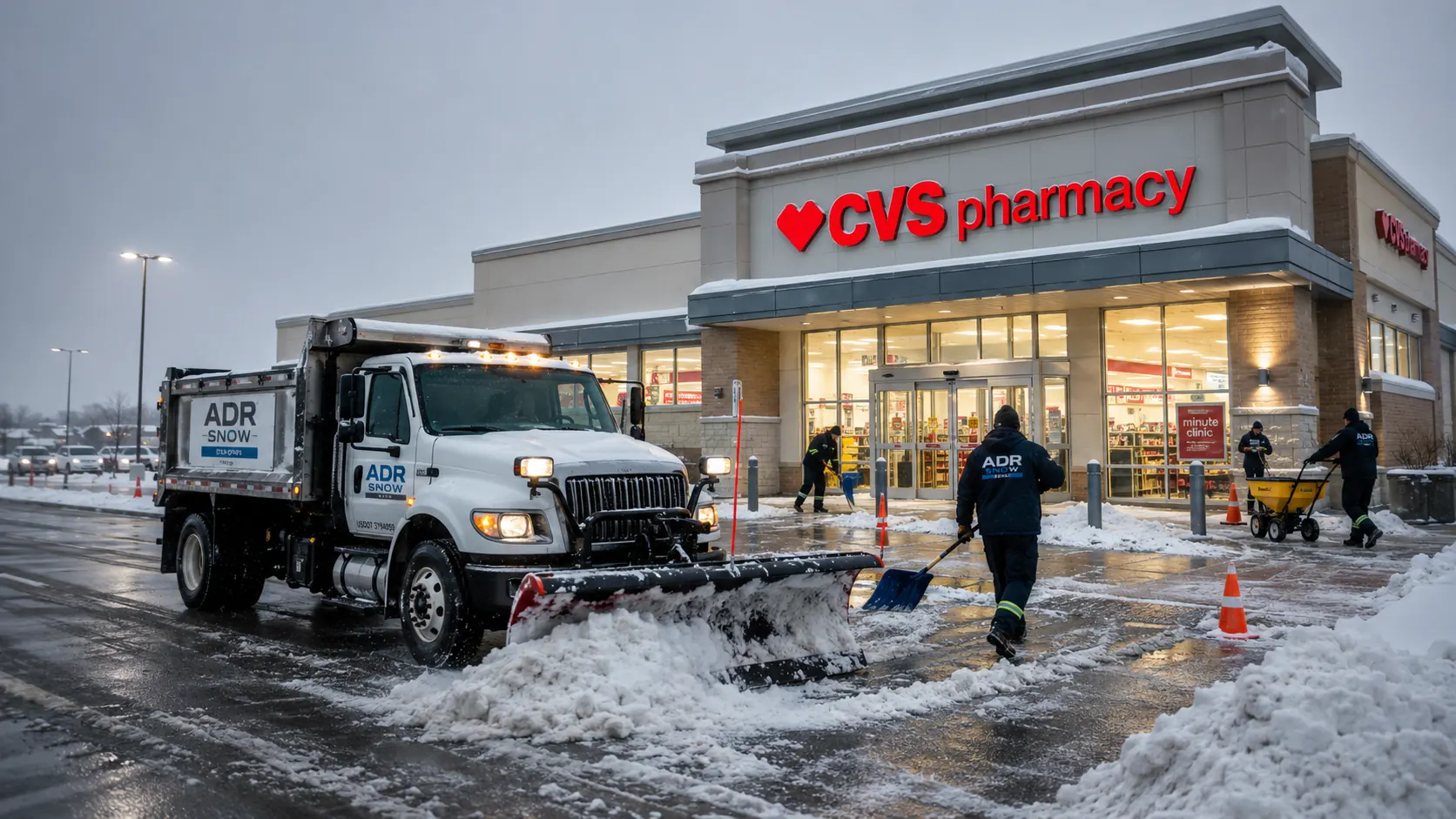
Pharmacy chain
CVS Pharmacy
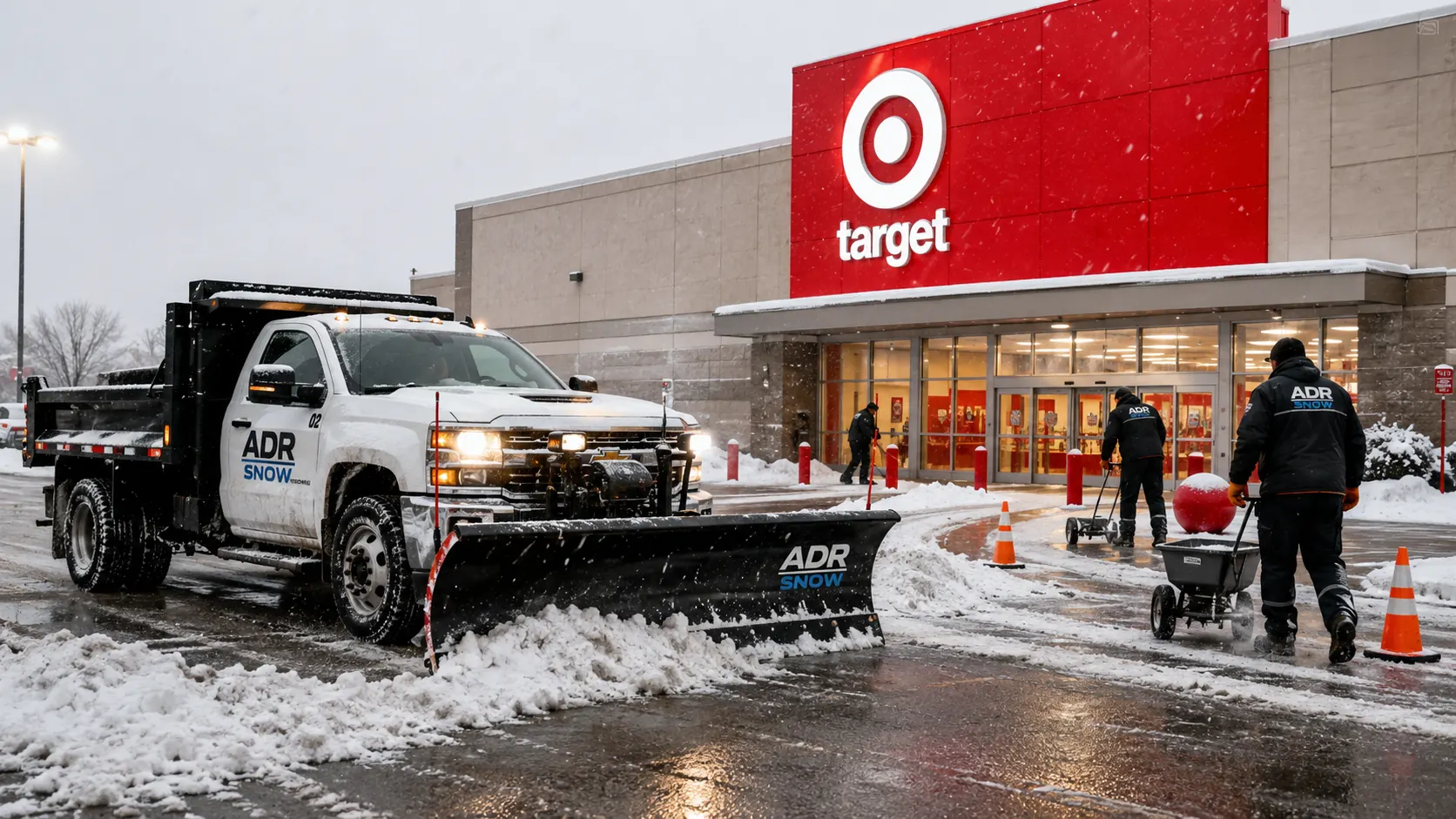
National retail
Target
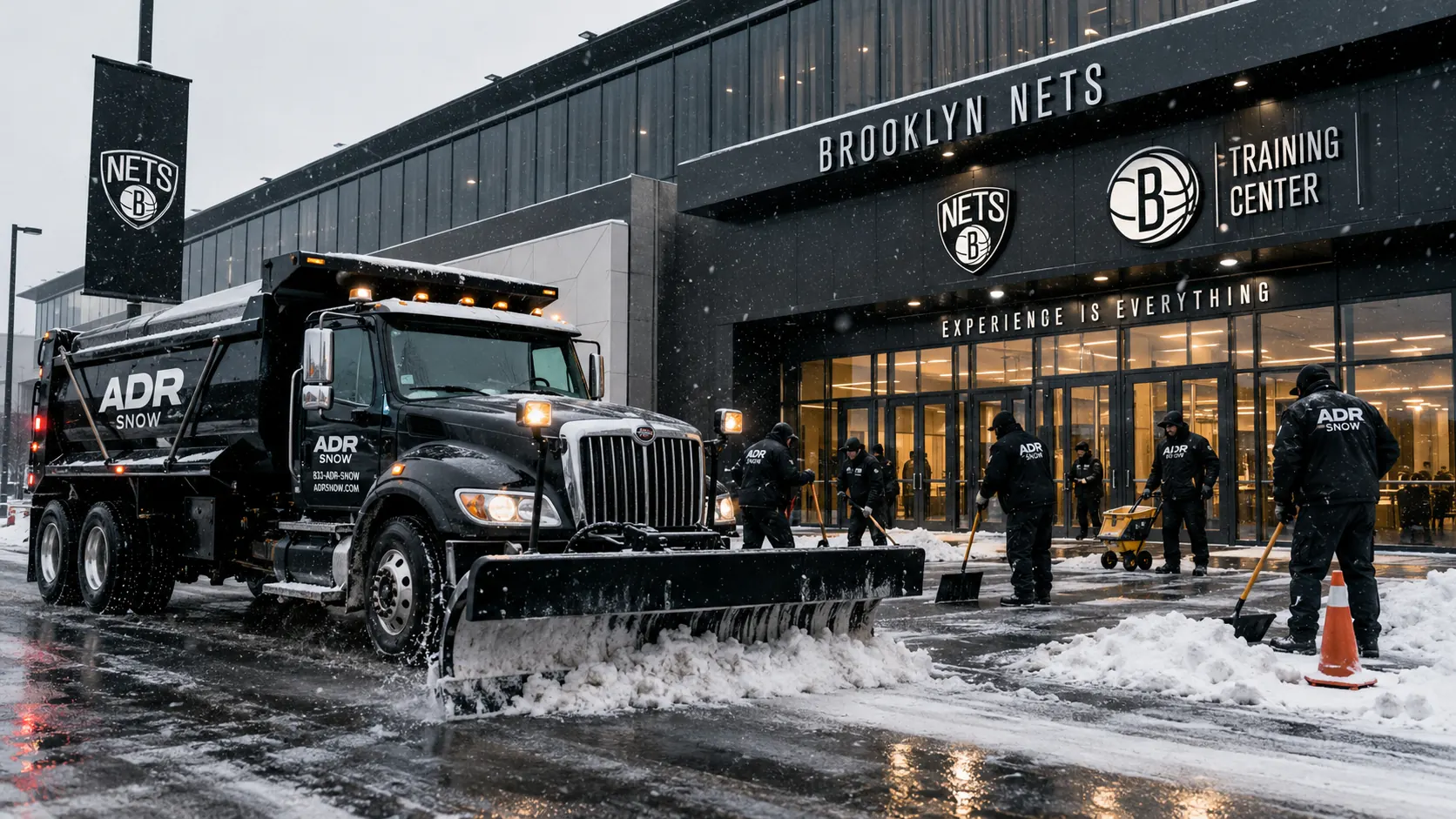
Sports and entertainment
Brooklyn Nets Training Center
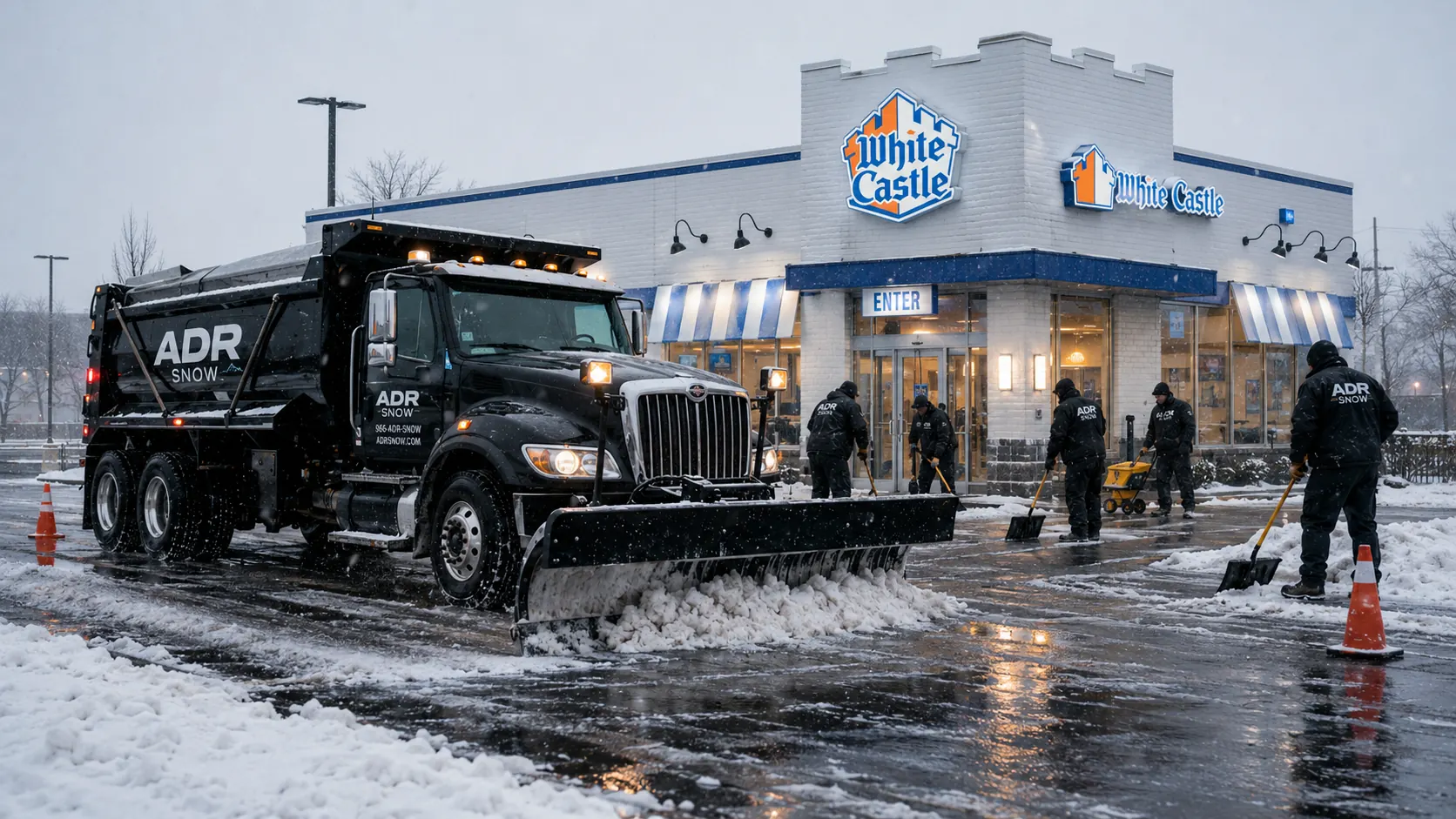
Quick-service restaurant
White Castle
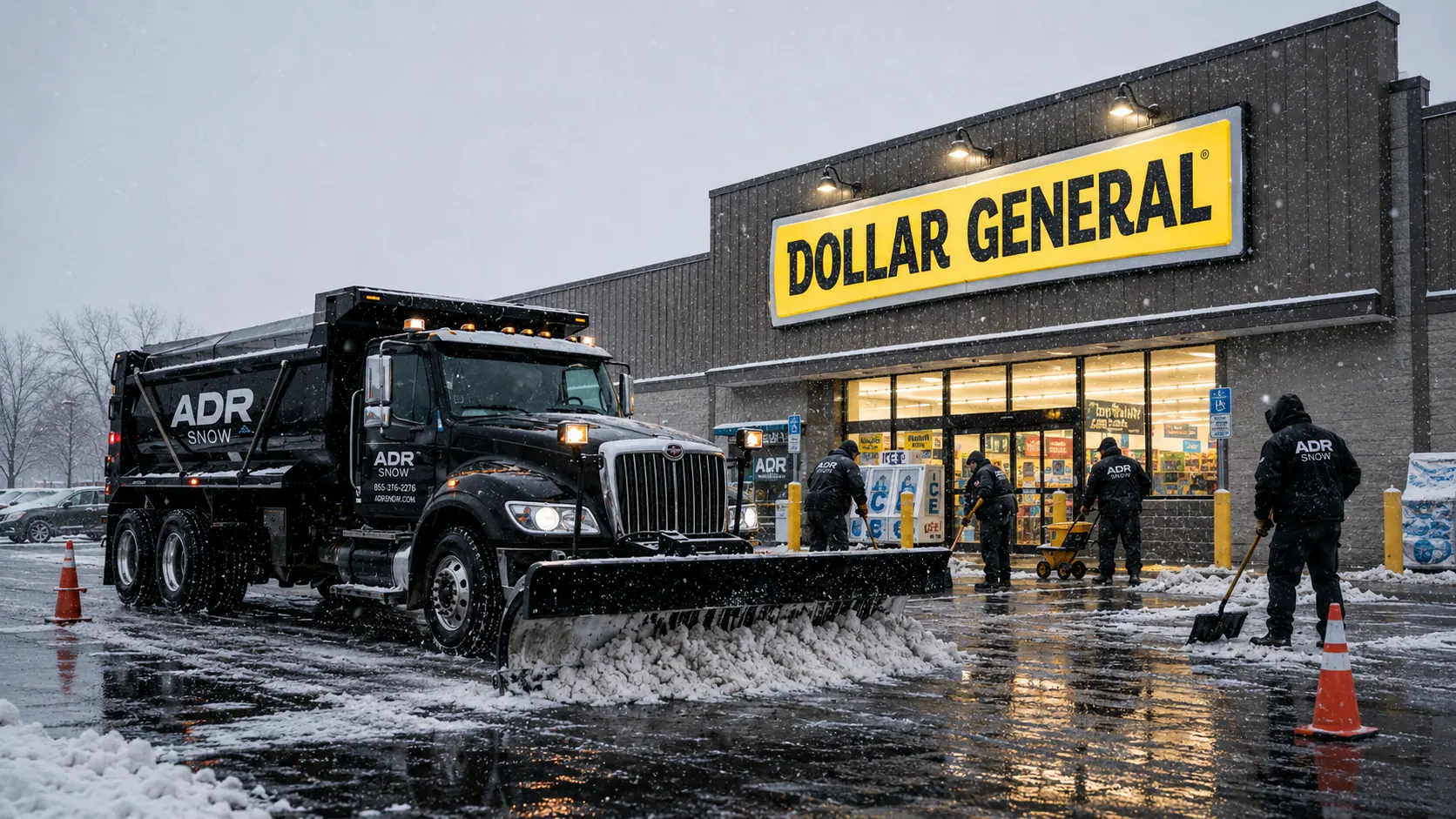
Retail chain
Dollar General
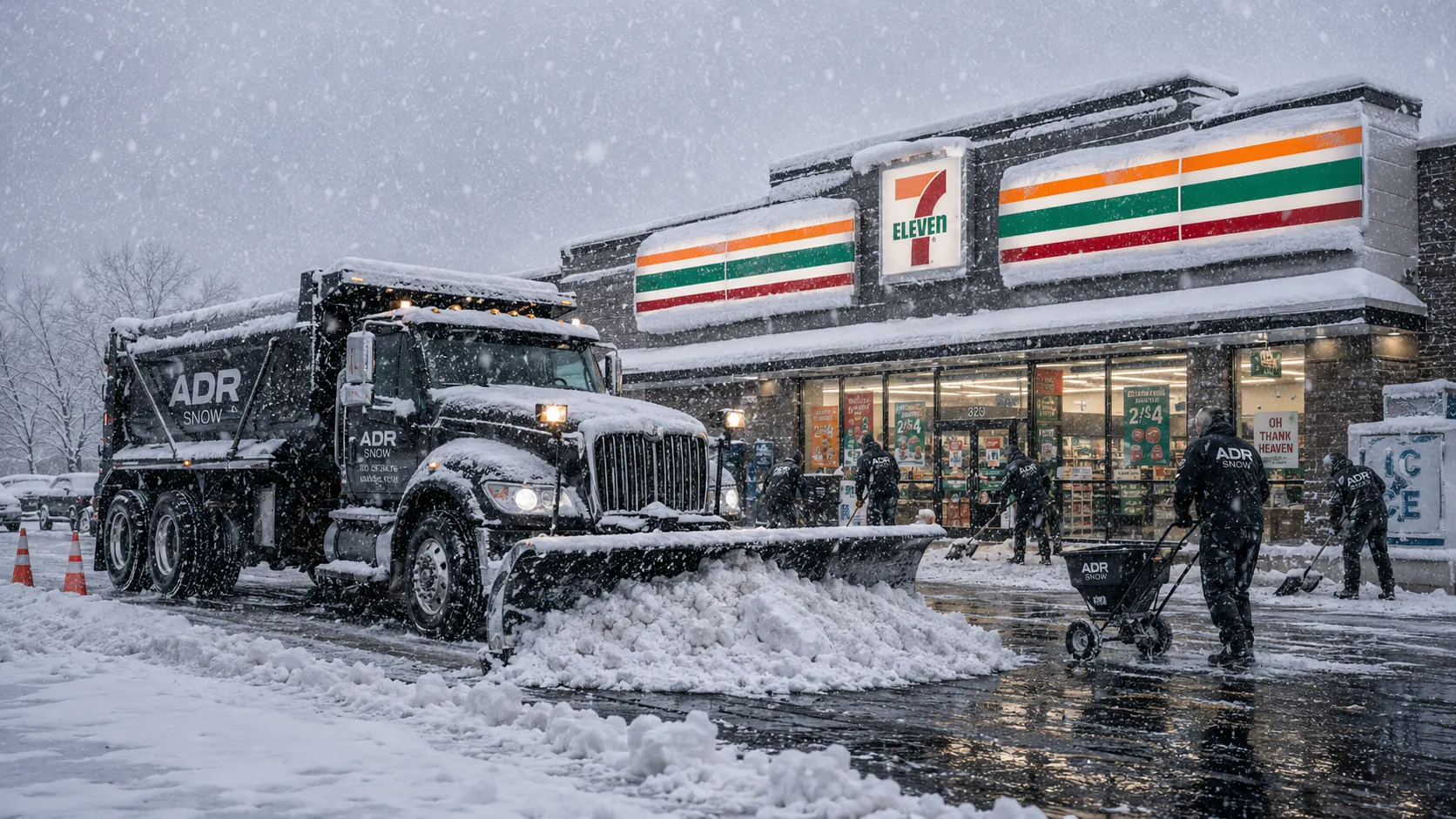
Convenience chain
7-Eleven
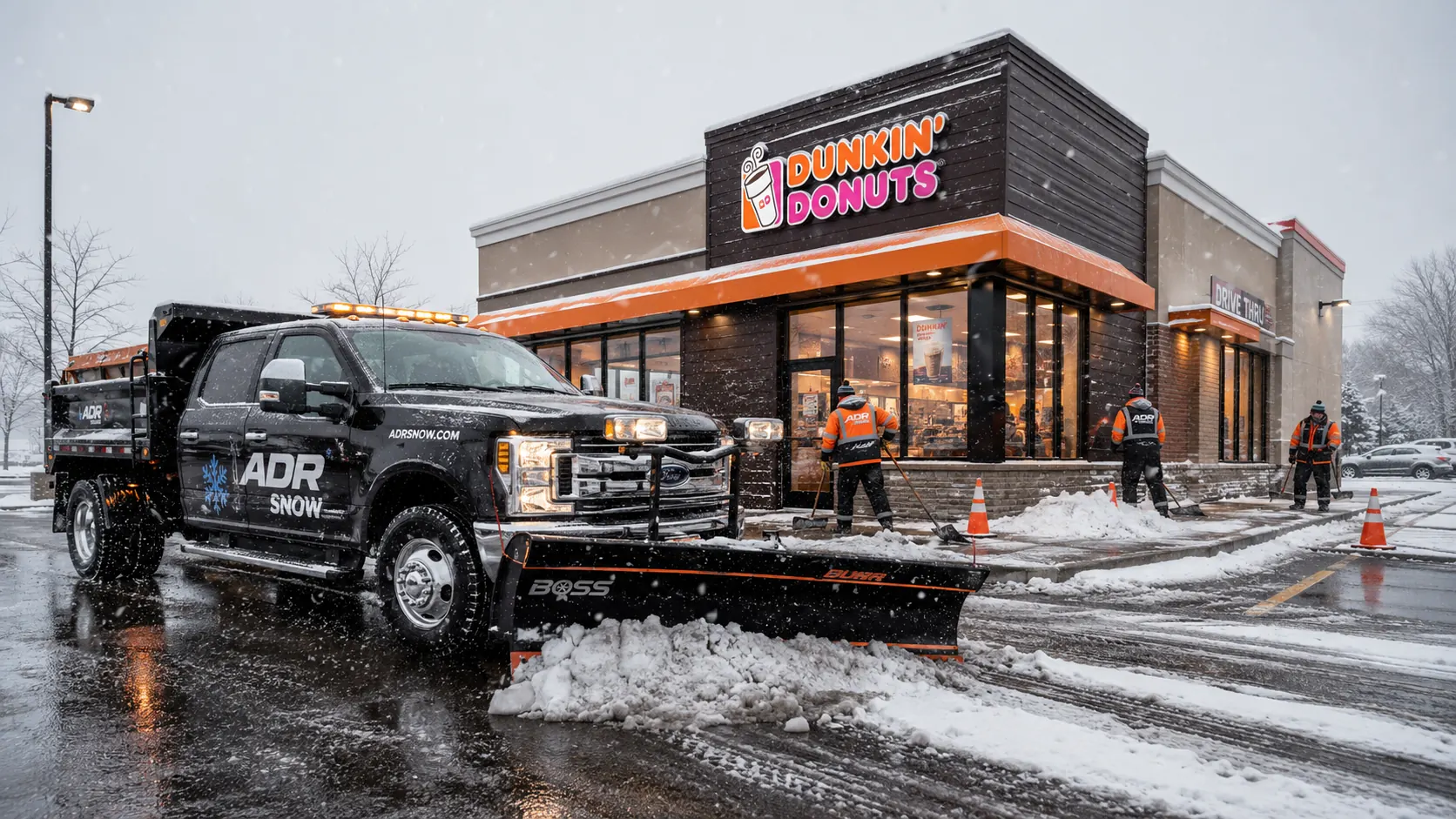
Quick-service restaurant
Dunkin'
Client sites shown with permission. Full client list shared under NDA.
Where we do it
Active coverage across the Northeast.
Each state has its own coverage page with county-level detail, local regulations and dispatch information.




Contract options
Five ways to contract. One that fits.
Every contract model is engineered for a specific property profile. Pricing on request, structure on consultation.
01
Per Hour
Billed by labor and equipment hours on site. Best for properties with unpredictable event sizes or one-off requests.
02
Per Push
Flat fee per event over a defined trigger depth. Predictable cost per storm with no hourly accounting.
03
Seasonal Flat Rate
One price for the entire winter, regardless of event count. The most common contract for multi-site portfolios.
04
Custom
Hybrid structures for portfolios with mixed property types, tiered SLAs, or specific liability requirements.
05
Emergency Call-Out
On-demand response for properties without an active seasonal contract. Subject to crew availability.
Common questions
Questions property managers actually ask.
What trigger depth do most commercial plowing contracts use?
One or two inches, depending on the property. Retail, medical and anything with heavy foot traffic usually trigger at one. Logistics yards and large industrial sites can push to two or three. We set the trigger with you in the pre-season walk, not by default.
Do you plow during the storm or wait for it to end?
During. We work the property at set intervals through the event and finish with a clean-down pass at the end. Some accounts ask us to wait for storm-end if they close during snow events, but that is the exception.
What happens when the stack zones fill up mid-season?
Removal kicks in. The trigger is set in the contract from day one, so when the piles hit the threshold, trucks show up and haul the accumulation off site. You do not get a phone call asking to approve emergency pricing.
Are walkways and sidewalks included in the plowing scope?
No. Walkways are a separate line under Snow Shoveling. We usually bundle both into the same contract with the items priced separately so CAM allocation and procurement reporting stay clean.
How are insurance certificates handled across the portfolio?
The blanket COI is issued when you sign. Each property gets its own certificate within twenty-four hours of joining the schedule. Renewals go out automatically through the season. Your risk team stops chasing paperwork.
Can the contract be structured as opex or capex?
Either. Per-event and per-push contracts read as straight opex. Seasonal flat-rate accounts can be structured as a capitalized winter line if your finance team prefers it. The schedule references whichever structure you book it as.
What does a multi-state contract actually look like?
One agreement covers NY, NJ, CT and MA on the same paper. Same account manager. Same dispatch protocol. One invoice. State-level variations live inside the property schedules. Adding a new state-line site does not start a new contract.
Sign before November
Get your commercial snow contract signed before the season starts.
Once the first storm hits, our crews respond first to properties already under contract.
Priority dispatch
First to the site once the storm starts.
Fixed season price
Locked at signing with no storm-day markups.
Dedicated crew
The same operators on your property through every event.
COI at signing
Insurance certificate delivered along with the contract.
Talk to our team
Get a proposal in one business hour.
Two fields. Twenty seconds. A real person calls back within an hour during winter.