
Commercial snow management for New York retail centers, managed properties and multi-site portfolios.
Snow plowing, removal, shoveling, salting and de-icing across the five boroughs and Westchester County. Routes built to the NYC Administrative Code §16-123 sidewalk window. One contract for the whole NY footprint, with the documented service record commercial properties need for liability defense.

Coverage state
New York
NY
Active national accounts under contract in New York






Local context
Commercial snow management in New York.
New York is the operational core of ADR Snow Management. Headquartered in Mount Vernon, our dispatch covers Manhattan, Brooklyn, the Bronx, Queens, Westchester County and the lower Hudson Valley with crews staged regionally before the first forecast event. For property management groups, REITs and corporate real estate teams operating in the New York metropolitan commercial market, this is where we built the operating standard the rest of the network is calibrated to.
Read more about operating in New York
Commercial snow management in New York runs against an unusual set of constraints. Density is higher than any other state we serve, sidewalk-clearing deadlines are codified, snow stacking is restricted in most boroughs and the liability exposure per property is among the highest in the country. Property managers operating here cannot scope snow management the way they would a suburban property in another state, and procurement teams cannot copy-paste a contract template from another market.
Our New York operation is engineered to meet those constraints. Routes are mapped before the season with the assigned crew chief. Disposal sites pre-arranged with standing manifest agreements. Crews working five-borough accounts run separate dispatch from suburban accounts. The standard is the same across the portfolio: open by opening hours, every event, every property, every borough.
For multi-property portfolios crossing the borough boundary or extending into Westchester, the master agreement consolidates the entire NY operation under one contract. One account manager, one invoice across all properties, one rollup report for the procurement file. Property management groups and REITs running large NY portfolios consolidate their vendor stack here instead of running multiple regional contracts with parallel dispatch.
Documentation cadence on every event is the New York operating discipline. NYC properties face the highest density of slip-and-fall claims in the country. Properties operating under documented service records, time-stamped photos and application logs sit in a fundamentally different defensive position when claims arrive nine months after the storm. The contract structure delivers the documentation by default, not on request.
Dispatch coverage
New York accounts run under a single dispatch alongside our other Northeast coverage.
Property mix
Commercial retail, banking, hospitality and logistics properties across the state.
Same operating standard
Routes, documentation and dispatch calibrated to the local regulatory profile.

On New York properties
The operation as it actually runs.
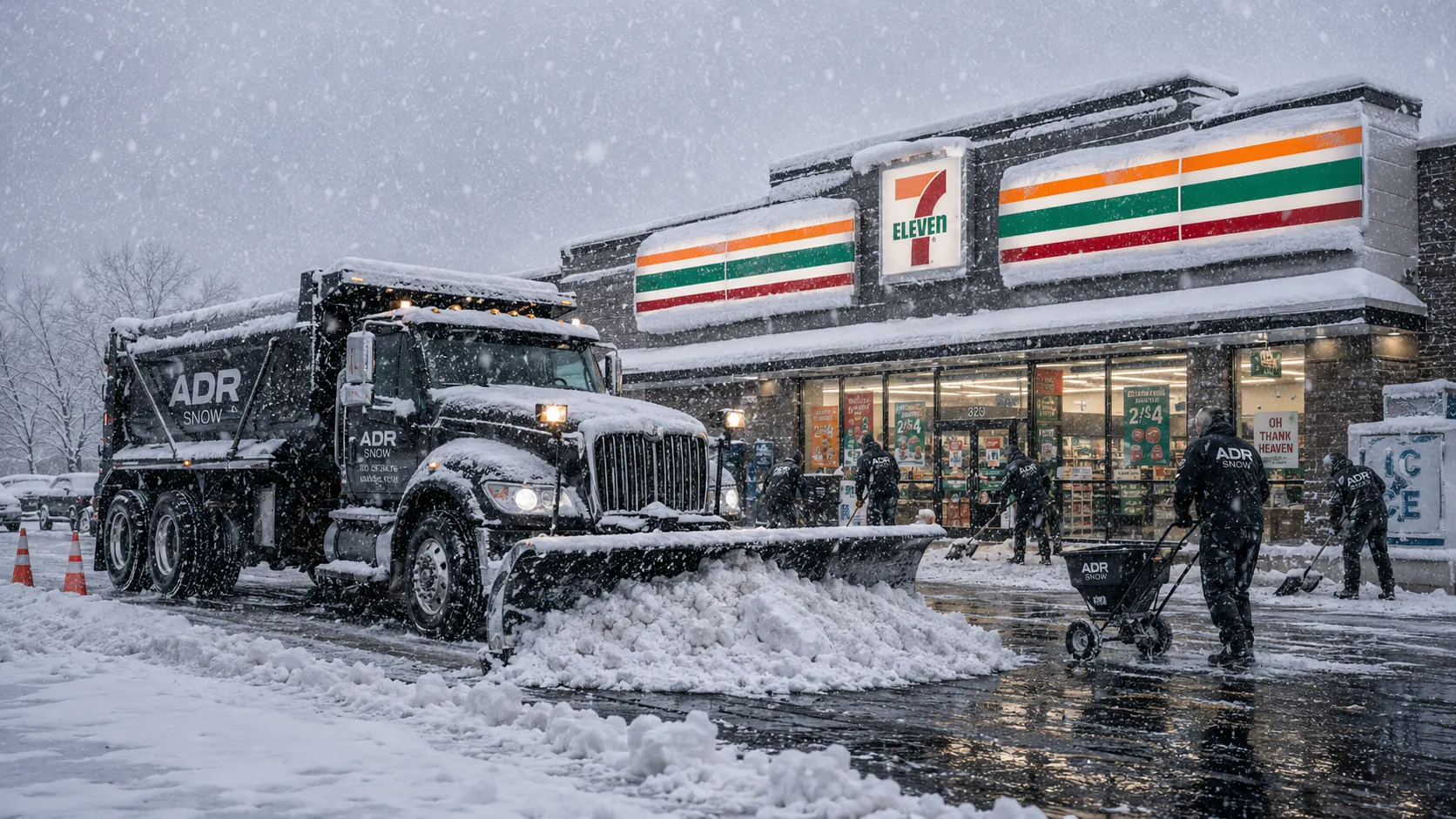
Routes mapped to your property mix, equipment staged regionally, crews dispatched before the first flake.
Regulatory profile
Contracts calibrated to NY rules.
Every master agreement is structured to meet the local regulatory window, with route timing and documentation cadence tuned per property.
Read the New York regulatory profile
Commercial properties in New York City are subject to NYC Administrative Code §16-123, which sets a sidewalk-clearing window after snowfall ends. Suburban counties follow municipal ordinances at the town and village level. New York State common law adds a separate layer of property-owner liability for slip-and-fall claims, with case law that has trended toward broader exposure over the last decade. Every ADR Snow master agreement is structured to meet the regulation that applies to the property, with route timing calibrated to the regulatory window and documentation cadence calibrated to the litigation profile your risk management team is briefed on.
Property types we serve in New York
Areas we serve
New York dispatch zones.
Sub-area pages with municipal context, neighborhood lists and area-specific FAQs.
NYC · Manhattan
Manhattan
Midtown, Financial District, SoHo, Tribeca
NYC · Brooklyn
Brooklyn
Downtown Brooklyn, Williamsburg, DUMBO, Park Slope
NYC · Bronx
The Bronx
Pelham Bay, Throgs Neck, Fordham, Riverdale
NYC · Queens
Queens
Long Island City, Astoria, Flushing, Jamaica
Westchester
Westchester County
Yonkers, White Plains, New Rochelle, Mount Vernon
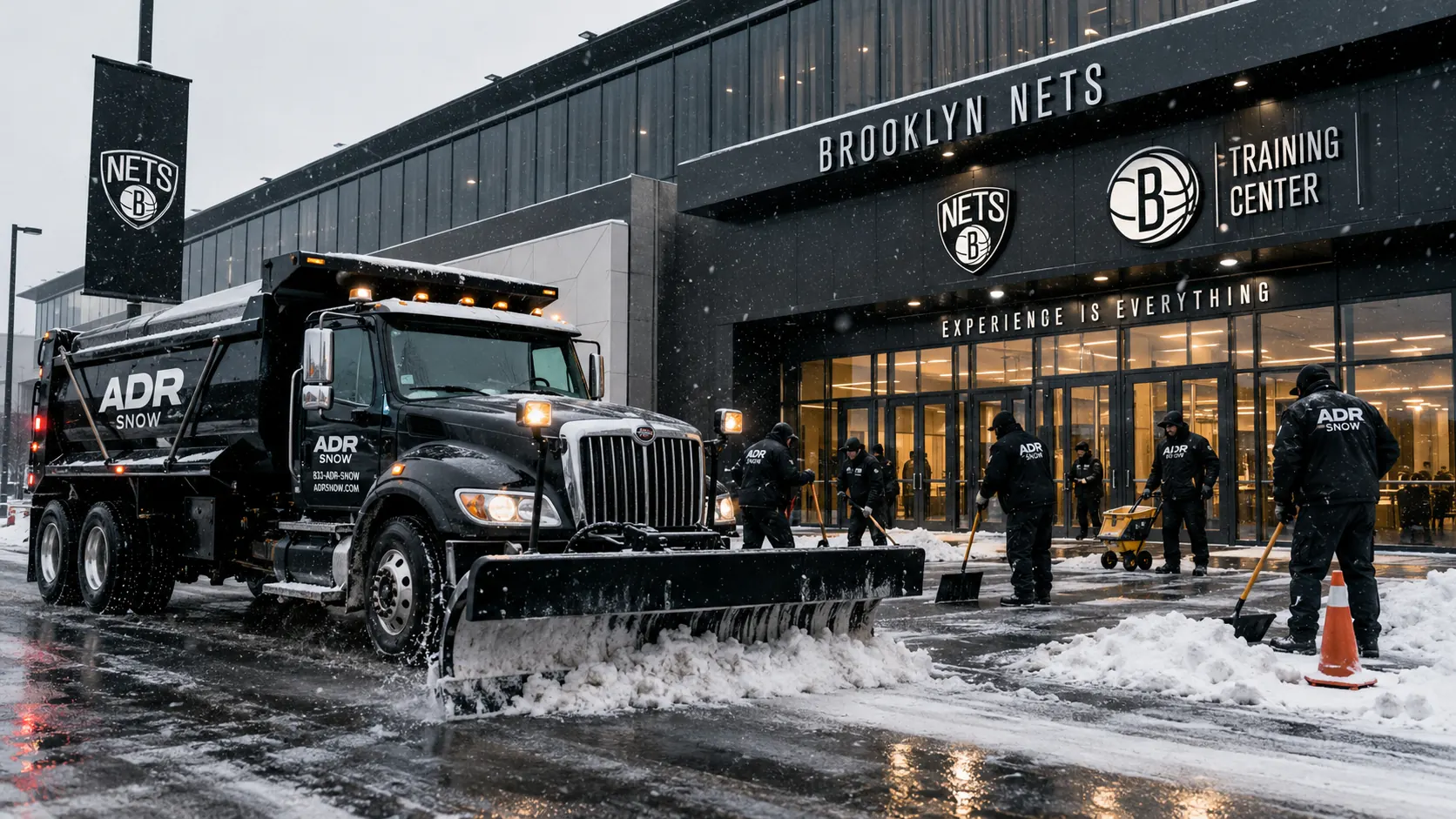
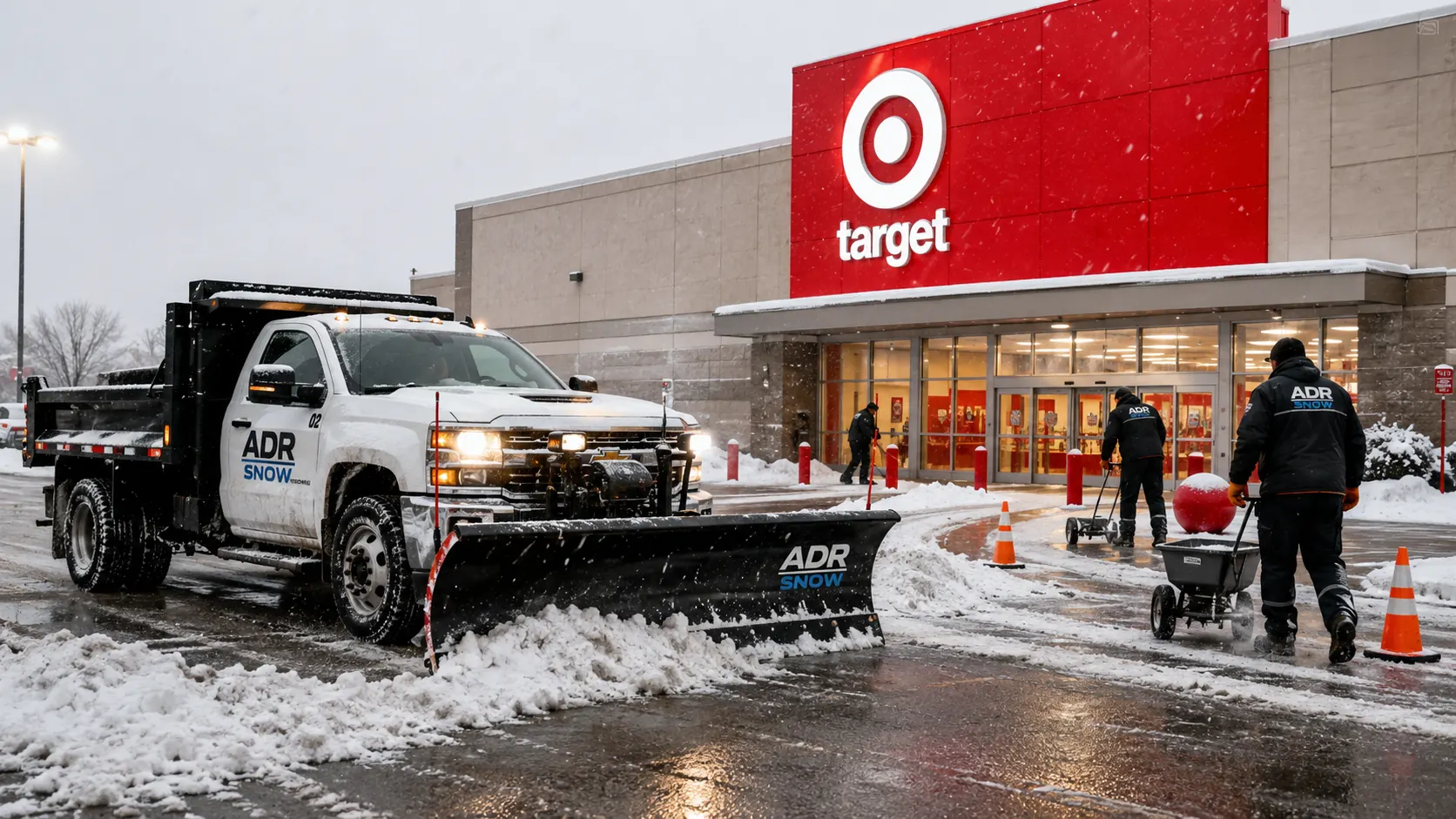
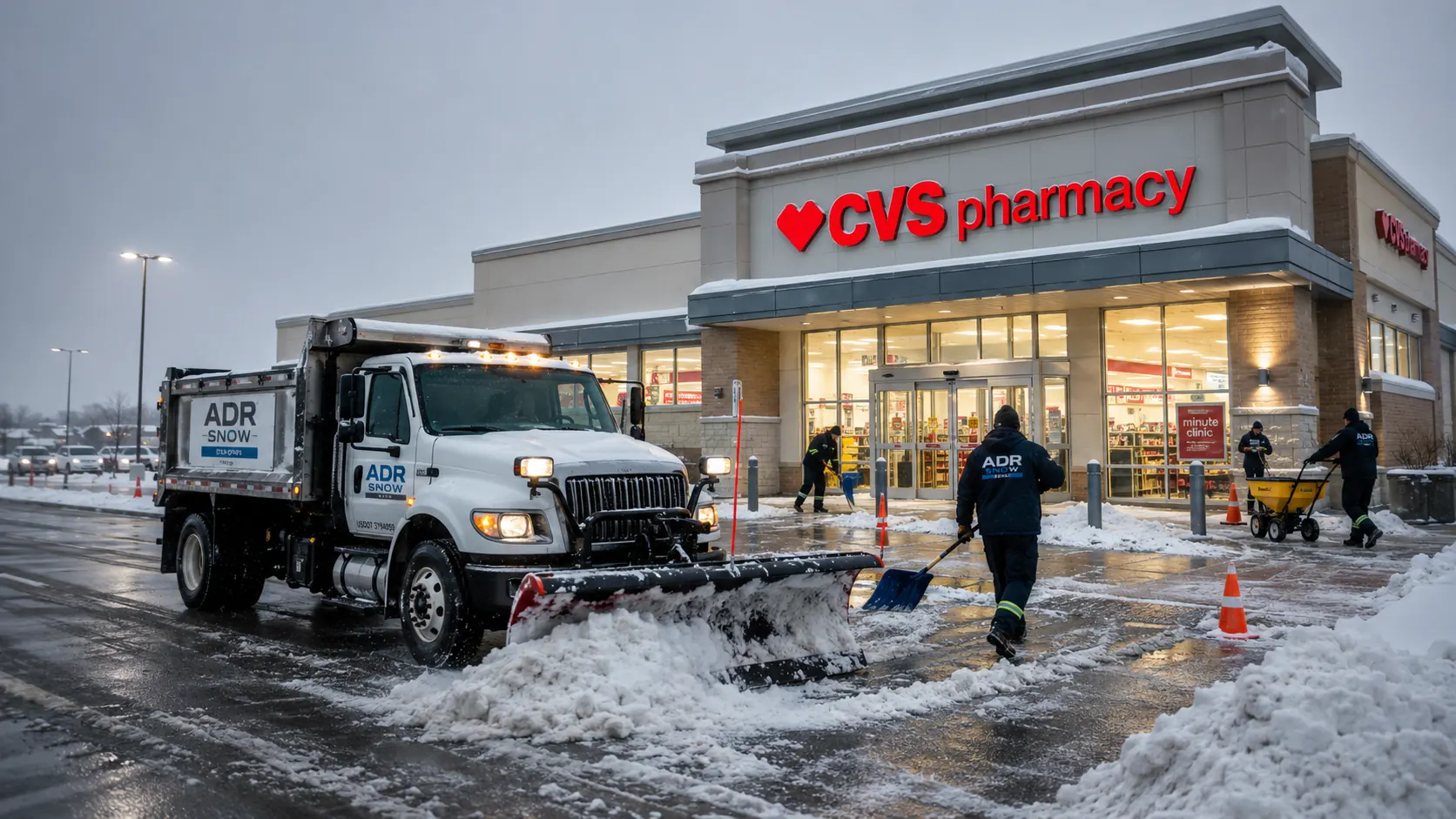
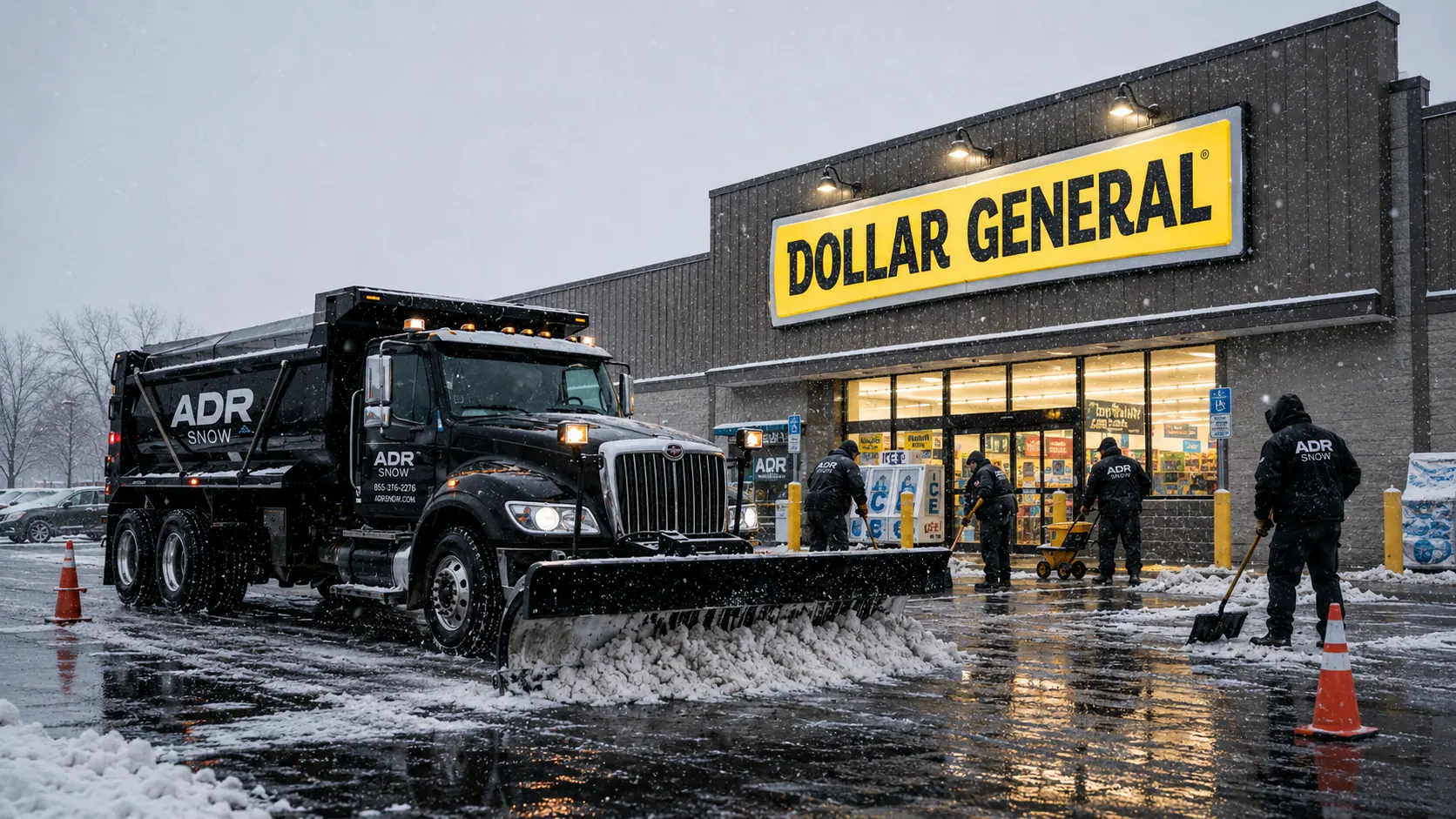
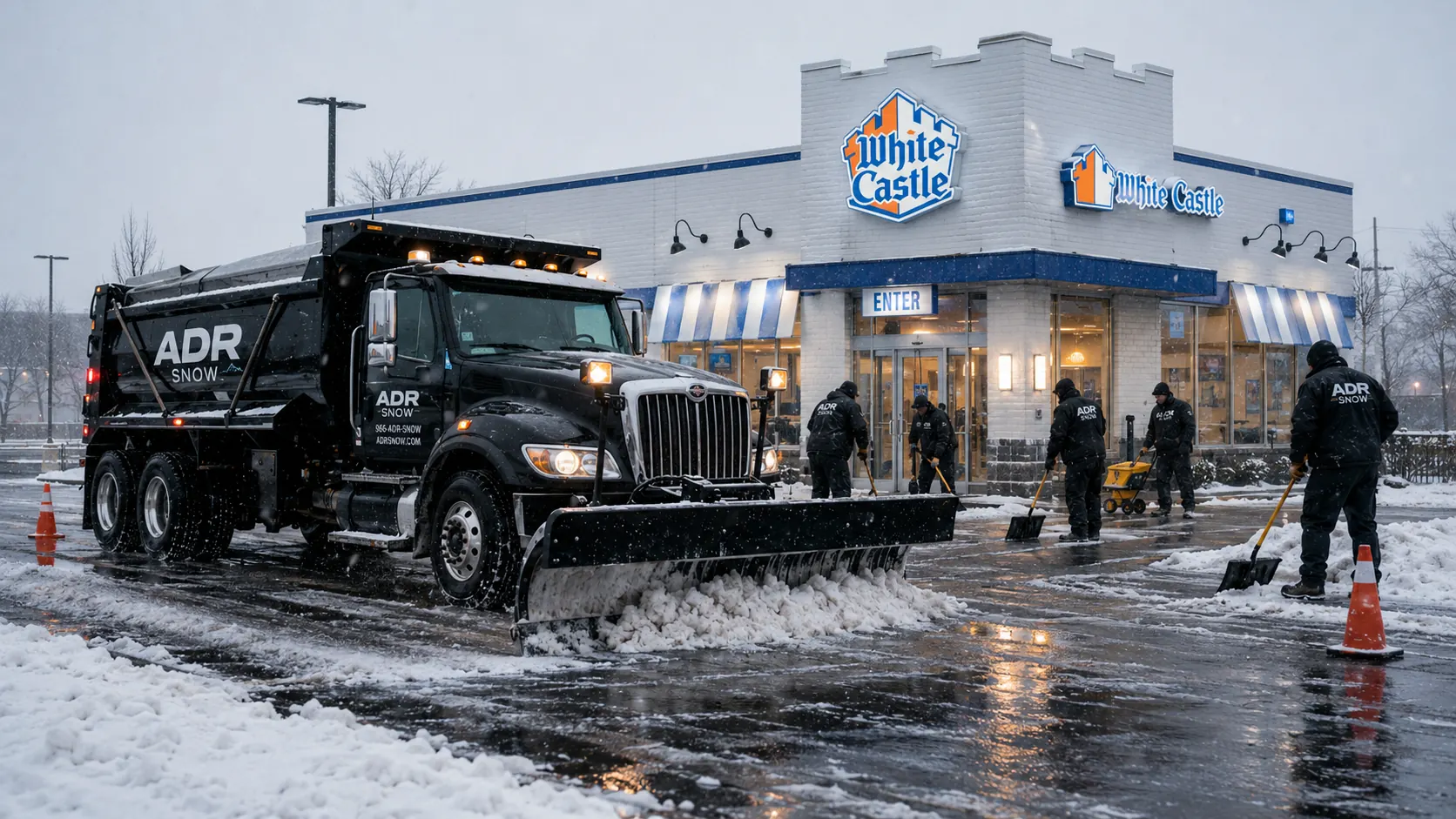
At the client, in the storm
Commercial properties across the Northeast where ADR Snow crews work during winter events.
Field work at national accounts and managed properties, captured during real snow events.
Pharmacy chain
CVS Pharmacy
National retail
Target
Sports and entertainment
Brooklyn Nets Training Center
Quick-service restaurant
White Castle
Retail chain
Dollar General
Convenience chain
7-Eleven
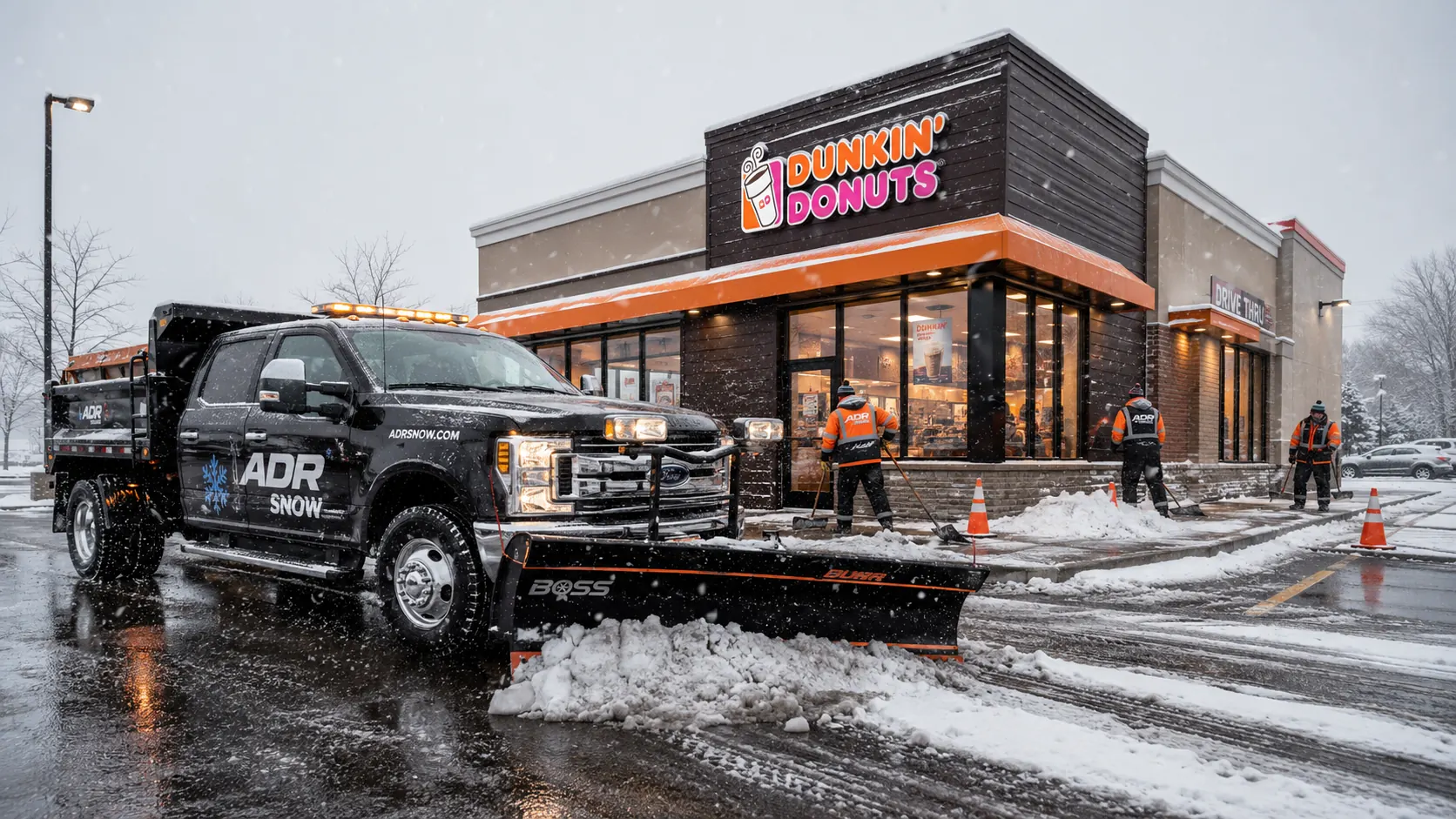
Quick-service restaurant
Dunkin'
Client sites shown with permission. Full client list shared under NDA.
Services in the area
Full service portfolio across this region.
Same five services, same five contract models, same operating protocol everywhere we dispatch.
Snow Plowing
View service02Snow Removal
View service03Snow Pushes
View service04Snow Shoveling
View service05Salting & De-Icing
View serviceClient operations platform
For regional portfolios, the ADR Snow client-access operations platform helps property teams follow service progress across locations during active snow events.
Common questions
Questions specific to New York.
Do you cover all five boroughs?
Yes. Manhattan, Brooklyn, Queens, the Bronx and Staten Island are all on the NYC dispatch, with crews staged regionally for storm response. Multi-borough accounts run on one contract, one account manager and one invoice.
What is the NYC sidewalk-clearing window under §16-123?
The Administrative Code requires sidewalks cleared inside a defined window after snowfall ends. Shorter when the storm stops during the day, longer when it stops overnight. We dispatch crews at storm start (not storm end) so the closing pass finishes inside the window without exception.
How do you handle REIT and corporate real estate portfolios in NYC?
Dedicated account manager, the same service deliverables on every property in the portfolio, and reporting built for internal vendor reviews. Portfolio-wide standards (stacking restrictions, ADA clearing, CAM-recoverable invoicing) get applied uniformly across the sites.
Where does the snow actually go from Manhattan and Brooklyn?
Permitted disposal sites we hold standing agreements with around the city. For properties under Department of Sanitation reporting, insurance reporting or municipal disposal rules, the manifest comes back with the event report so chain-of-custody is already documented.
What does a typical NYC multi-property contract look like?
Seasonal flat-rate, with a schedule per property. Each site has its own route map, trigger depth, stack zone (or removal trigger), shoveling cadence and de-icing chemistry. Seasonal pricing is predictable for budget. Removal triggers and surge events are pre-priced so you do not negotiate during a storm.
What service record do we get for NYC slip-and-fall defense?
Photos before and after every visit, application logs for salt and de-icing, route records, crew identification per pass and an event report inside twenty-four hours. When a claim arrives months later, that is the file your risk team and counsel will reference. It is the default delivery, not an upgrade.
Can the NY contract roll up with NJ, CT and MA accounts?
Yes. Tri-state and four-state portfolios run on one contract with one account manager and one invoice. State-level differences (regulatory, lease structure, CAM allocation) live inside the property schedules instead of separate agreements.
Sign before November
Get your commercial snow contract signed before the season starts.
Once the first storm hits, our crews respond first to properties already under contract.
Priority dispatch
First to the site once the storm starts.
Fixed season price
Locked at signing with no storm-day markups.
Dedicated crew
The same operators on your property through every event.
COI at signing
Insurance certificate delivered along with the contract.
Talk to our team
Get a proposal in one business hour.
Two fields. Twenty seconds. A real person calls back within an hour during winter.