
Commercial salting and de-icing to reduce freeze-thaw risk across walkways, lots and access points.
Pre-treatment before forecast events, post-treatment after every plow pass, on-call response during freeze-thaw cycles. Application logged at the gallon and pound for liability defense, environmental compliance and ESG reporting.
Selected by national accounts for salting & de-icing across the Northeast




What it is
Salting & De-Icing for commercial properties.
Salting and de-icing is the connective tissue of a commercial master agreement. It runs before the event, during the event and on-call between events. For property managers, this is the workstream that addresses the surface refreeze at 5 AM on a clear, cold morning when nothing fell overnight.
Read the full explanation
Commercial de-icing is layered. Pre-treatment with liquid brine before forecast events to prevent ice bonding. Post-treatment with salt or treated salt after plowing and shoveling on every event. On-call de-icing during freeze-thaw cycles, overnight refreeze windows and cold-weather periods regardless of accumulation. The cadence is contractual, not improvised.
Our product mix runs rock salt, treated salt and liquid brine depending on temperature, surface and environmental sensitivity. Application rates and product types documented per property in the pre-season plan. Application logs captured per visit and filed to the property record for procurement and compliance review.
Inside the master agreement, de-icing is contracted as a standing workstream with its own application cadence and trigger logic. Pre-treatment scheduled by forecast. Post-treatment by plowing route completion. On-call de-icing by temperature threshold or contracted interval. Property managers do not approve every visit; the contract authorizes the cadence.
For environmentally sensitive sites, the contract specifies low-impact chemistry options including calcium magnesium acetate and other pet-friendly products. Application logs document product type and volume, supporting environmental compliance reporting and corporate sustainability commitments.
Who it is for
Property types where salting & de-icing is the contract.
Every commercial property in the coverage area
No exceptions. Any commercial property with foot or vehicle traffic in the Northeast carries de-icing liability through the season. The question is not whether to contract it, but how to scope it.
Properties with refreeze and freeze-thaw risk
Sites with shaded sections, drainage paths or freeze-thaw cycles need scheduled de-icing beyond storm response. The on-call workstream addresses conditions that produce incidents without producing accumulation.
High-liability surfaces and pedestrian zones
ADA ramps, entries, ATM lanes, drive-thrus and any surface where a slip-and-fall becomes a litigation event. Application cadence calibrated to risk exposure, not generic walkway treatment.
Environmentally sensitive and ESG-driven sites
Properties near waterways, landscaped areas or pet-friendly traffic that require specialty de-icing chemistry. Application logs support environmental compliance and corporate ESG reporting.
Healthcare, hospitality and 24-hour operations
Properties with continuous operations and zero tolerance for surface refreeze. On-call de-icing runs on the contracted cadence regardless of storm activity.
Multi-tenant and CAM-recoverable properties
De-icing cost is typically CAM-recoverable with proper documentation. Application logs support tenant invoicing and CAM reconciliation without additional bookkeeping.
How we do it
The operating protocol behind every salting & de-icing contract.
The same standard operating procedure runs across every account, from a 50-property portfolio down to a single branch.
- 01
Pre-treatment before forecast events
Liquid brine or treated salt applied twelve to twenty-four hours before forecast accumulation. Prevents snow and ice from bonding to pavement. Application logged with weather context for the property file.
- 02
Post-treatment on every event
After plowing and shoveling, salt and de-icing chemistry applied as part of the closing pass. Every surface, every event. Application rates documented per visit.
- 03
On-call de-icing between events
Freeze-thaw cycles, overnight refreeze and shaded refreeze zones serviced on a scheduled or trigger basis through the season. Cadence defined in the contract, not requested ad hoc by the property.
- 04
Calibrated application with product-specific logs
Calibrated spreaders applying defined rates per surface class. Product type recorded per application: rock salt, treated salt, brine, calcium chloride, magnesium chloride or low-impact alternatives.
Client platform
Property teams follow crew activity and site updates during active events.
At the client, in the storm
Commercial properties across the Northeast where ADR Snow crews work during winter events.
Field work at national accounts and managed properties, captured during real snow events.
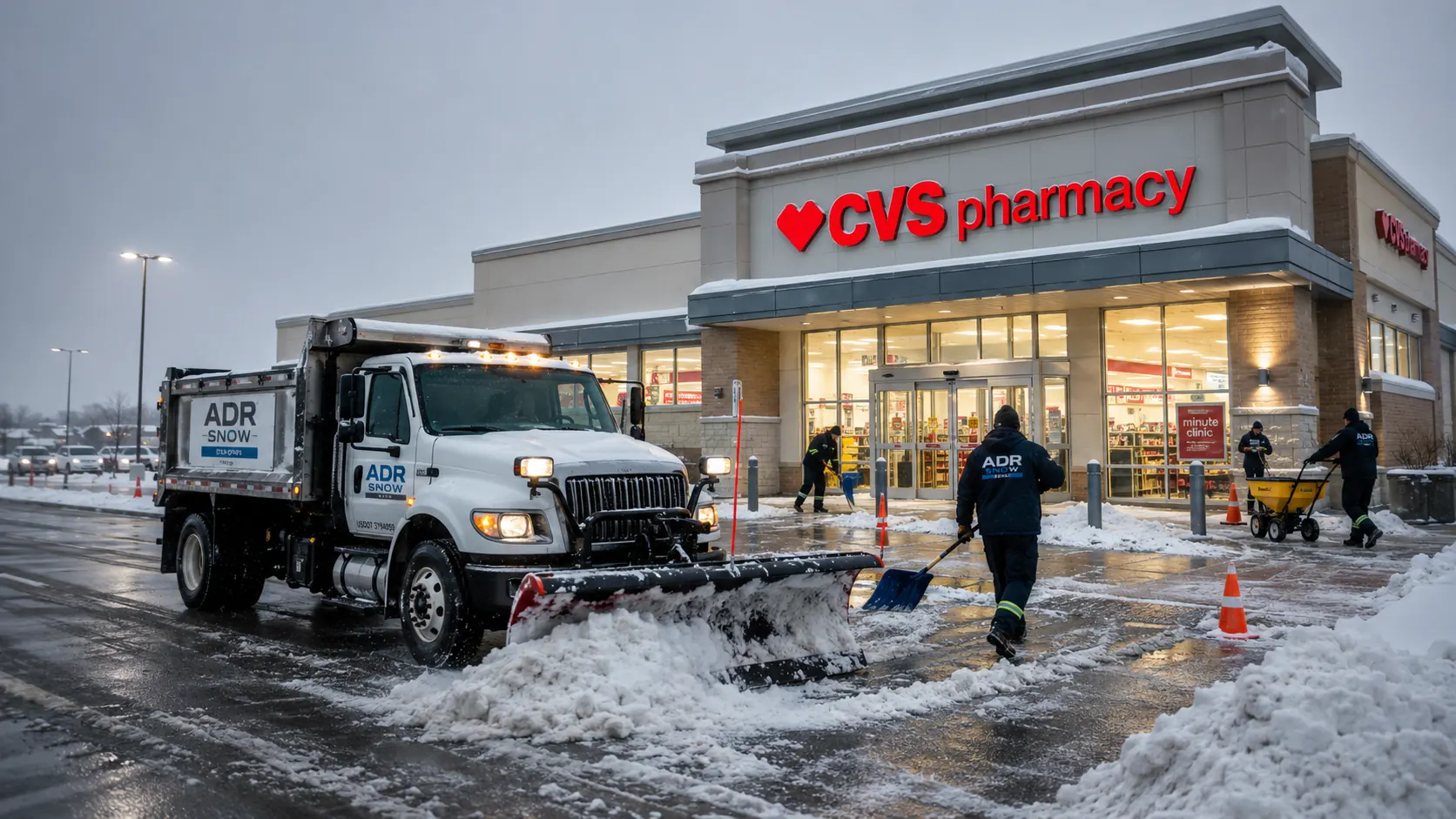
Pharmacy chain
CVS Pharmacy
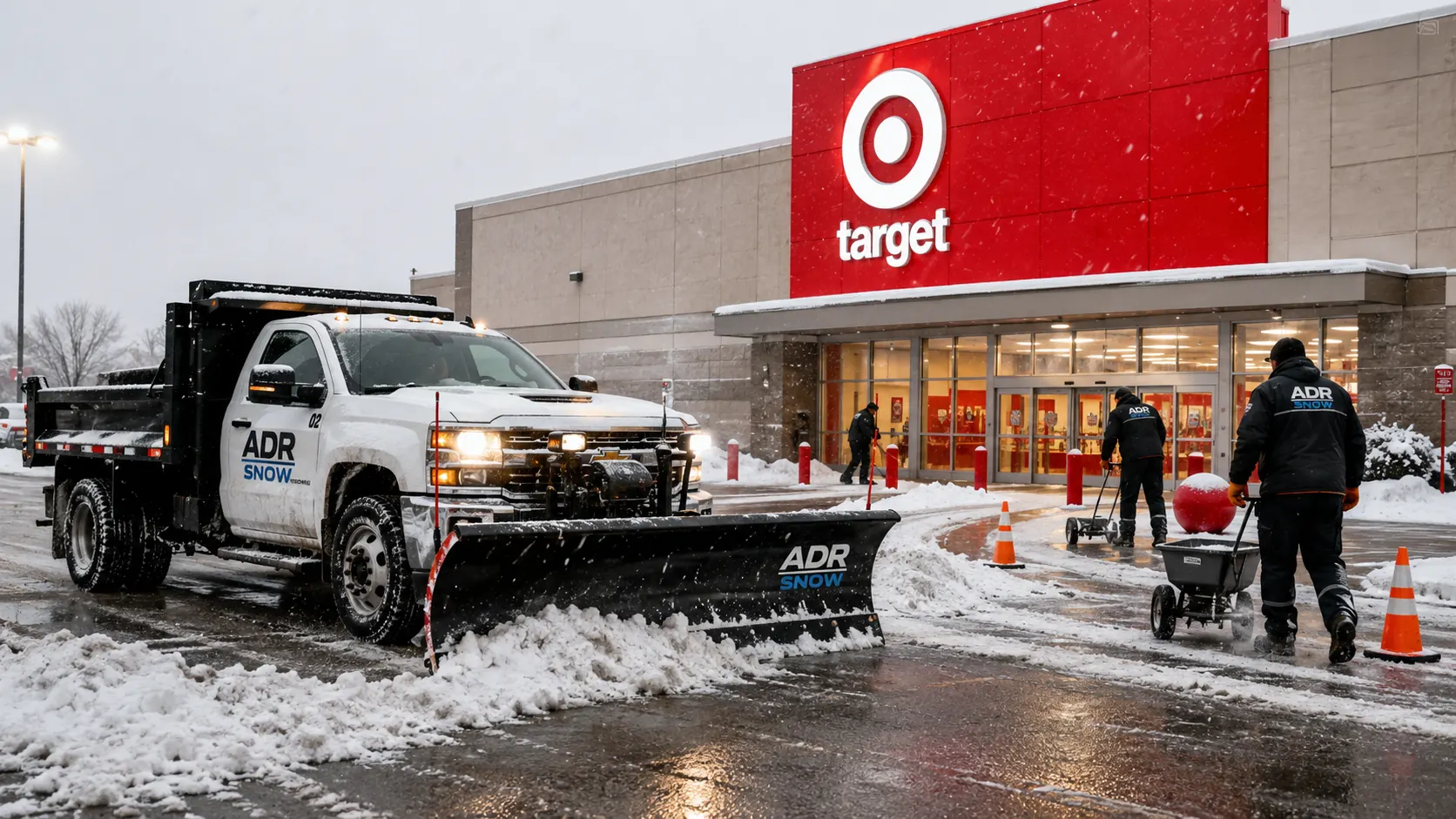
National retail
Target
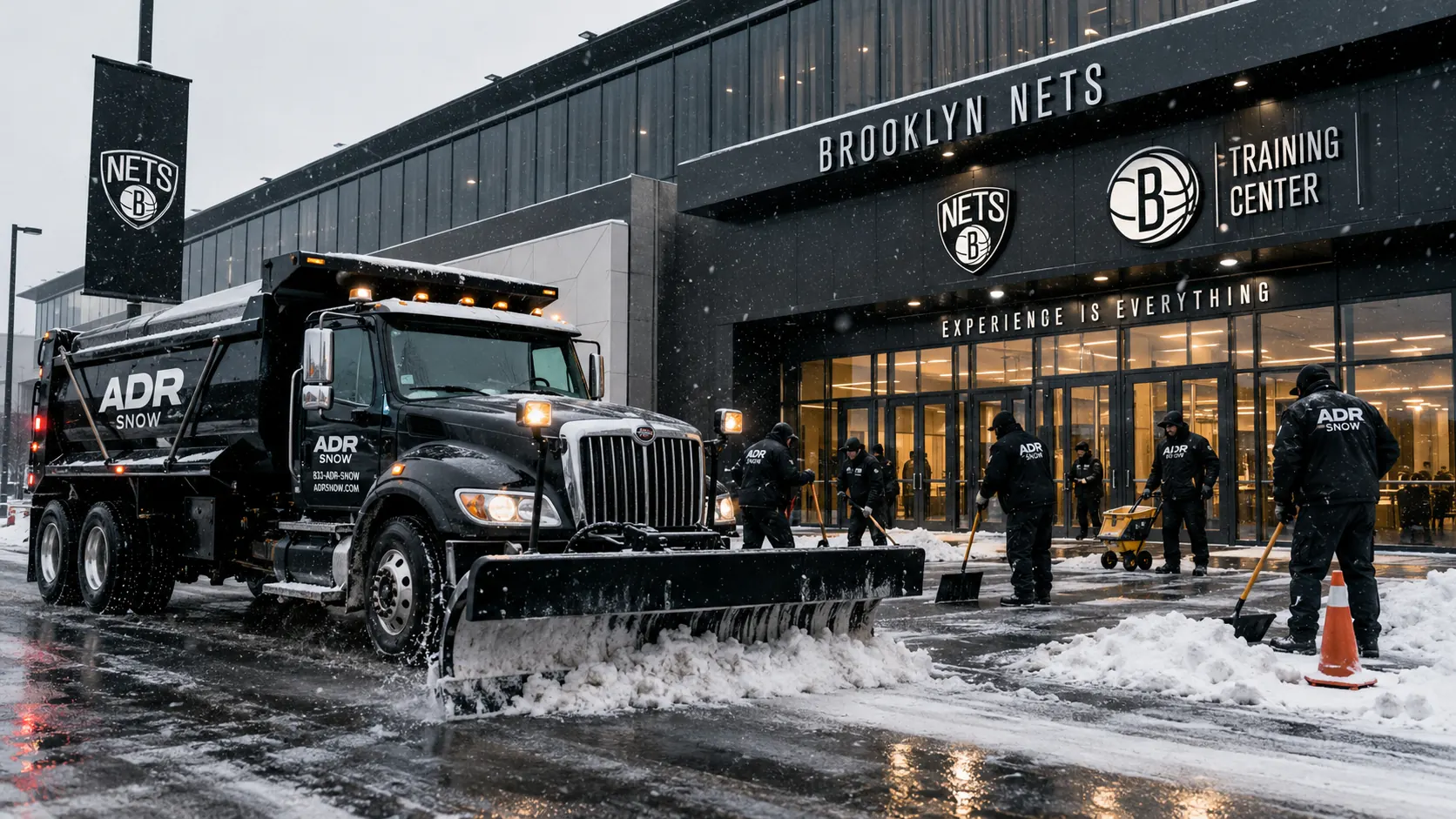
Sports and entertainment
Brooklyn Nets Training Center
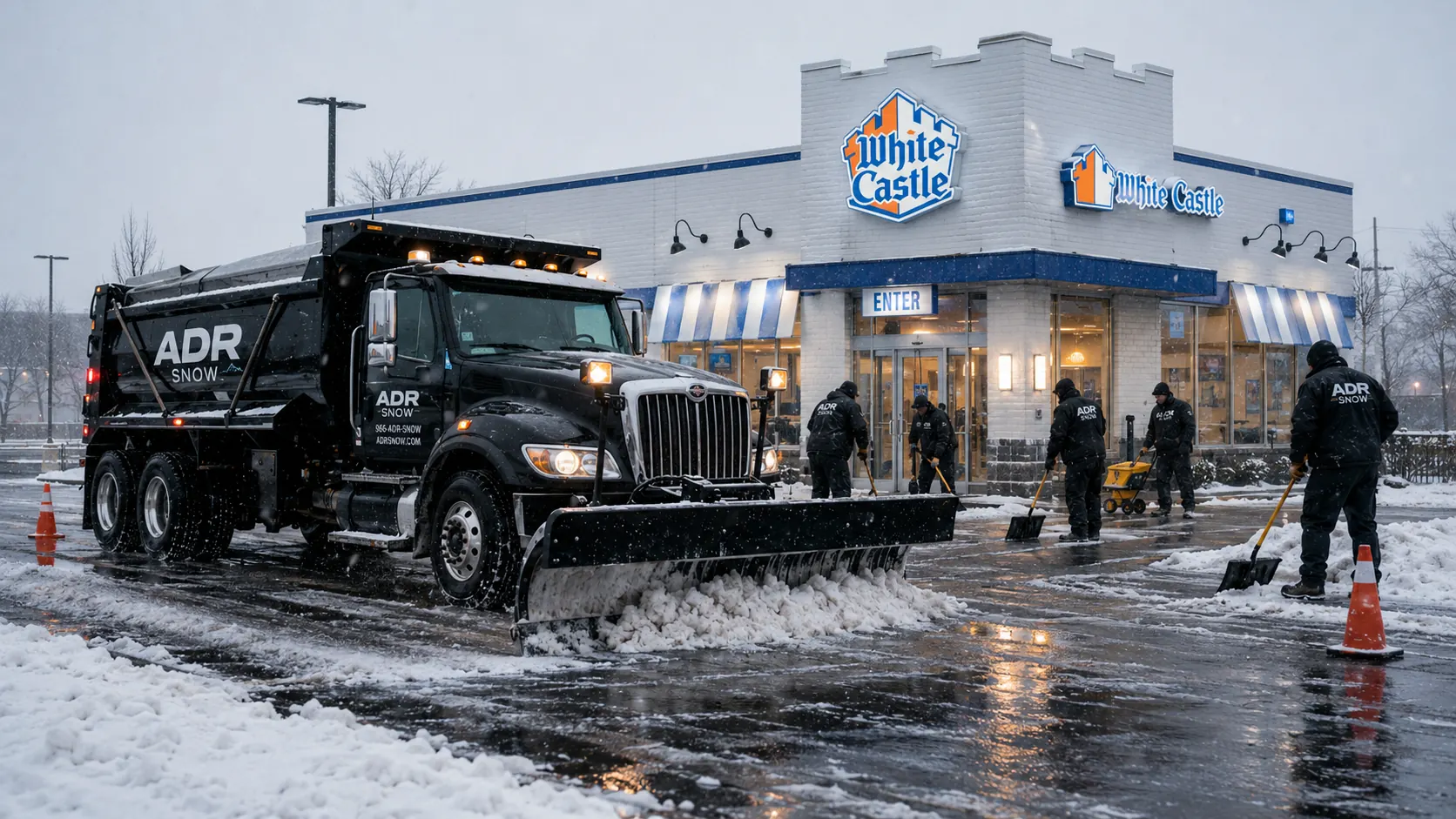
Quick-service restaurant
White Castle
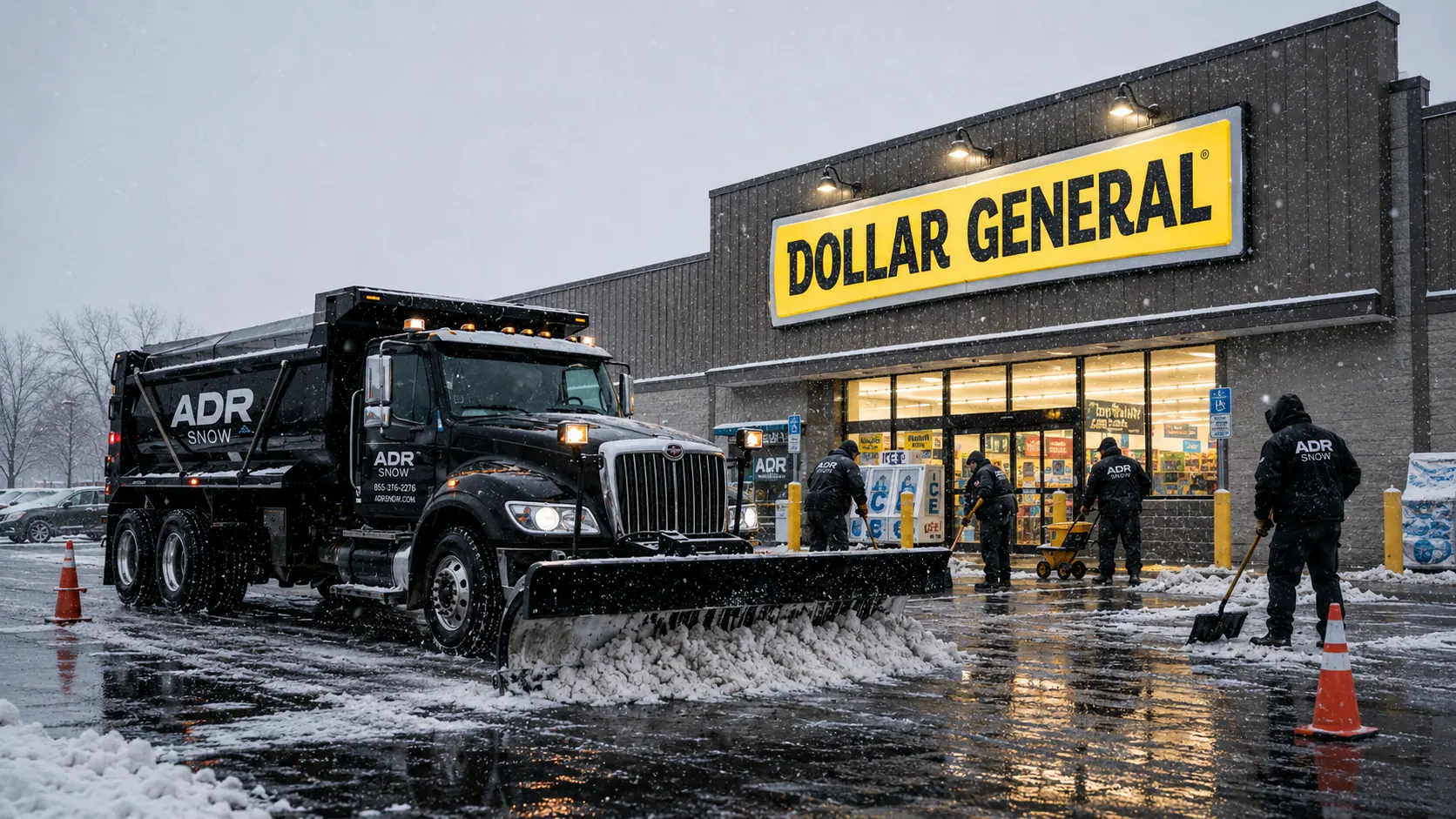
Retail chain
Dollar General
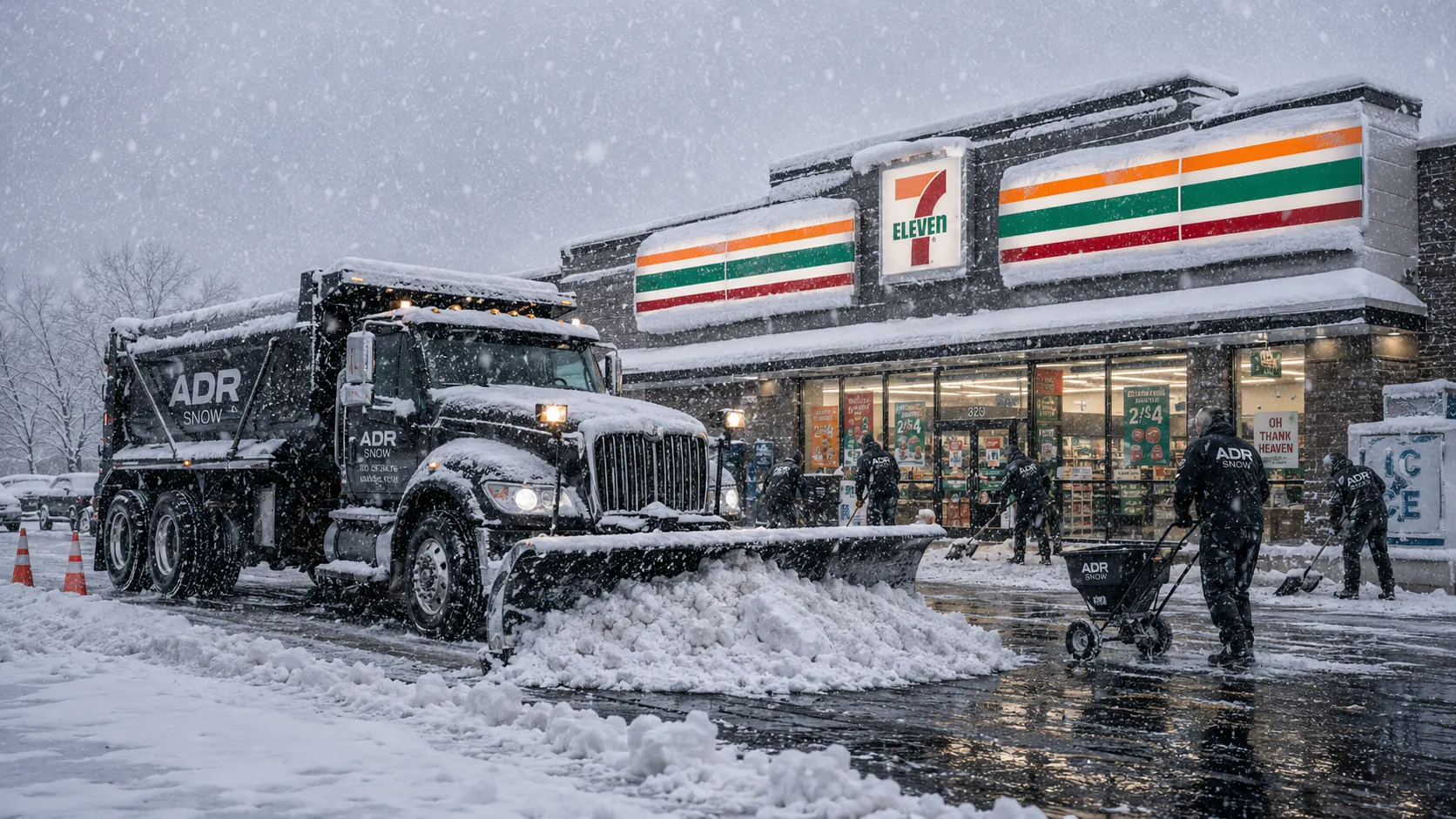
Convenience chain
7-Eleven
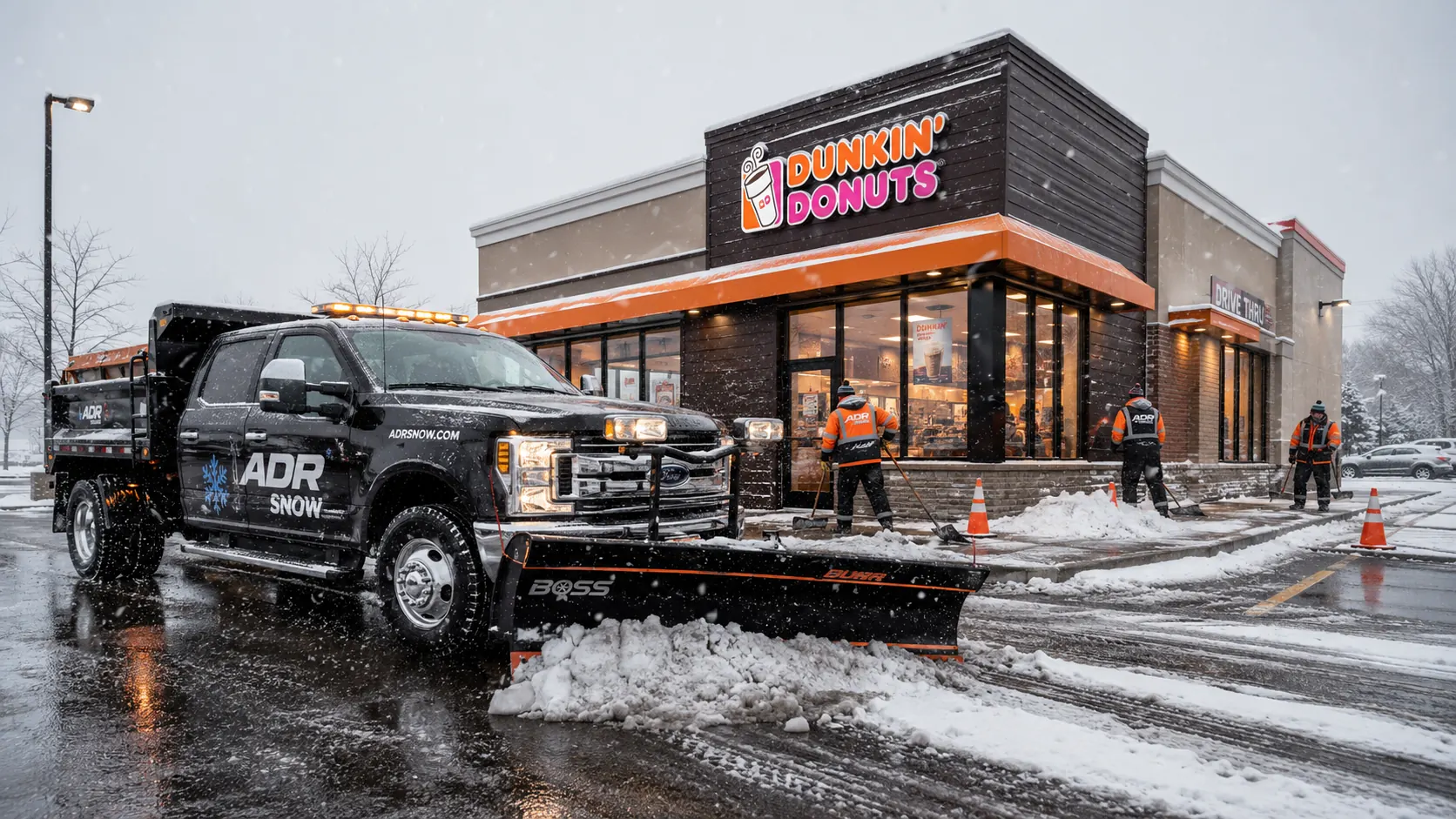
Quick-service restaurant
Dunkin'
Client sites shown with permission. Full client list shared under NDA.
Where we do it
Active coverage across the Northeast.
Each state has its own coverage page with county-level detail, local regulations and dispatch information.




Contract options
Five ways to contract. One that fits.
Every contract model is engineered for a specific property profile. Pricing on request, structure on consultation.
01
Per Hour
Billed by labor and equipment hours on site. Best for properties with unpredictable event sizes or one-off requests.
02
Per Push
Flat fee per event over a defined trigger depth. Predictable cost per storm with no hourly accounting.
03
Seasonal Flat Rate
One price for the entire winter, regardless of event count. The most common contract for multi-site portfolios.
04
Custom
Hybrid structures for portfolios with mixed property types, tiered SLAs, or specific liability requirements.
05
Emergency Call-Out
On-demand response for properties without an active seasonal contract. Subject to crew availability.
Common questions
Questions property managers actually ask.
What products do you actually use for de-icing?
Rock salt on pavement at standard temperatures. Treated salt blends when it gets colder. Liquid brine for pre-treatment. Calcium chloride or magnesium chloride for the bottom of the temperature curve. CMA and other low-impact chemistries on environmentally sensitive sites. The product mix per property is set in the site plan.
How often does de-icing run between storms?
Whenever conditions warrant. Freeze-thaw cycles, overnight refreeze, post-rain freeze, anything in the forecast below thirty-two degrees. Most properties see two to five additional visits a month beyond storm response. The cadence is set in the contract, not requested ad hoc.
Is pre-treatment included in a seasonal contract?
Yes, by default. Brine or treated salt goes down twelve to twenty-four hours before the forecast event. It is the single biggest lever for reducing post-storm labor, so we never strip it out to lower a quote.
Are pet-safe and low-impact options available?
Yes. Calcium magnesium acetate (CMA) and other low-corrosion, pet-friendly chemistries are stocked for properties that need them. We spec them in the site plan and the application logs note the product on every pass.
How is application volume reported back to us?
Every pass logs the product, the rate per square foot and the total volume applied. Monthly rollup goes to whoever runs your vendor scorecard. The annual total ends up in the budget conversation for next season.
Do the logs support CAM reconciliation with tenants?
Yes. Property-level application logs feed straight into CAM pass-through where the lease permits. We send invoice formats and supporting records your team can hand to tenants without rebuilding the math.
How does de-icing fit into environmental compliance reporting?
For sites near waterways, landscaped corporate campuses or properties with municipal environmental obligations, the chemistry is selected to fit the site profile and the volume report doubles as compliance documentation. ESG teams get product-volume totals annually.
Sign before November
Get your commercial snow contract signed before the season starts.
Once the first storm hits, our crews respond first to properties already under contract.
Priority dispatch
First to the site once the storm starts.
Fixed season price
Locked at signing with no storm-day markups.
Dedicated crew
The same operators on your property through every event.
COI at signing
Insurance certificate delivered along with the contract.
Talk to our team
Get a proposal in one business hour.
Two fields. Twenty seconds. A real person calls back within an hour during winter.