
Large-site snow pushing for commercial lots, retail centers, industrial properties and multi-site portfolios.
Box pushers and loader-mounted pushers for distribution centers, big-box retail, industrial yards and the large-format commercial properties where truck plowing alone would run past your opening time. Equipment pre-staged at the property, cycle times reported with the post-event file.
Selected by national accounts for snow pushes across the Northeast





What it is
Snow Pushes for commercial properties.
Snow pushes are the heavy-volume sibling of plowing. Where a truck plow clears narrow paths per pass, a pusher (a wide blade mounted on a loader or skid-steer) moves significantly more snow per pass and is built for properties where the math of square footage and storm volume requires it.
Read the full explanation
For a ten-acre distribution yard or a big-box retail center, pushing is the only way to get the lot cleared inside the operating window. Trucks would take eight hours; a coordinated pusher operation gets it done in two. For property managers, this is the difference between freight moving on schedule and SLA breach calls Monday morning.
Our pusher equipment runs the lot in coordinated routes with stack-zone management built in. Volume is moved to permanent stack zones or transitioned to removal as accumulation requires. Cycle time is documented per pass and reported with the post-event file for procurement and operations teams that track vendor performance.
Inside the master agreement, pushes sit as a defined workstream priced separately from truck plowing. Properties that need pushing usually also need truck plowing for entries, drive lanes and tight curb work. The contract scopes both, and the schedule allocates equipment by zone so neither workstream blocks the other.
For multi-site logistics and large-format retail portfolios, pushing is the workstream that proves whether a vendor can scale equipment across the portfolio without losing site-level discipline. Same operating standard across every property regardless of footprint. Standardized cycle times that procurement teams can hold the vendor to.
Who it is for
Property types where snow pushes is the contract.
Distribution and logistics centers
Large yards, trailer parking and dock aprons that need to stay clear for twenty-four-hour freight operations. Cycle time directly tied to carrier SLA commitments and the property's ability to deliver them.
Big-box retail and large-format anchors
Large-format anchors with high parking inventory and tight delivery windows before opening. Pushing clears the lot inside the operating window where truck plowing alone would extend into business hours.
Transit, parking and event venues
Stadium lots, transit parking and large-format public-facing lots where speed of clearance defines revenue. Event-driven dispatch coordinated to game schedules and operational calendars.
Industrial and manufacturing campuses
Outdoor staging yards, equipment storage and access roads that need full operational status by shift change. Cycle coordination with internal operations leaders directly responsible for shift-on-time metrics.
Auto dealers and inventory-heavy properties
Vehicle storage lots and inventory display areas that require clear access without damage to inventory. Pushers configured for property layout and inventory aisle geometry.
Multi-acre office parks and corporate campuses
Corporate campuses with parking inventory exceeding two or three acres. Pushing scopes the bulk lot while truck plowing handles entries and tight zones, keeping cycle time inside the morning commute window.
How we do it
The operating protocol behind every snow pushes contract.
The same standard operating procedure runs across every account, from a 50-property portfolio down to a single branch.
- 01
Lot geometry mapping and route engineering
Pre-season mapping defines pusher routes, stack zones and turnaround points calibrated to property layout. Routes engineered for the equipment, not improvised in the storm. Geometry locked into the per-site operating plan.
- 02
Pre-positioned equipment for large accounts
For large-format accounts, pusher-equipped loaders staged at the property before forecast events. Zero deployment delay. The cycle starts at the trigger moment, not after equipment arrives from a regional yard.
- 03
Coordinated multi-machine operations
Loaders, pushers and support trucks run coordinated routes. One radio channel, one site lead, multiple machines moving in choreographed sequence. Cycle output measured per pass and tracked against the operating window.
- 04
Stack management or removal handoff
Accumulation moved to defined stack zones. When stack capacity exhausts, the property transitions to removal operations seamlessly under the same master agreement. Property managers do not negotiate the transition mid-storm.
Client platform
Property teams follow crew activity and site updates during active events.
At the client, in the storm
Commercial properties across the Northeast where ADR Snow crews work during winter events.
Field work at national accounts and managed properties, captured during real snow events.

Pharmacy chain
CVS Pharmacy
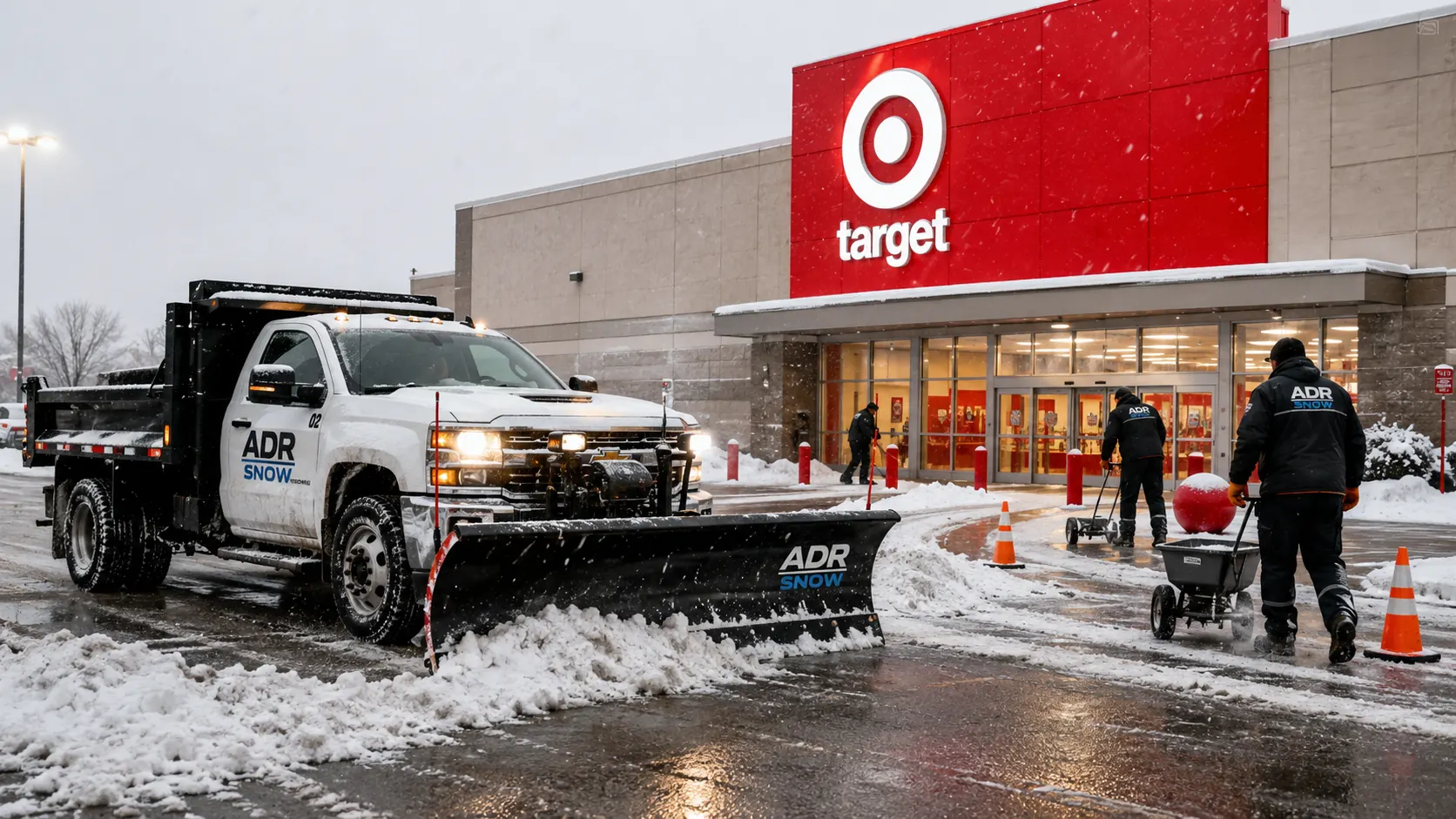
National retail
Target
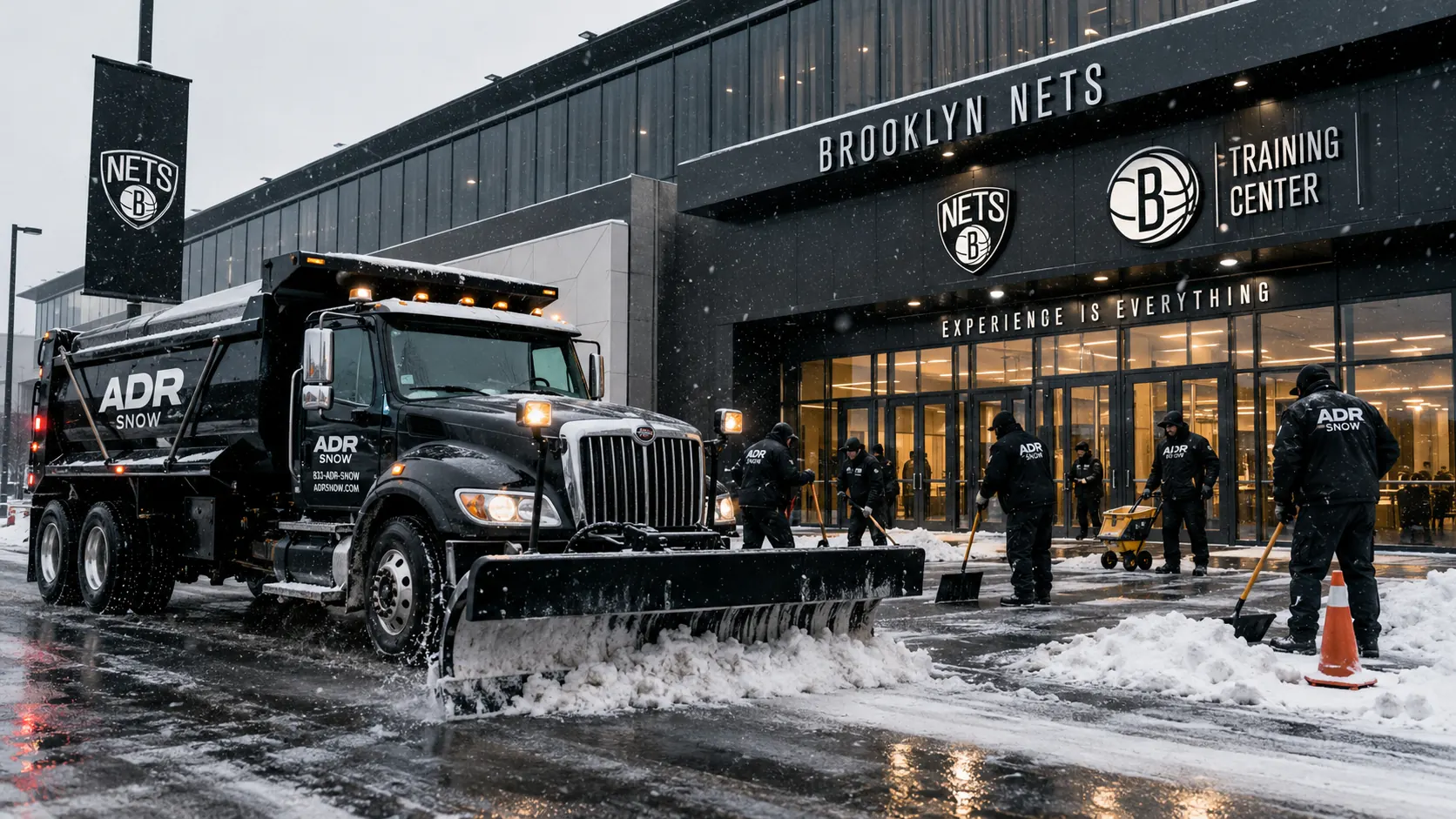
Sports and entertainment
Brooklyn Nets Training Center
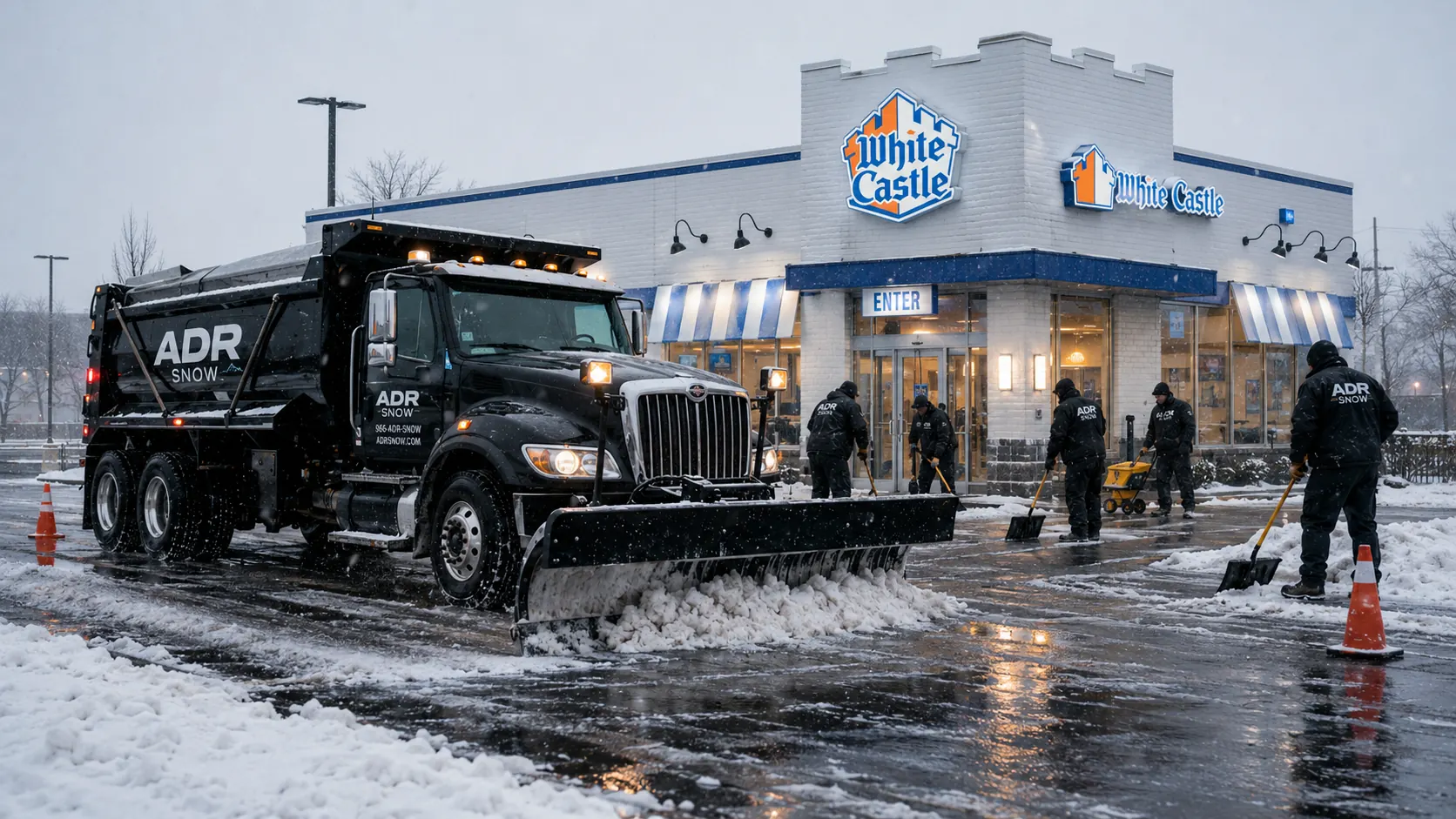
Quick-service restaurant
White Castle
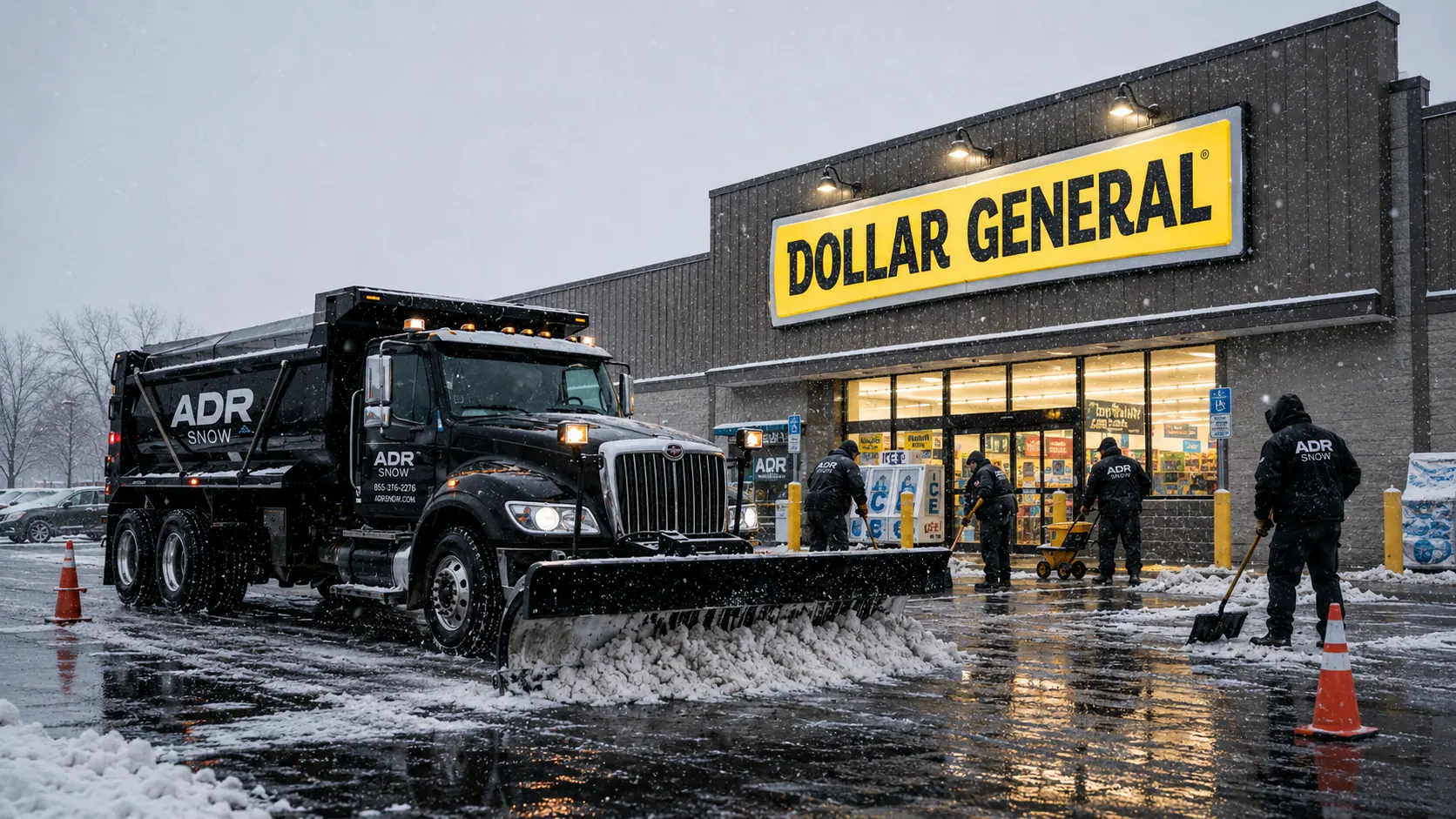
Retail chain
Dollar General
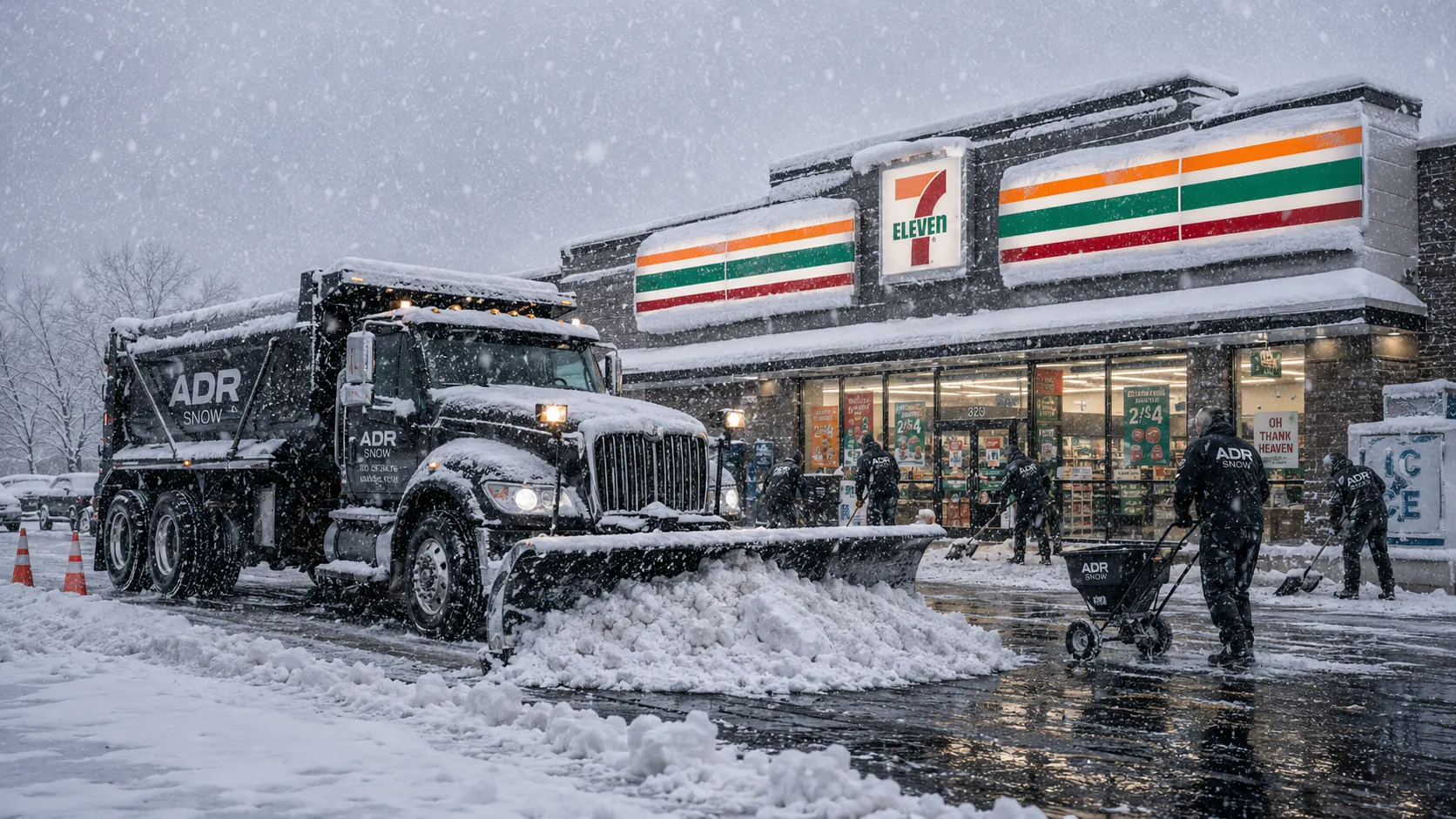
Convenience chain
7-Eleven
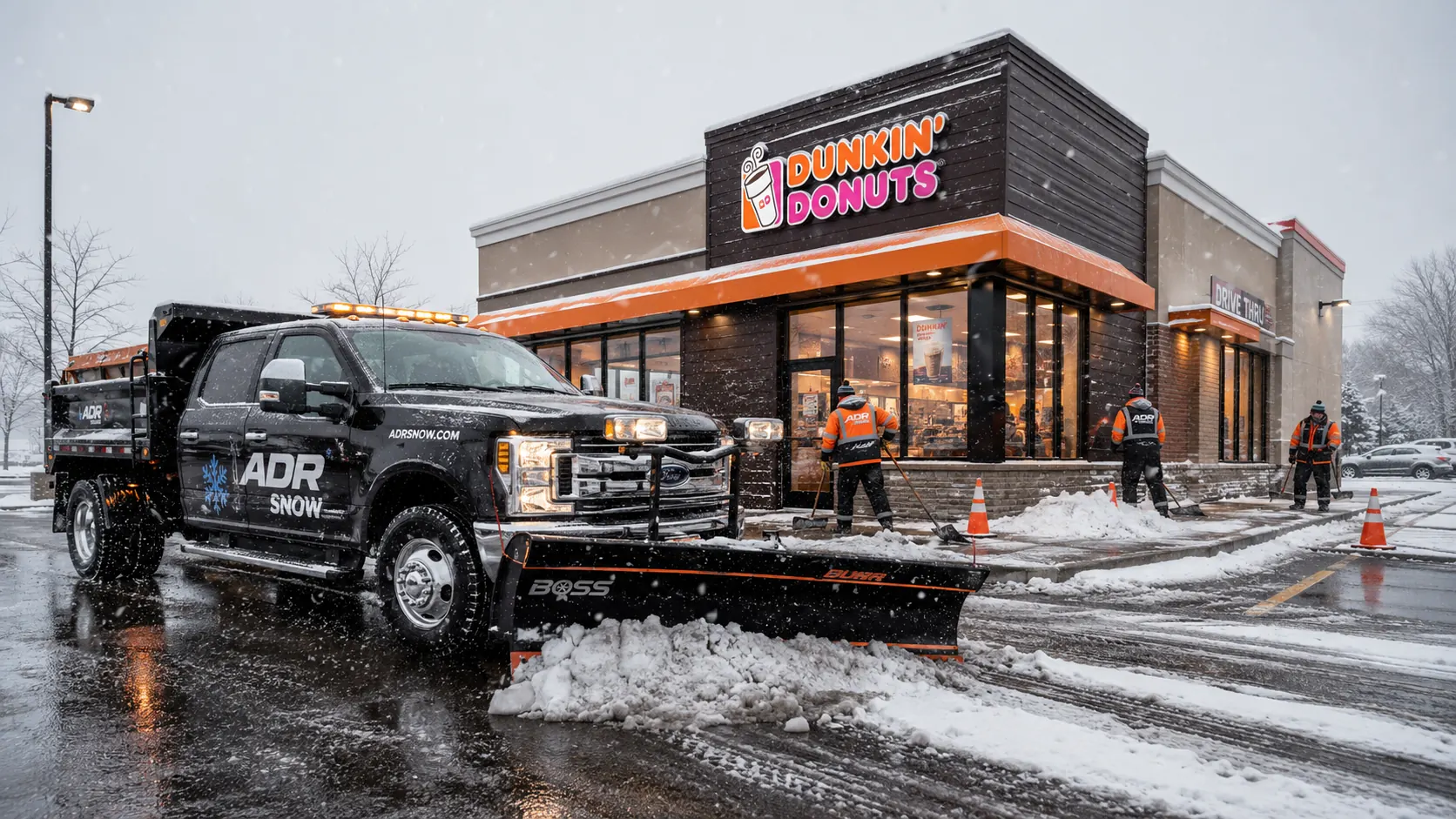
Quick-service restaurant
Dunkin'
Client sites shown with permission. Full client list shared under NDA.
Where we do it
Active coverage across the Northeast.
Each state has its own coverage page with county-level detail, local regulations and dispatch information.




Contract options
Five ways to contract. One that fits.
Every contract model is engineered for a specific property profile. Pricing on request, structure on consultation.
01
Per Hour
Billed by labor and equipment hours on site. Best for properties with unpredictable event sizes or one-off requests.
02
Per Push
Flat fee per event over a defined trigger depth. Predictable cost per storm with no hourly accounting.
03
Seasonal Flat Rate
One price for the entire winter, regardless of event count. The most common contract for multi-site portfolios.
04
Custom
Hybrid structures for portfolios with mixed property types, tiered SLAs, or specific liability requirements.
05
Emergency Call-Out
On-demand response for properties without an active seasonal contract. Subject to crew availability.
Common questions
Questions property managers actually ask.
How is a snow push different from regular plowing?
A truck plow clears a narrow path per pass. A pusher is a wide box blade on a loader or skid-steer that moves two to four times the volume per pass. Pushes are the answer when truck plowing alone would push past your opening time.
At what property size does pushing become necessary?
There is no hard line, but anything above three acres of clearable surface usually needs pusher equipment to hit the operating window. Below that, trucks are fine. The pre-season walk-through settles the equipment mix per site.
Are pushes priced differently than plowing?
Yes. Pushes cost more per hour but deliver a much lower cost per square foot cleared. For large-format properties the math almost always favors pushing. The per-acre rate is locked in the schedule before the season starts.
Can pushing and plowing run on the same property?
Often. A typical big-box retail account uses pushers for the main lot and truck plows for entries, drive lanes and tight curb work. Both lines sit in the same contract, priced separately so CAM and procurement reporting stay clean.
What cycle data do you report after each event?
Total area cleared, cycle minutes, equipment hours and operator hours, recorded per pass and rolled into the event report. Procurement teams running vendor scorecards get the same data set every event, every property. Standardized, no narrative.
How does pushing integrate with the other services?
It does not run as a separate vendor relationship. Pushing, plowing, shoveling, salting and de-icing all sit on the same contract, under the same dispatch, under one account manager. You deal with one team, not five.
What if a property exceeds the equipment capacity in a single event?
Surge capacity is priced in advance. The schedule defines a threshold and the surcharge for additional equipment. We notify you before the surge crew rolls and confirm the cost against the schedule. No pricing conversations during a storm.
Sign before November
Get your commercial snow contract signed before the season starts.
Once the first storm hits, our crews respond first to properties already under contract.
Priority dispatch
First to the site once the storm starts.
Fixed season price
Locked at signing with no storm-day markups.
Dedicated crew
The same operators on your property through every event.
COI at signing
Insurance certificate delivered along with the contract.
Talk to our team
Get a proposal in one business hour.
Two fields. Twenty seconds. A real person calls back within an hour during winter.