
Commercial snow removal for managed properties that run out of room to stack snow safely.
Loaders and dump trucks running overnight cycles, off-site disposal with manifests, parking inventory back at full capacity before the property opens. The removal trigger is set in the contract and the cost is set in the schedule, so there is no negotiation at 2 AM during a storm.
Selected by national accounts for snow removal across the Northeast




What it is
Snow Removal for commercial properties.
Snow removal is the next tier of service beyond plowing. Where plowing pushes accumulation to a stack zone on the property, removal physically loads that accumulation into trucks and hauls it off site. For property managers, the distinction matters because removal is where parking inventory is restored and CAM cost allocation becomes more complex.
Read the full explanation
Commercial removal becomes necessary when stack capacity exhausts, when accumulation blocks parking inventory revenue, when the property has zero tolerance for on-site snow for safety, aesthetic, regulatory or insurance reasons. The trigger is rarely the storm itself. The trigger is the operating constraint of the property.
Our removal operations run loaders, skid-steers and dump trucks in coordinated overnight cycles. A typical operation runs between 11 PM and 5 AM to clear the property before opening hours. Disposal sites are pre-arranged across the coverage area, with manifests delivered to the property file for sites under chain-of-custody requirements.
Inside the master agreement, removal sits as a defined trigger inside the plowing contract or as a standalone line item priced per cubic yard or per event. The trigger threshold is written into the schedule before the season starts, so property managers do not negotiate emergency rates after the storm. Procurement teams get cost predictability they can carry into the annual budget.
For multi-site portfolios, removal is the workstream that distinguishes mature vendors from transactional ones. A vendor that scopes removal contractually and dispatches it operationally is different from one that improvises. Portfolio-wide removal performance is one of the variables sophisticated property management groups score during vendor evaluation.
Who it is for
Property types where snow removal is the contract.
Urban retail and high-traffic locations
Properties where every parking space generates revenue and on-site stacks cannot occupy inventory through the season. Tenants underwrite parking access into their leases, and property managers defend that access through documented removal cycles.
Properties with limited stacking capacity
Tight urban lots, small footprint banks, multi-tenant properties with shared lanes and corporate properties with limited curb access. Stack capacity is exhausted within the first one or two events of the season.
Compliance and insurance-driven sites
Properties under municipal ordinances or insurance requirements that prohibit on-site snow accumulation past defined depths. Removal is contractually mandatory and disposal manifests are part of the standing requirement.
Property management groups with portfolio standards
Groups with portfolio-wide service standards that prohibit visible snow accumulation across any property. Removal cycles standardized across the portfolio for brand and operating consistency.
Healthcare, hospitality and education campuses
Properties where pedestrian flow and access aesthetics are operational requirements, not nice-to-haves. Removal preserves the visitor experience and the regulatory profile.
Properties switching to removal post-storm
Standing seasonal contracts that switch to removal mode automatically after large events exceed normal stack capacity. The contract handles the transition without an emergency call from the property manager.
How we do it
The operating protocol behind every snow removal contract.
The same standard operating procedure runs across every account, from a 50-property portfolio down to a single branch.
- 01
Stack-threshold monitoring with contractual triggers
Stack depth and footprint monitored across the season. Removal triggered automatically when defined contractual thresholds are reached. Property managers receive trigger notifications before operations dispatch, with cost confirmed against the contract schedule.
- 02
Overnight operations window with staged crews
Removal scheduled for overnight cycles, typically 11 PM to 5 AM, to preserve daytime parking inventory and tenant access. Crews dispatched ahead of the window with full equipment complement staged on site.
- 03
Coordinated loader-and-truck cycles
Loaders feed dump trucks staged at the stack zone. Trucks haul to permitted disposal sites under standing agreements. Cycle time monitored and documented per truckload. High-volume properties run multiple loader-truck pairs simultaneously.
- 04
Disposal manifests and chain-of-custody documentation
Manifests delivered to the property file for sites under municipal disposal requirements, insurance reporting requirements or internal compliance protocols. Each load tracked from origin to disposal site.
Client platform
Property teams follow crew activity and site updates during active events.
At the client, in the storm
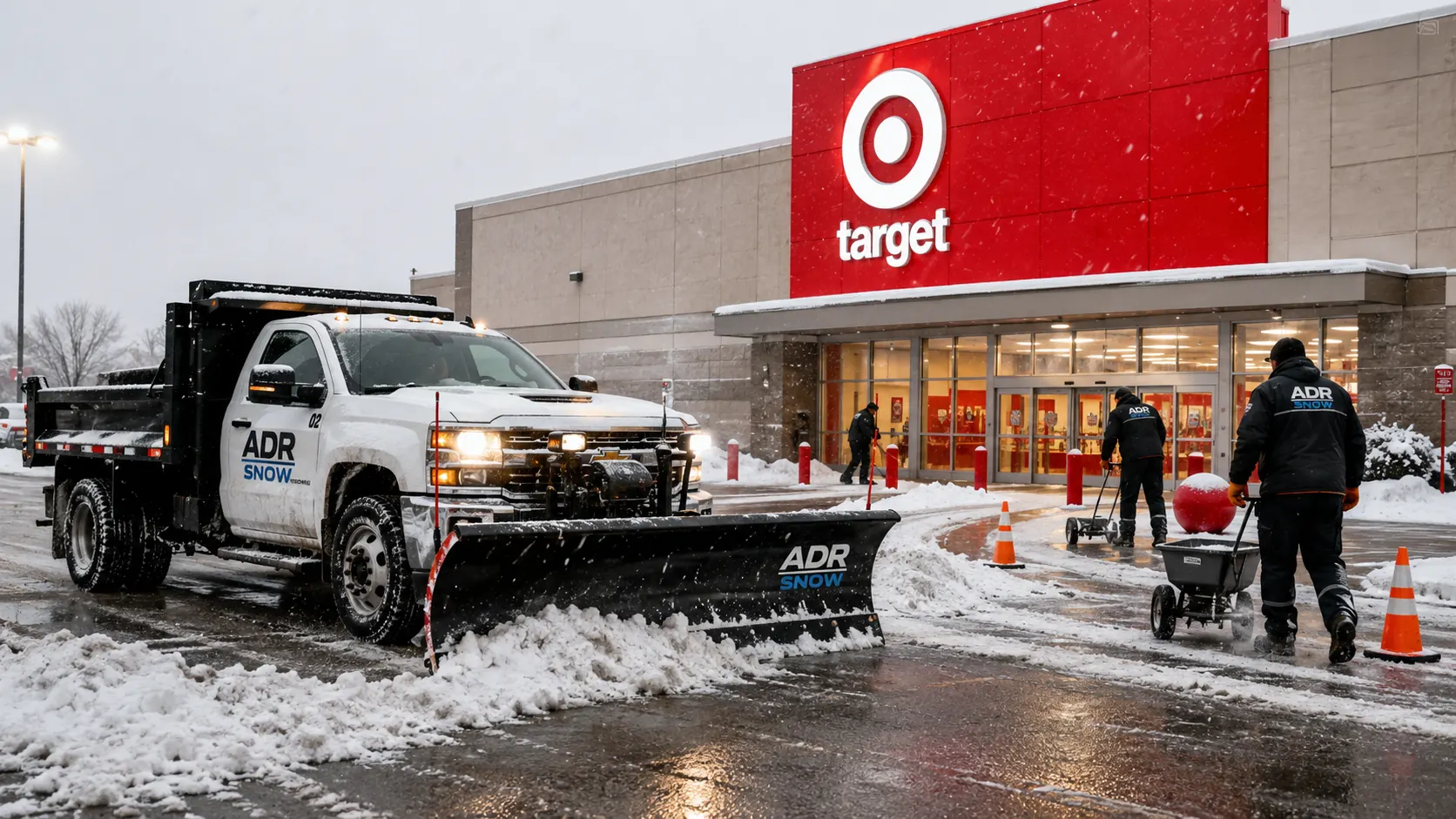
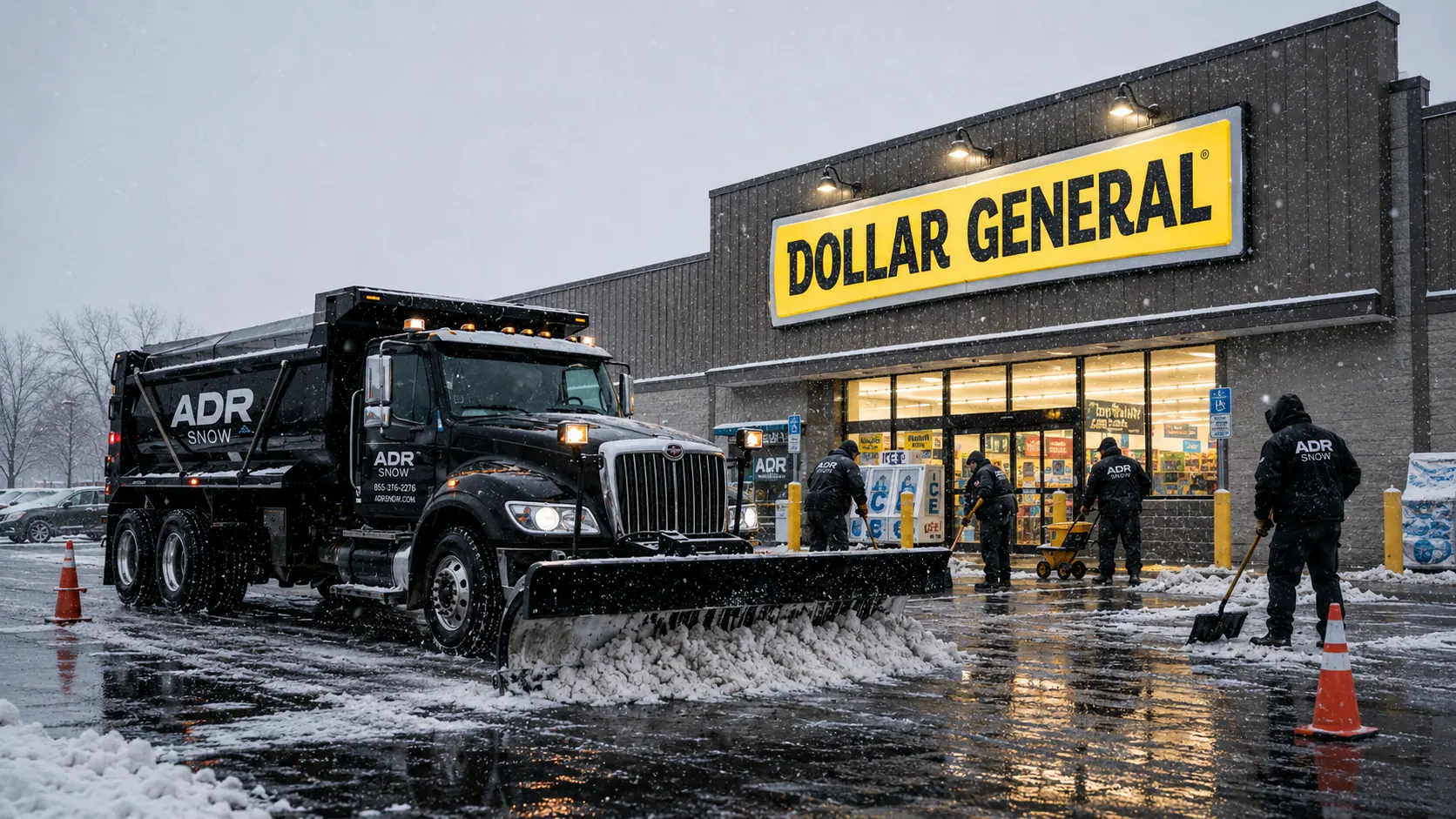
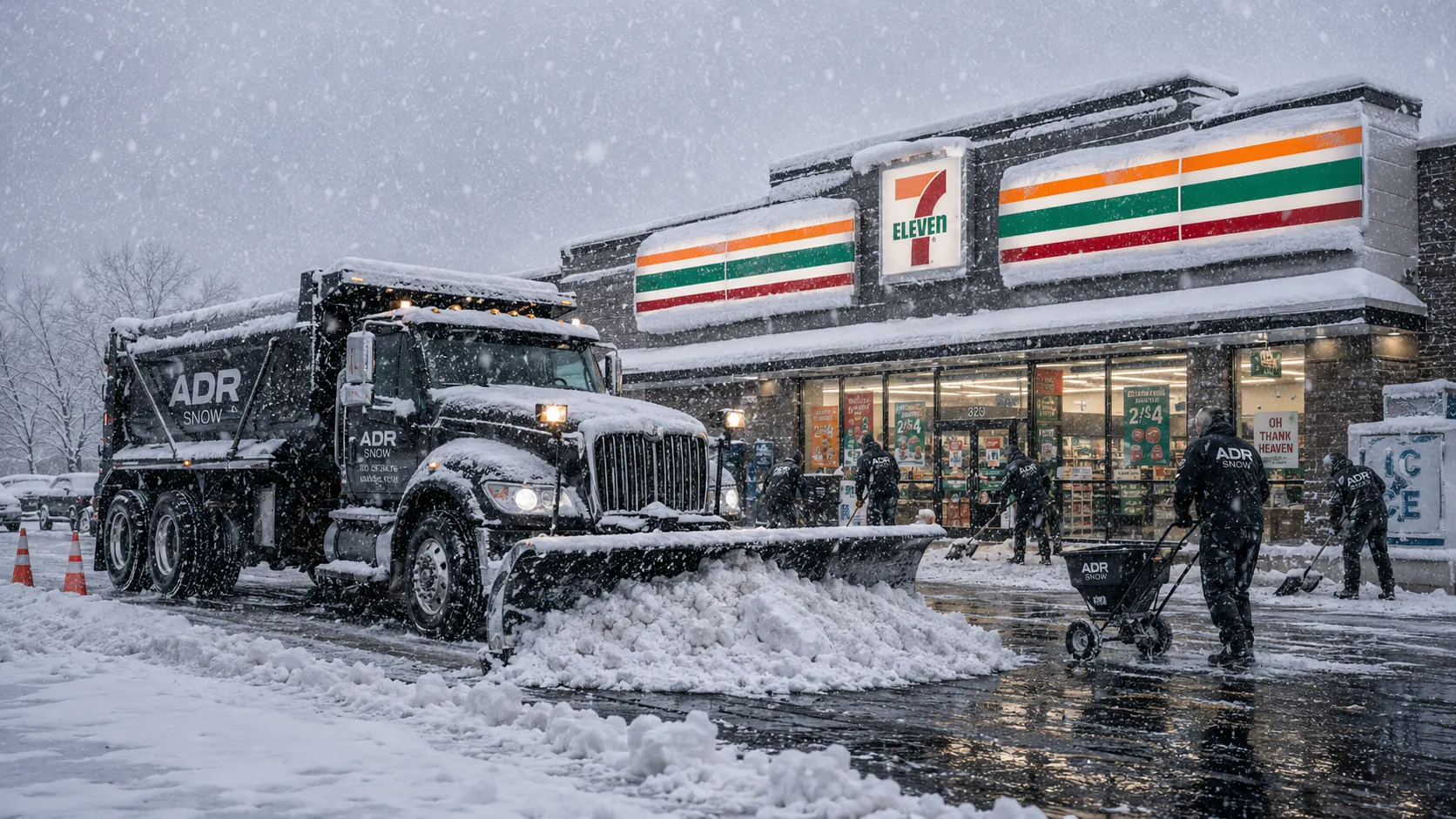
Commercial properties across the Northeast where ADR Snow crews work during winter events.
Field work at national accounts and managed properties, captured during real snow events.

Pharmacy chain
CVS Pharmacy
National retail
Target

Sports and entertainment
Brooklyn Nets Training Center

Quick-service restaurant
White Castle
Retail chain
Dollar General
Convenience chain
7-Eleven

Quick-service restaurant
Dunkin'
Client sites shown with permission. Full client list shared under NDA.
Where we do it
Active coverage across the Northeast.
Each state has its own coverage page with county-level detail, local regulations and dispatch information.




Contract options
Five ways to contract. One that fits.
Every contract model is engineered for a specific property profile. Pricing on request, structure on consultation.
01
Per Hour
Billed by labor and equipment hours on site. Best for properties with unpredictable event sizes or one-off requests.
02
Per Push
Flat fee per event over a defined trigger depth. Predictable cost per storm with no hourly accounting.
03
Seasonal Flat Rate
One price for the entire winter, regardless of event count. The most common contract for multi-site portfolios.
04
Custom
Hybrid structures for portfolios with mixed property types, tiered SLAs, or specific liability requirements.
05
Emergency Call-Out
On-demand response for properties without an active seasonal contract. Subject to crew availability.
Common questions
Questions property managers actually ask.
How is removal priced compared to plowing?
Separately. Different equipment, different hours, different disposal fees. Most contracts bundle a fixed plowing component with a per-event or per-cubic-yard removal trigger. The trigger is set in the schedule before the first storm, so you are not negotiating during the season.
Where does the snow actually go?
Permitted disposal sites we have standing agreements with across the region. If your property needs chain-of-custody paperwork, the manifest comes back with the event report. The disposal route is mapped before the storm, not improvised at 2 AM.
How long does a removal operation take?
Four to eight hours overnight, on the typical property. Lot size, accumulation depth and disposal site distance drive the math. Large-format sites sometimes run two or three consecutive nights after a major event. We give you the estimate in the pre-season site plan.
Can removal be triggered mid-storm?
Yes, on request. The default is post-storm so loaders are not competing with active plowing. Properties that cannot wait can contract in-storm removal with the surcharge set in advance. No mid-storm pricing conversations.
What is the disposal manifest used for?
Municipal disposal compliance, environmental reporting and insurance documentation. The manifest shows where each load was deposited. Risk teams attach it to their compliance file. CAM reconciliations cite it as supporting documentation.
Does removal coordinate with shoveling and de-icing on the same site?
Yes. Multi-service contracts run all workstreams under the same dispatch. Removal happens overnight after shoveling and de-icing have already cleaned the surfaces, so the site record reads as one consistent event, not three separate visits.
Can removal cost be passed through to tenants as CAM?
In most multi-tenant commercial leases, yes, with the right documentation. We provide invoice formats and supporting service records that property teams can drop straight into the tenant reconciliation. No extra bookkeeping on your side.
Sign before November
Get your commercial snow contract signed before the season starts.
Once the first storm hits, our crews respond first to properties already under contract.
Priority dispatch
First to the site once the storm starts.
Fixed season price
Locked at signing with no storm-day markups.
Dedicated crew
The same operators on your property through every event.
COI at signing
Insurance certificate delivered along with the contract.
Talk to our team
Get a proposal in one business hour.
Two fields. Twenty seconds. A real person calls back within an hour during winter.