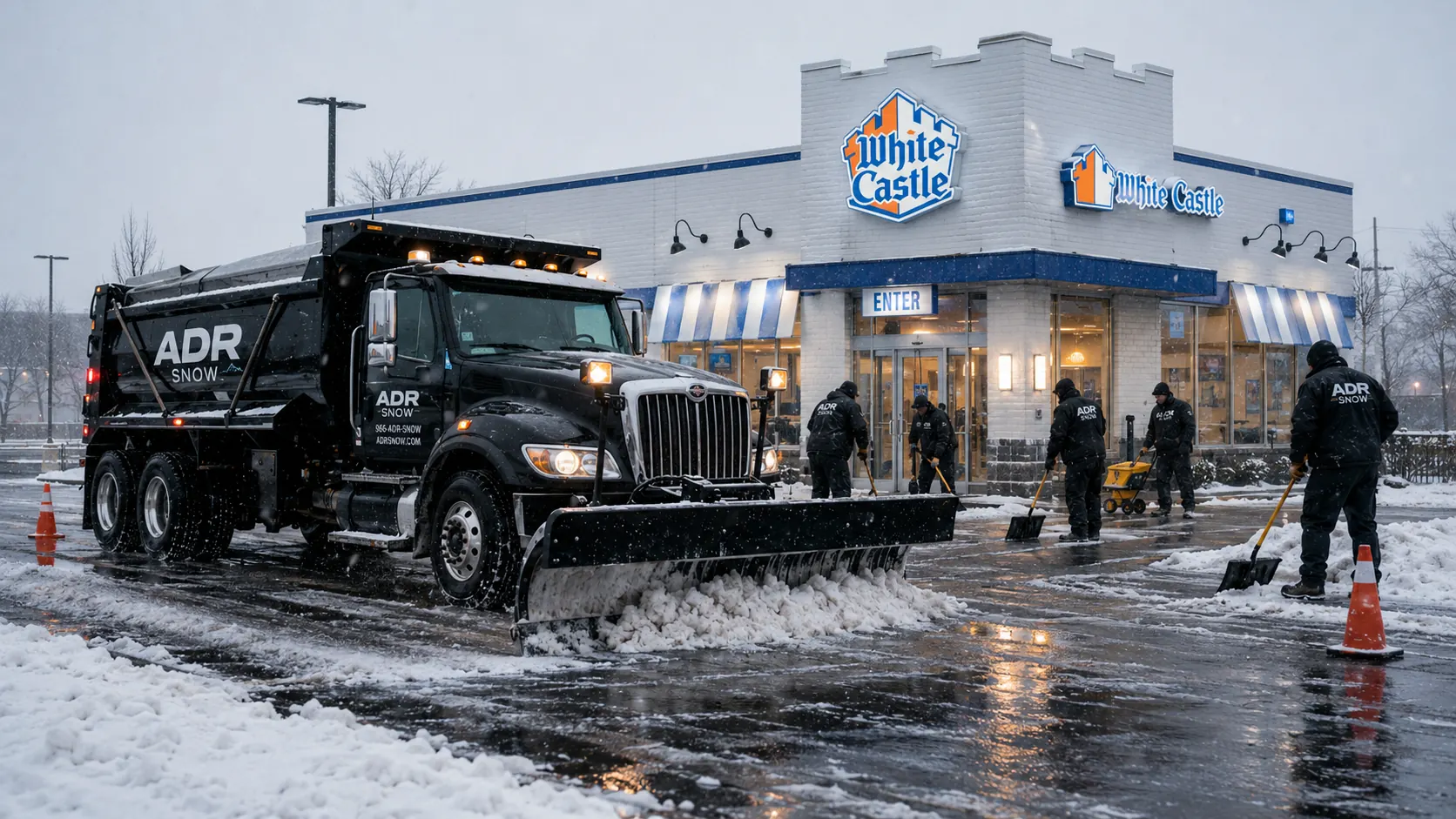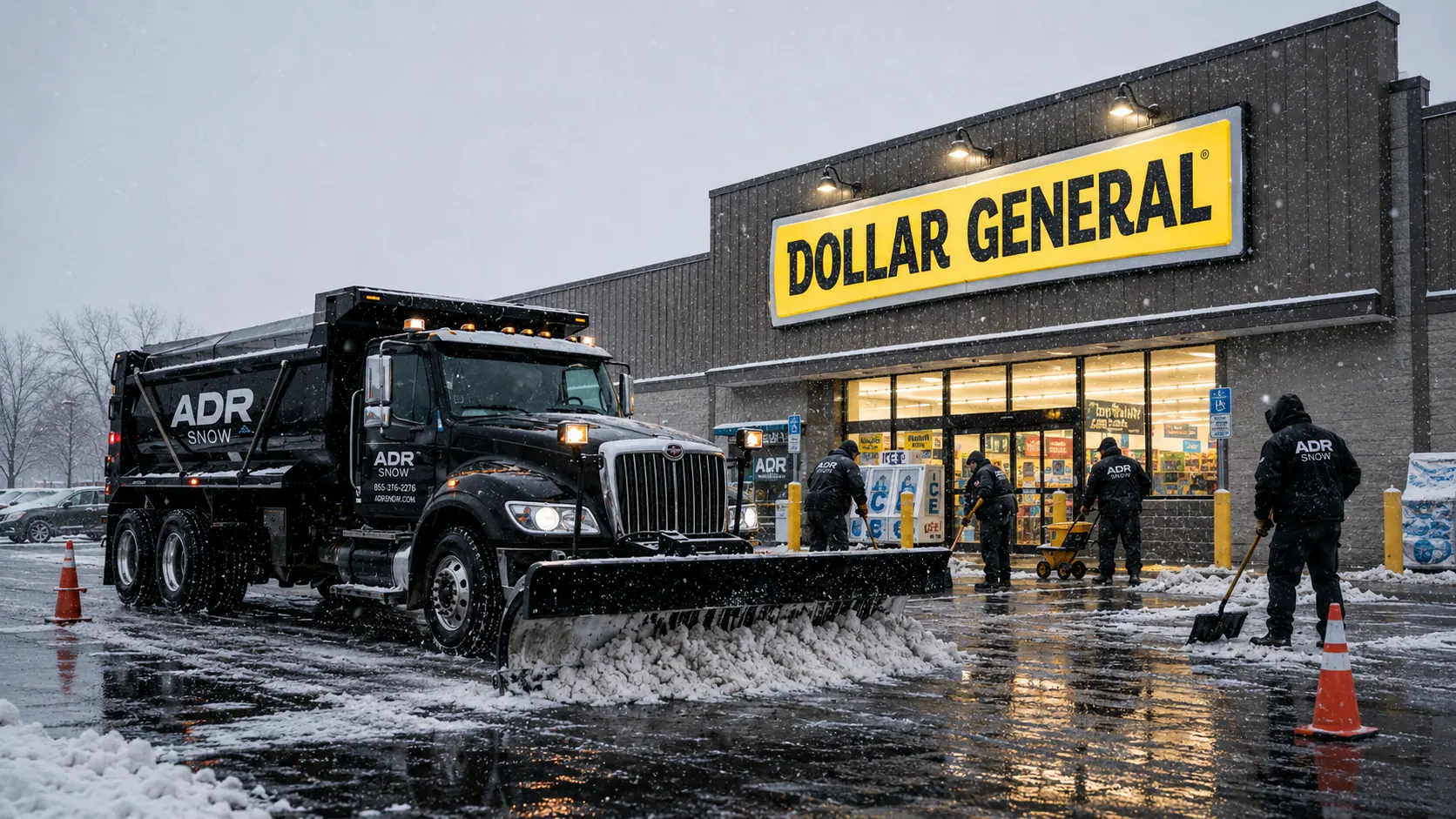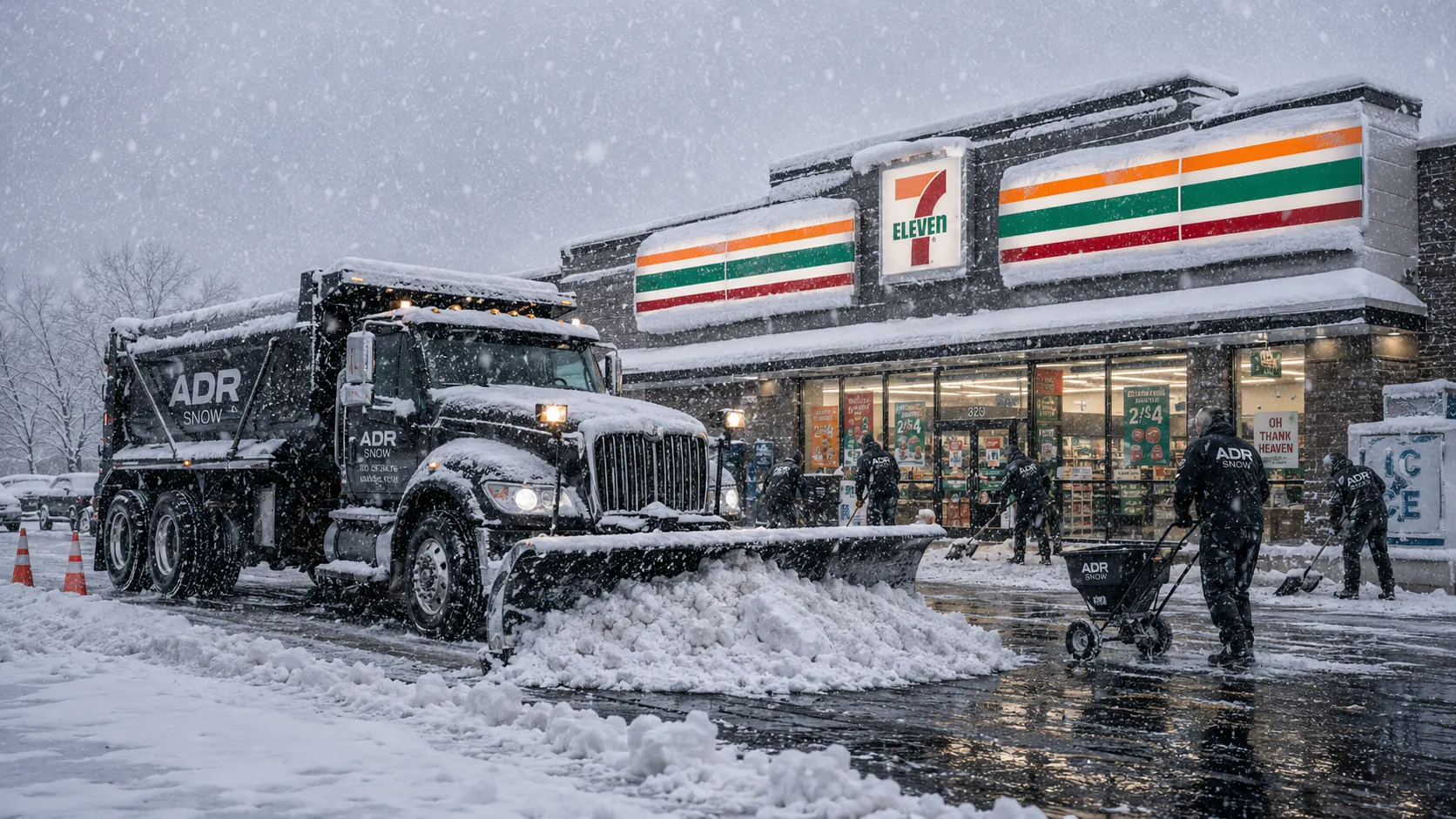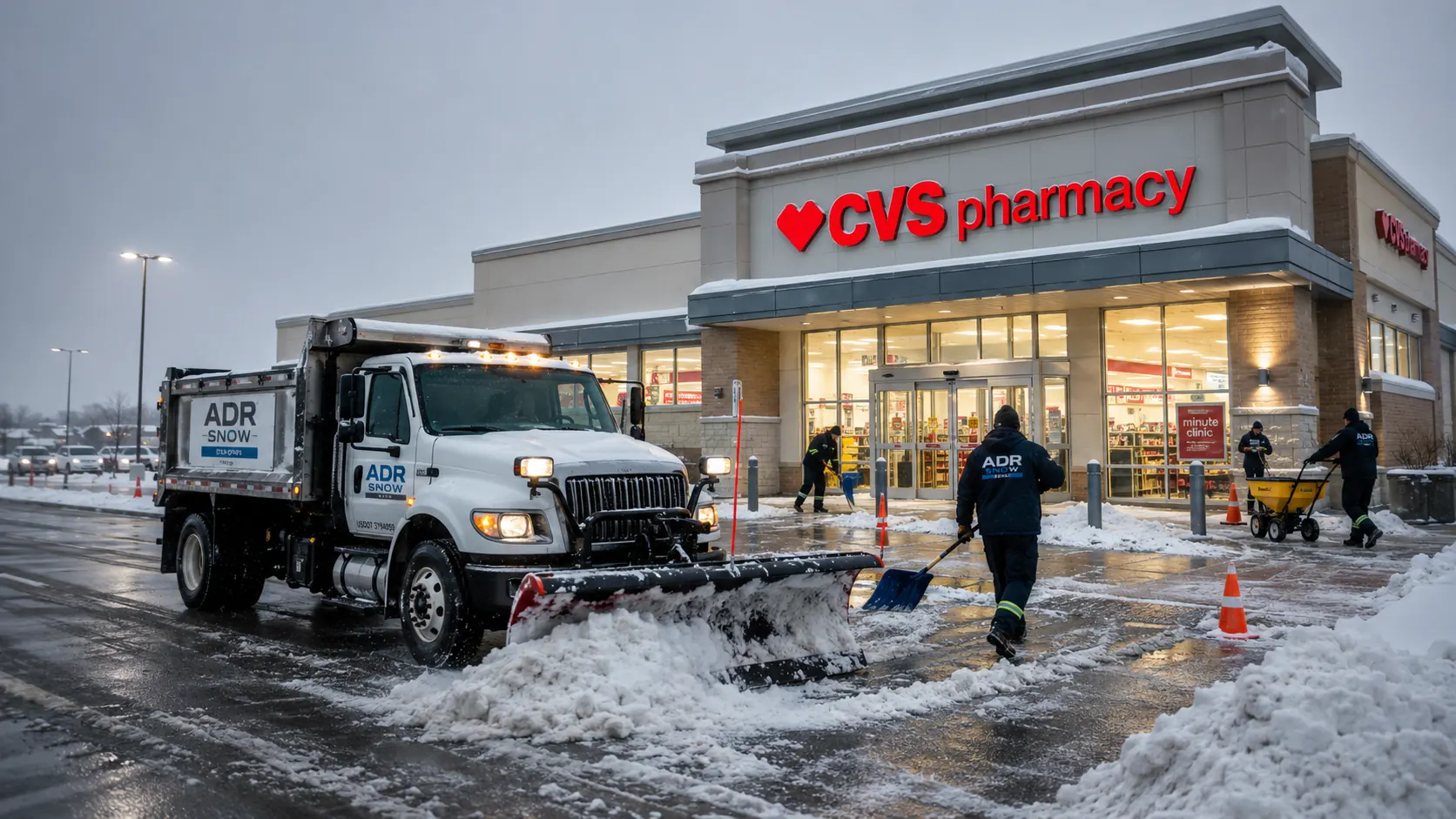
Black ice is a thin, transparent layer of ice that forms on pavement and walking surfaces under specific cold-weather conditions. The name is a slight misnomer. The ice itself is not black. It is so thin and clear that the dark pavement underneath shows through, making the surface look wet, or in many cases, look like nothing at all.
How it forms
Black ice forms when a thin film of liquid water freezes in place rather than running off, evaporating or accumulating into a recognizable layer. The most common sources are overnight refreeze of melted snow, condensation from humid air onto a cold surface, light rain that freezes on contact, and meltwater from drainage paths that crosses cold pavement.
Why it produces incidents
The risk is the absence of visual warning. Pedestrians and drivers approach the surface expecting wet pavement or clear pavement and instead find ice. Reaction time is too short to adjust, and the slip or skid happens at full walking or driving speed.
On commercial property, black ice is the condition behind a disproportionate share of incidents because property managers and staff who are responding to clear-looking surfaces have no signal to escalate treatment.
What the response looks like
Standard response is pre-treatment of high-risk zones based on forecast conditions, monitoring routines that catch forming patches before they produce incidents, and de-icing application that prevents the formation in the first place. None of these are storm-day services. They run between events and through cold-weather periods regardless of accumulation.
Operational note
ADR Snow Management runs commercial winter operations across New York, New Jersey, Connecticut and Massachusetts. If your property would benefit from a contract structured around the standards described above, the conversation starts with a callback.