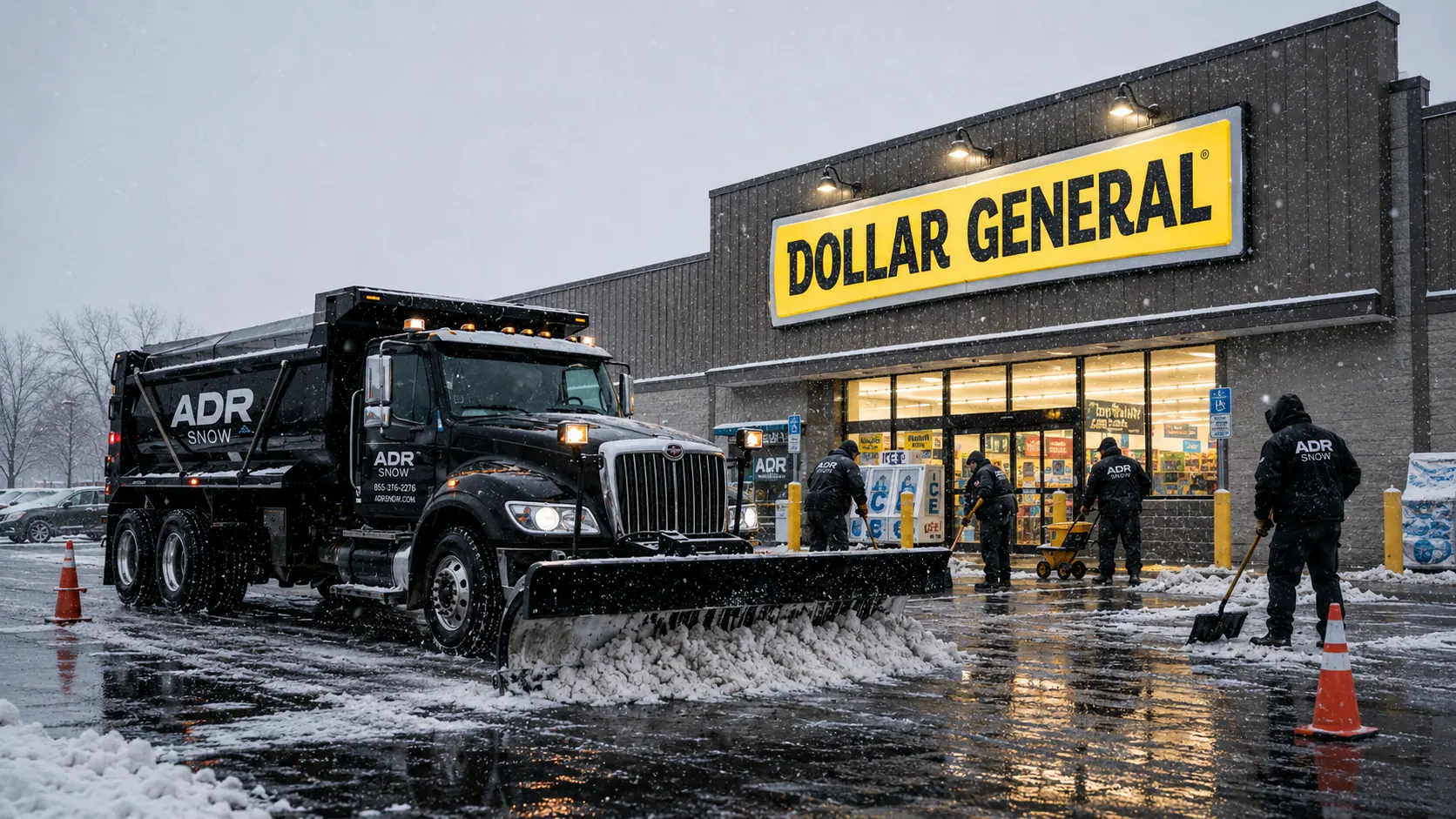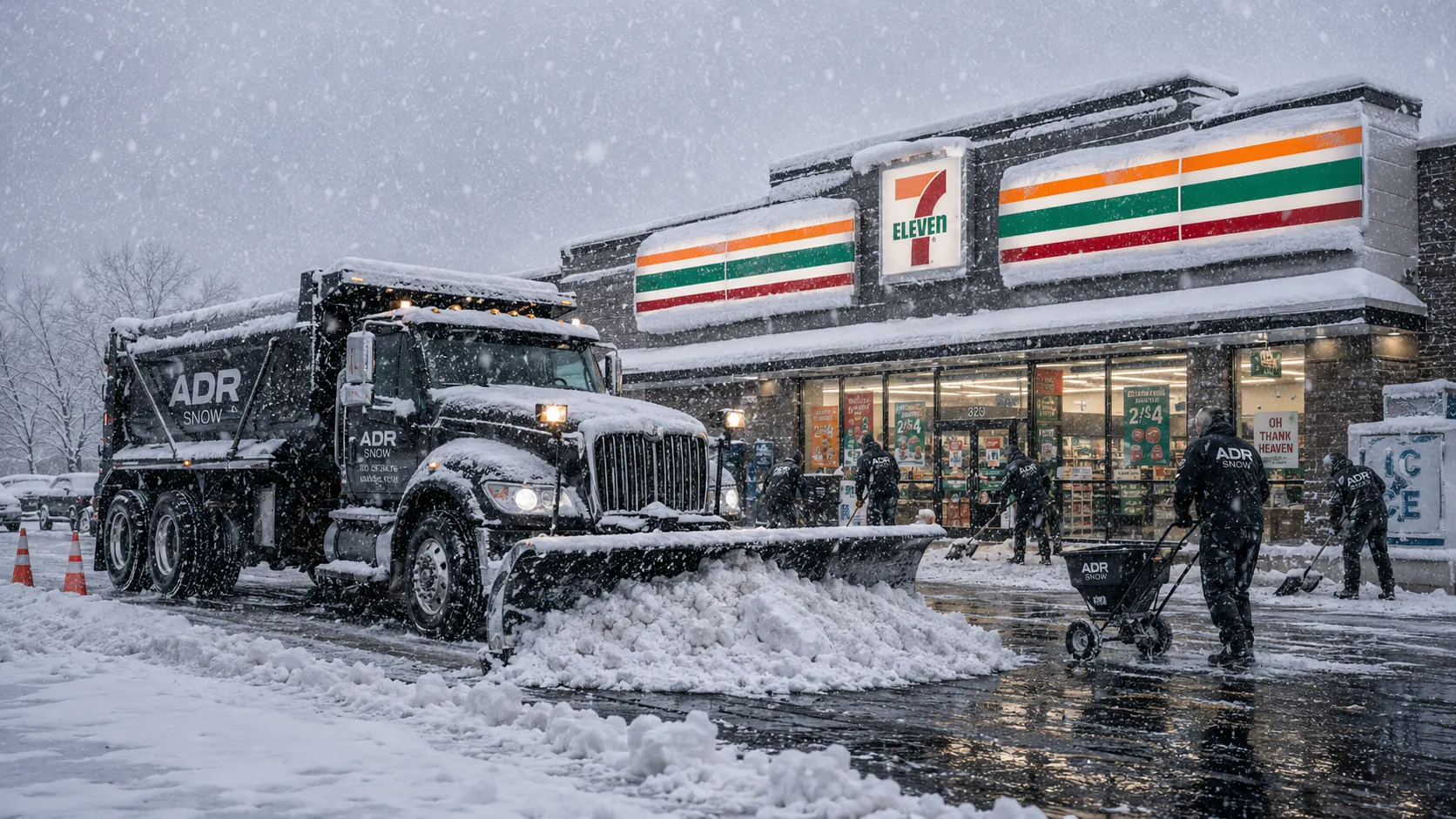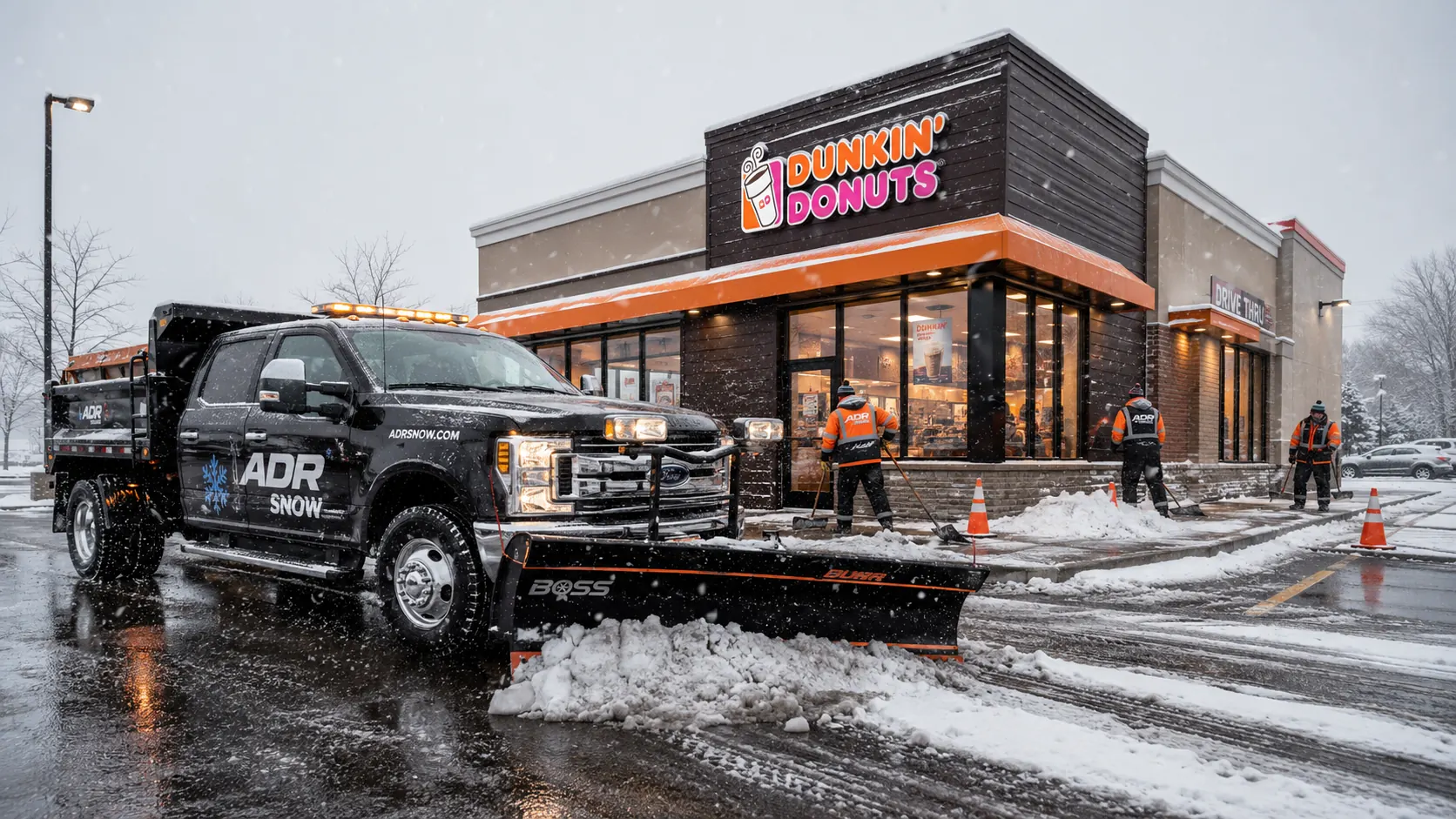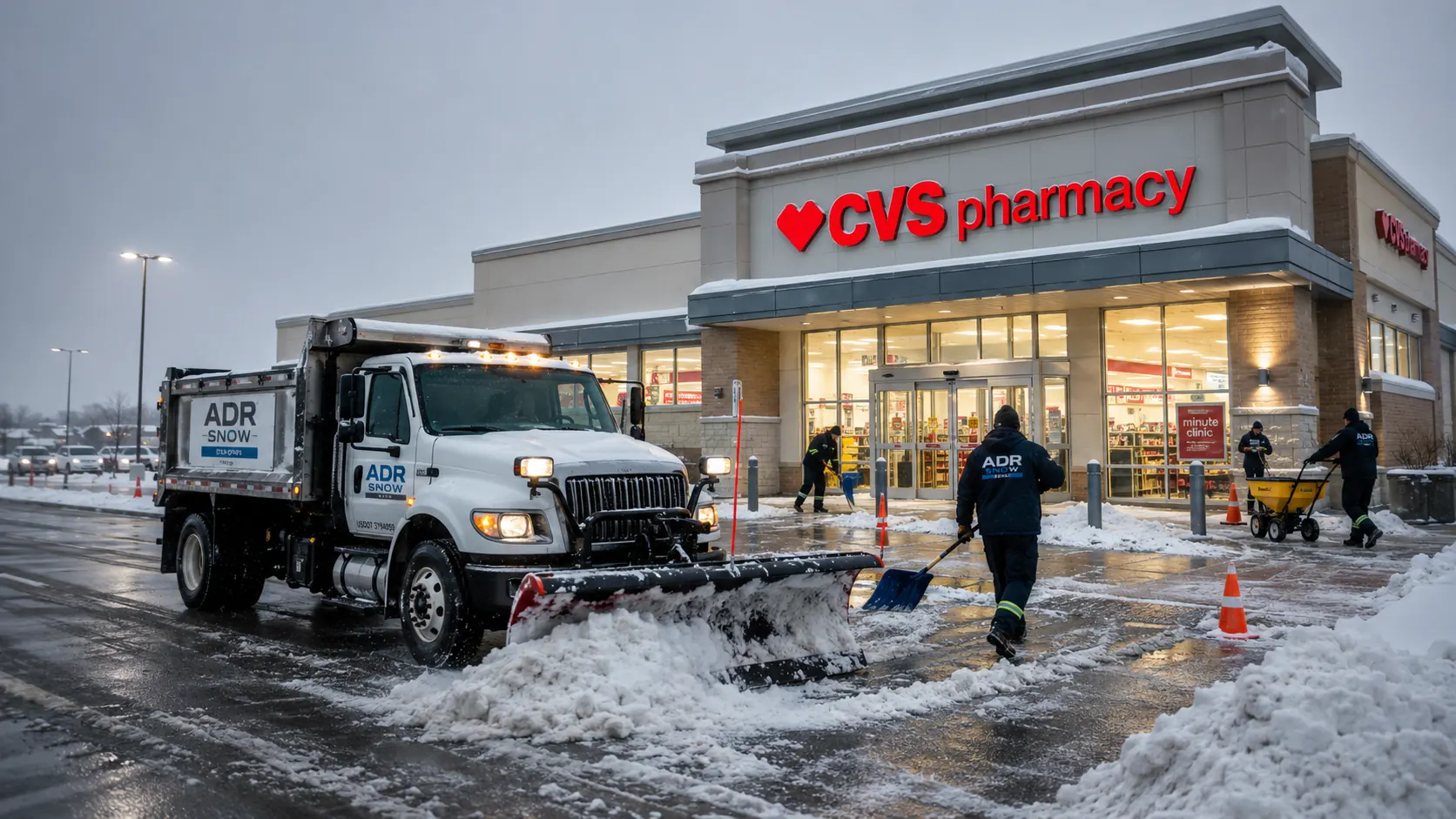
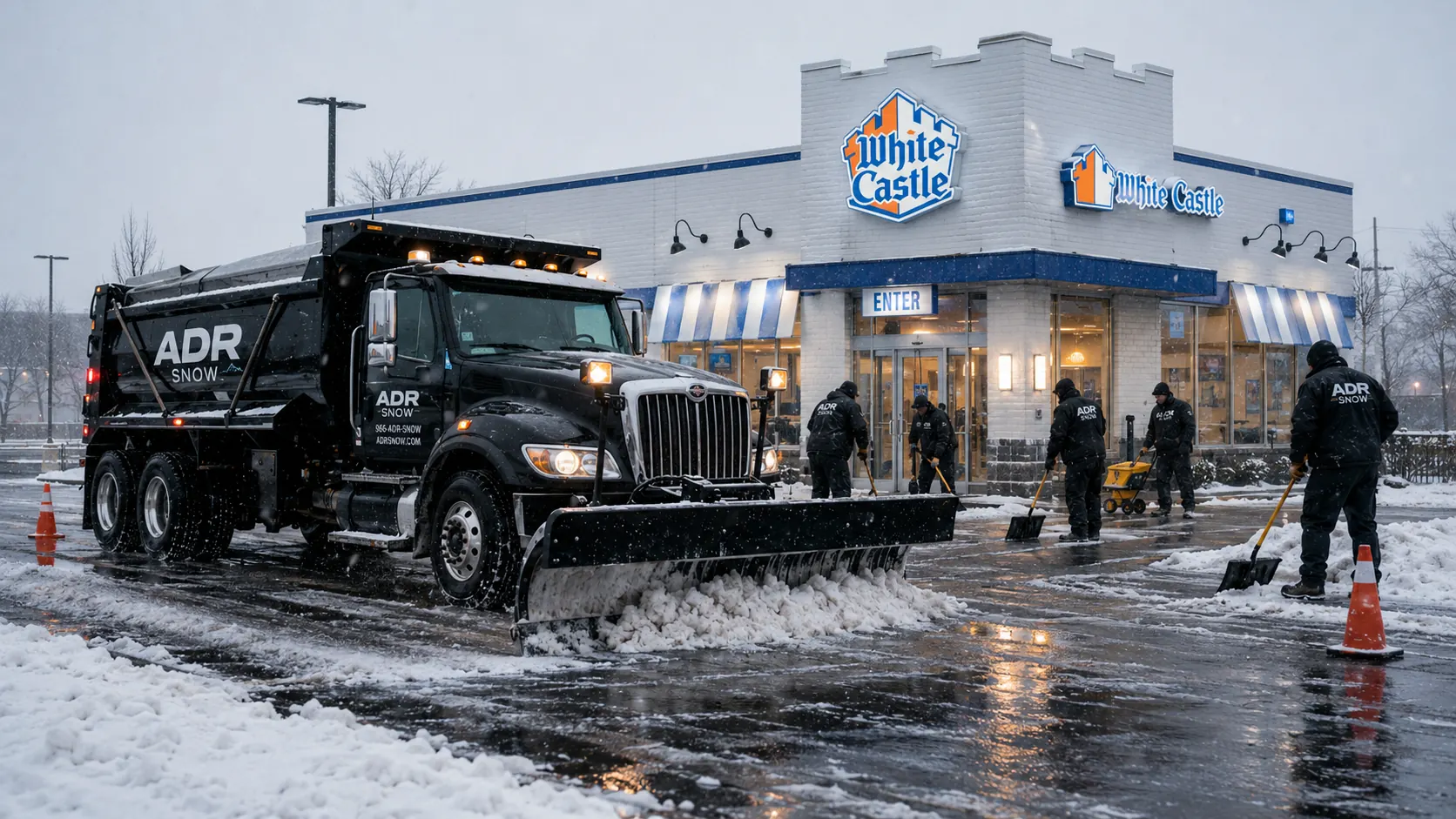
Almost every commercial winter accident report we have ever read tells the same five or six stories. A customer slips on a sidewalk that was cleared on a route timed wrong. An employee falls on a parking lot that refroze overnight after a clear-day clean-up. A delivery driver loses footing on a loading apron where the salt application ran short. The conditions vary; the underlying failures do not.
The most useful way to think about winter risk on a commercial property is not as a function of weather but as a function of operating windows. Storm windows. Refreeze windows. Post-storm windows. Shift-change windows. The accidents happen inside those windows when the property and the vendor are out of sync.
Where most incidents actually start
Three causes appear in nearly every incident review. First, surfaces that look cleared but are not, usually because clearing happened too early relative to ongoing accumulation or refreeze. Second, walkway routes that were scoped by the vendor for general use but did not account for the actual pedestrian pattern of the property. Third, areas where two services were supposed to overlap but neither vendor took the handoff.
Each of these is a documentation problem before it is an operational one. If the property has a written record of who cleared what, when and using what product, the incident still happens, but the claim profile is materially different.
What the documentation record actually buys you
A snow management contract that delivers time-stamped service records is not a marketing feature. It is the file that defends your property in the slip-and-fall claim that arrives nine months after the storm. The case is rarely about whether the property was perfect at the moment of the incident. It is about whether the property was operated reasonably across the conditions. The record is what proves the operation.
Operational note
ADR Snow Management runs commercial winter operations across New York, New Jersey, Connecticut and Massachusetts. If your property would benefit from a contract structured around the standards described above, the conversation starts with a callback.