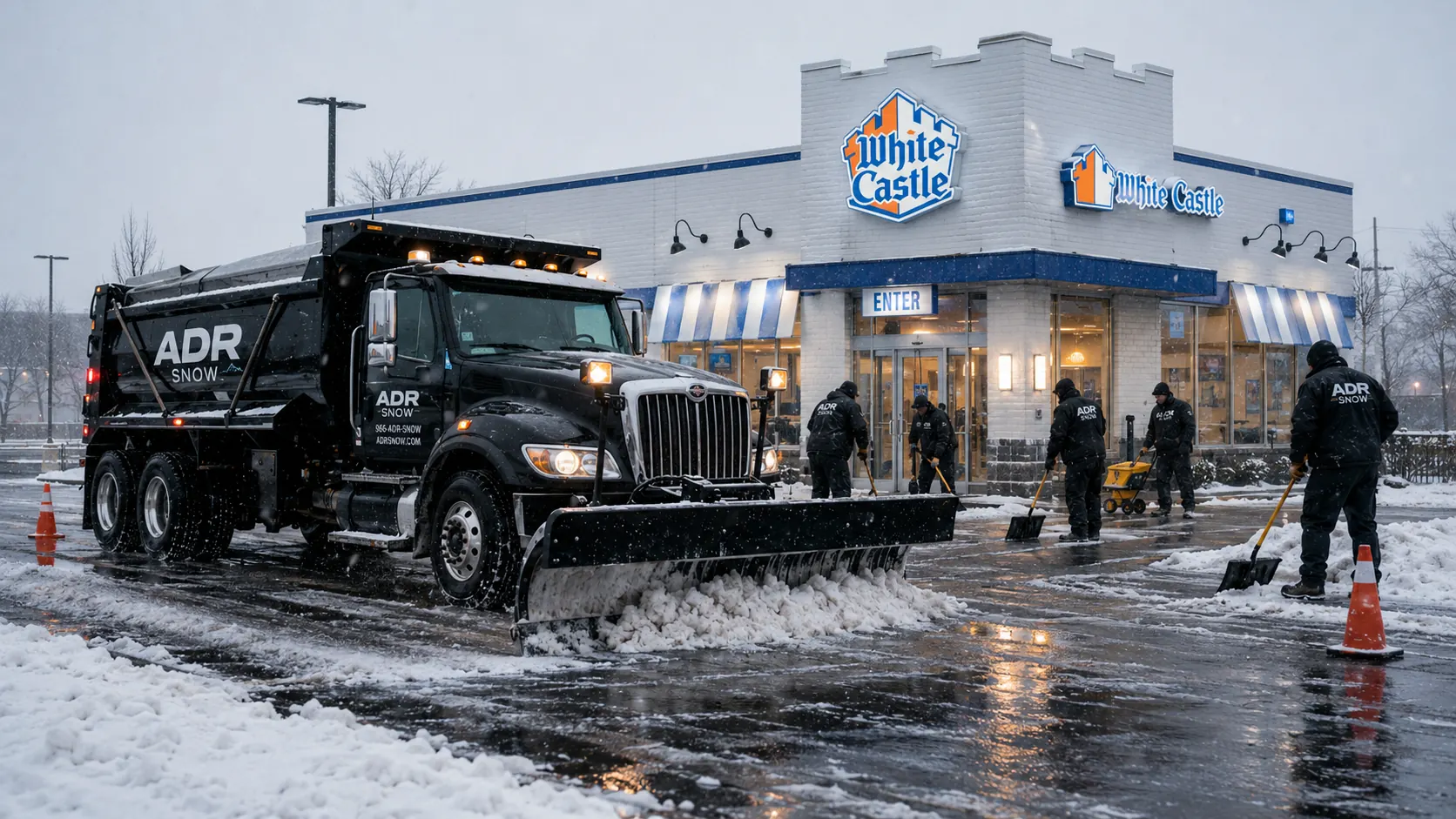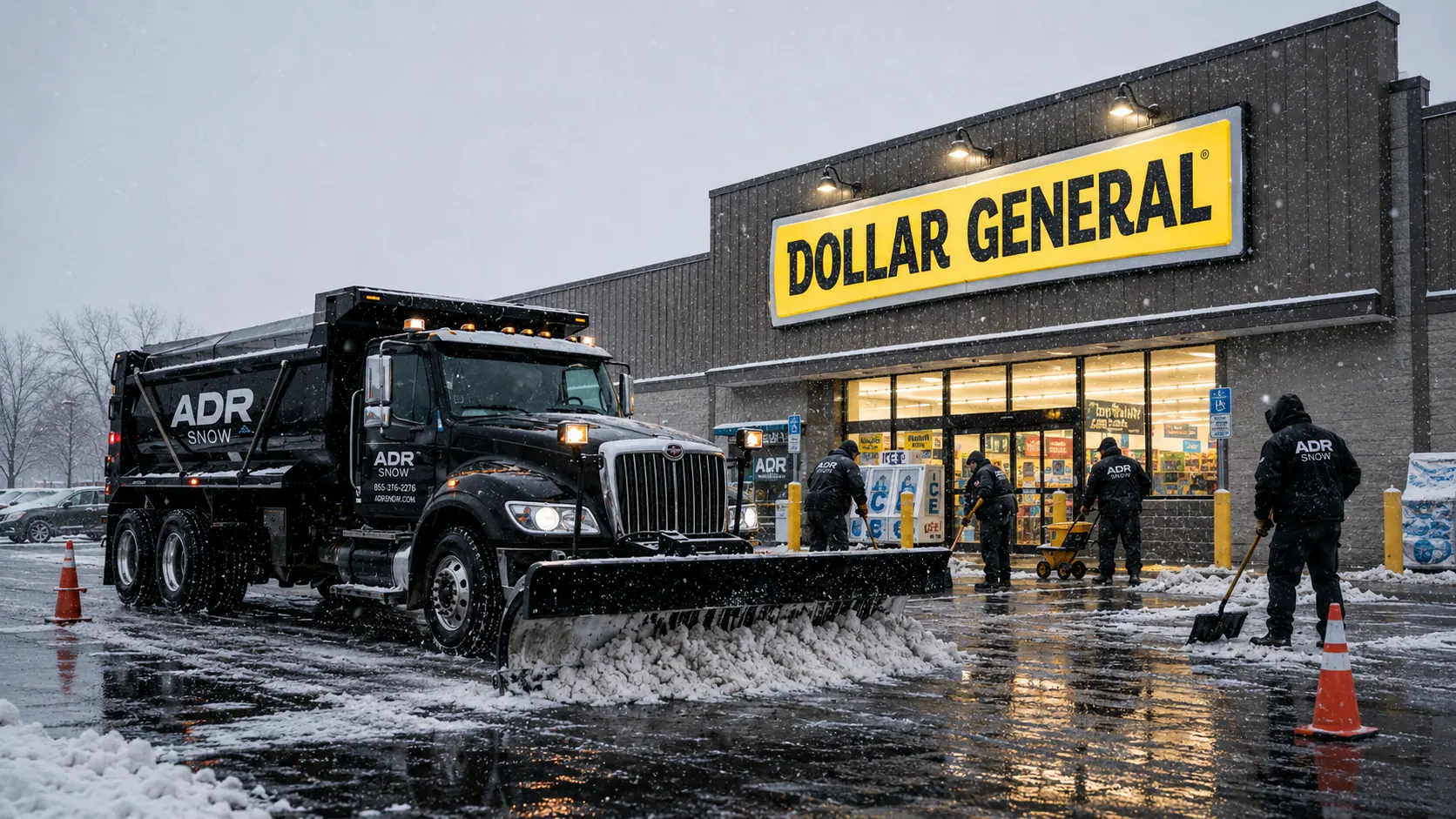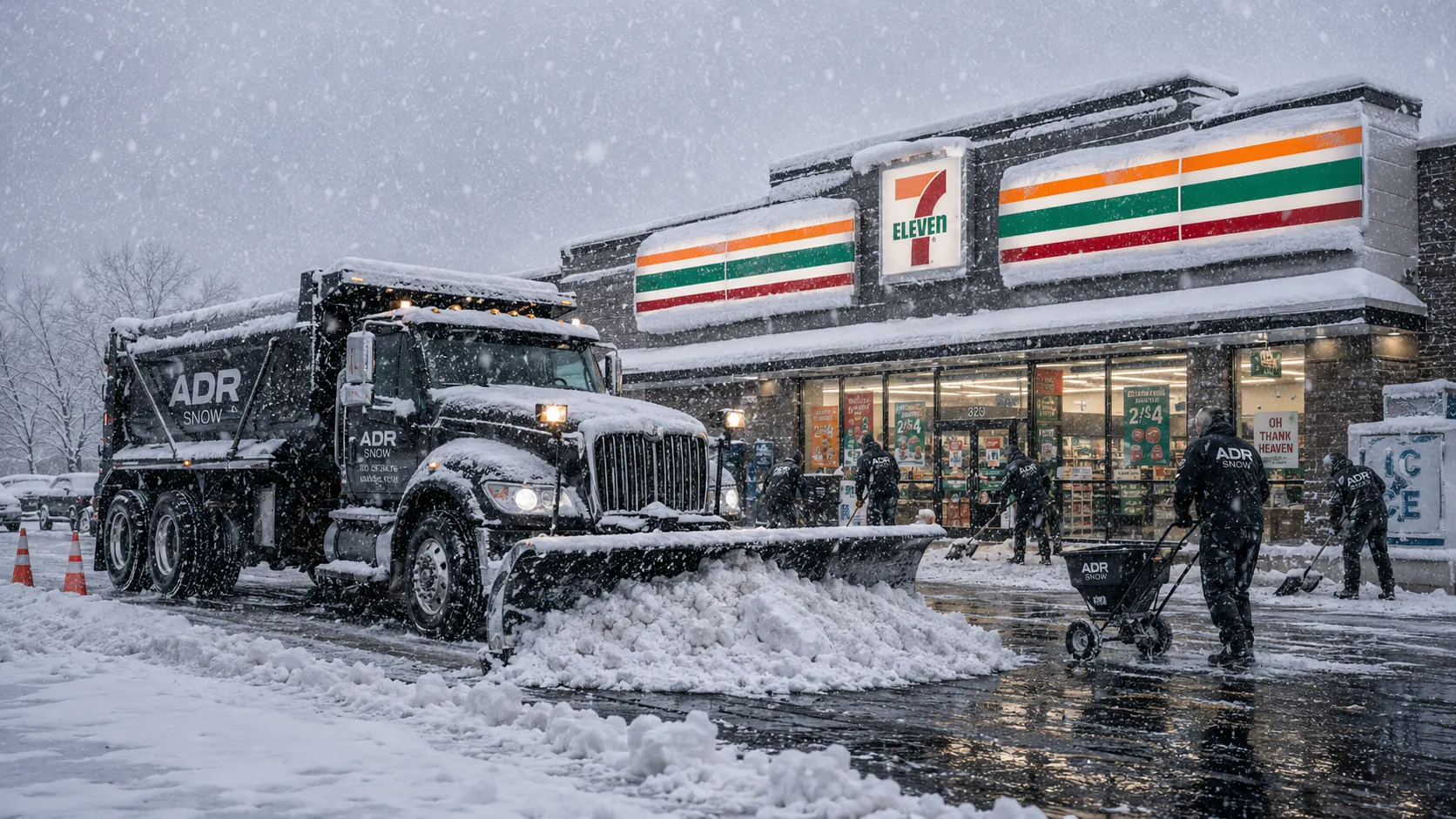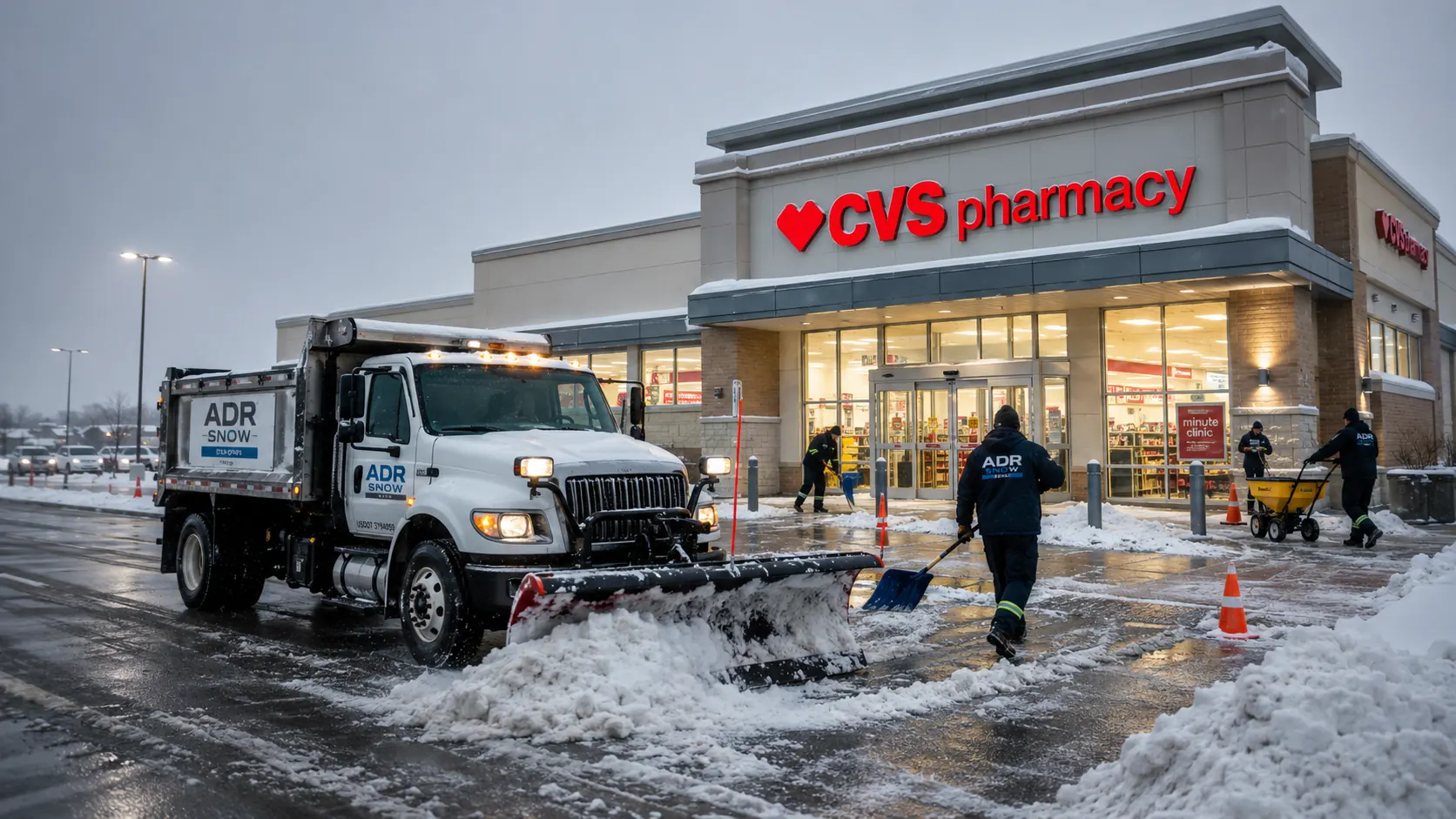

A winter safety checklist on a commercial property is not a poster on a wall. It is an operating routine, broken into three phases, that determines whether the property runs the season or absorbs it.
Before the season
Walk the property with your snow management vendor. Document trigger depths, route boundaries, stack zones, disposal logic and equipment access. Confirm certificates of insurance and compliance documentation. Brief property staff on how to flag conditions in real time during events. Update internal signage and any tenant communications.
Before each event
Confirm the forecast trigger with the vendor. Pre-treat high-risk zones with brine or de-icing chemistry. Stage any internal materials (caution signs, salt buckets, indoor matting) that property staff will deploy. Confirm dispatch coordination if your property has shift-based operations.
During each event
Property staff sweep entries on a routine schedule and document conditions. Vendor crews execute routes per contract. Communication channel open between site and dispatch. Photo documentation captured at intervals.
After each event
Final clear-down and salt application across pedestrian routes. Property walk-through to confirm conditions. Event report delivered for the property file. Any anomalies flagged for the next event preparation.
A property that runs this checklist for a full season has a documented operational record that defends nearly any incident claim that arrives later. The checklist itself is what an insurer or counsel will want to see when an incident does occur.
Operational note
ADR Snow Management runs commercial winter operations across New York, New Jersey, Connecticut and Massachusetts. If your property would benefit from a contract structured around the standards described above, the conversation starts with a callback.