
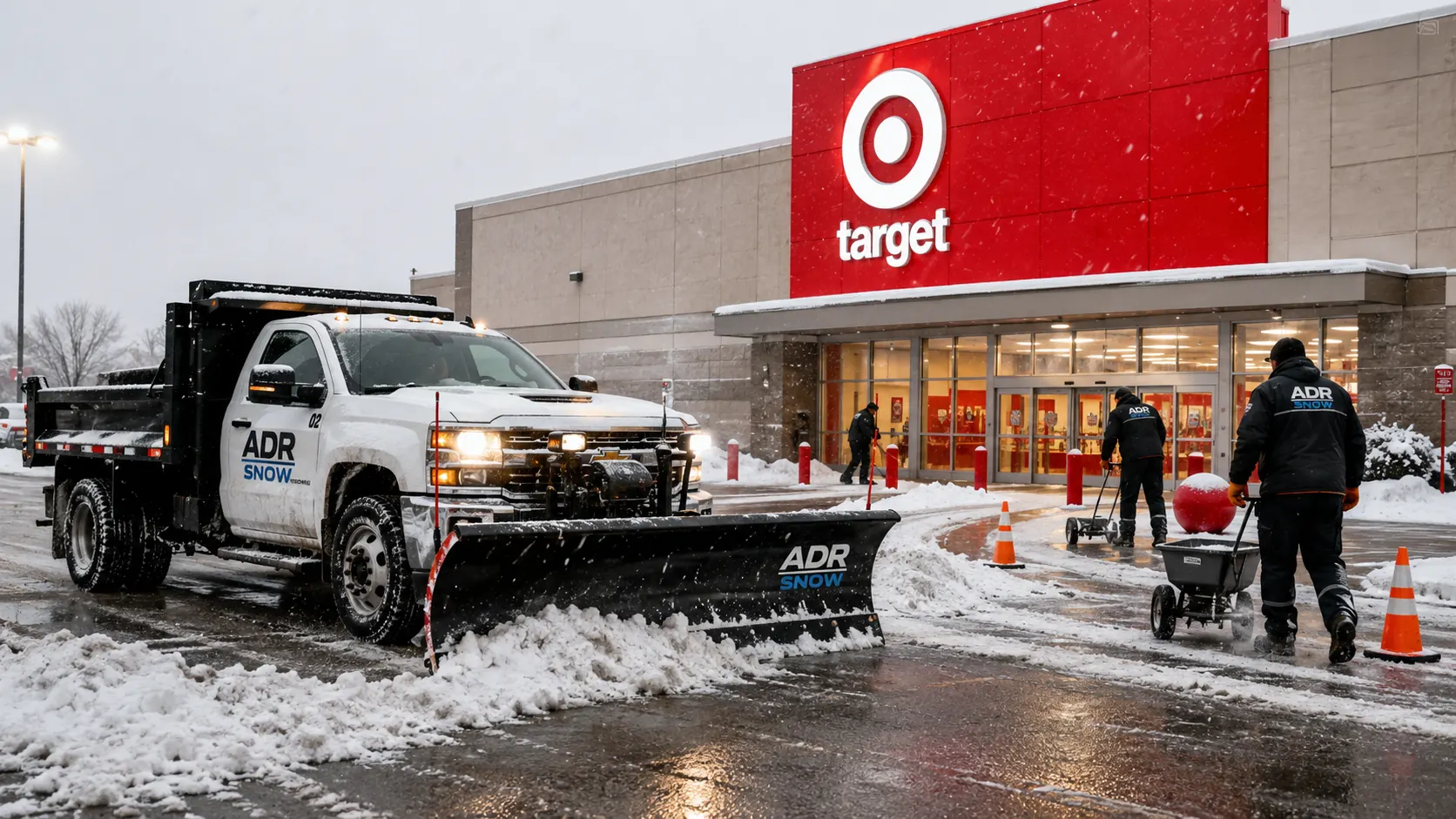
In casual conversation, snow removal and snow plowing tend to get used interchangeably. In a commercial contract, they are distinct services. Understanding the distinction matters because they are priced separately, dispatched separately and often invoiced separately.
Plowing pushes. Removal hauls.
Plowing pushes accumulated snow off pavement and into a stack zone on the property. Removal physically loads that accumulation into trucks and hauls it off site. The two services use different equipment, different operating windows and different cost structures.
Plowing happens during and immediately after the storm. Removal typically happens after the storm has ended, often overnight, when the property has minimal active use.
When removal becomes necessary
Removal is required when stacking capacity exhausts, when accumulation blocks parking inventory, or when the property has zero tolerance for on-site snow for safety, aesthetic or regulatory reasons. On dense urban properties, removal is often the default service rather than a fallback.
How the two services integrate in a contract
Most commercial contracts include both plowing and removal as distinct line items. The plowing component handles event-by-event accumulation. The removal component triggers when the property hits defined thresholds. The combined arrangement is what keeps the property operational through the season without surprise emergency calls.
For property managers evaluating contracts, a useful question is what the removal trigger is and how it is priced. A contract that does not address removal explicitly will produce expensive, reactive operations when the season demands it.
Operational note
ADR Snow Management runs commercial winter operations across New York, New Jersey, Connecticut and Massachusetts. If your property would benefit from a contract structured around the standards described above, the conversation starts with a callback.