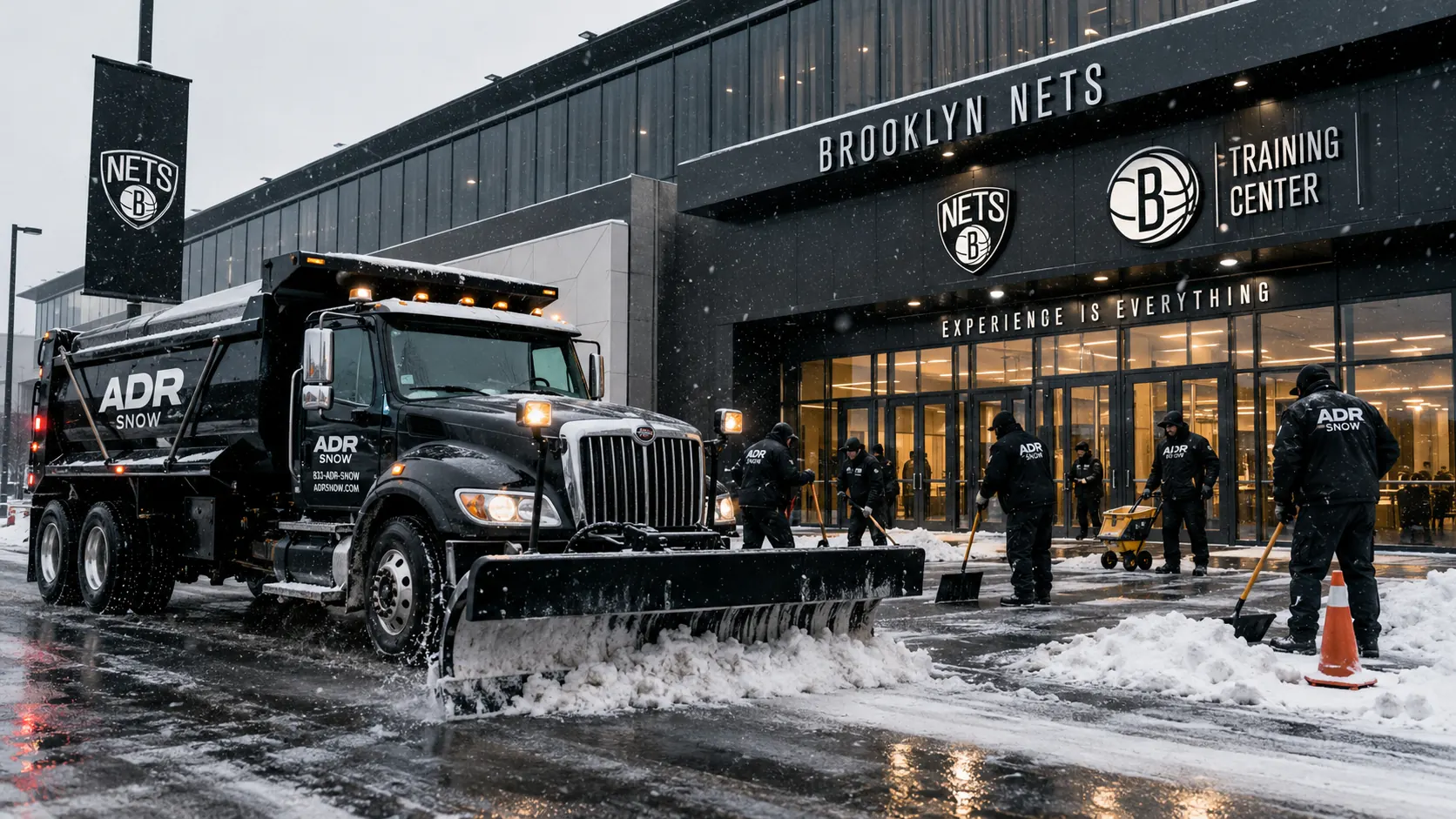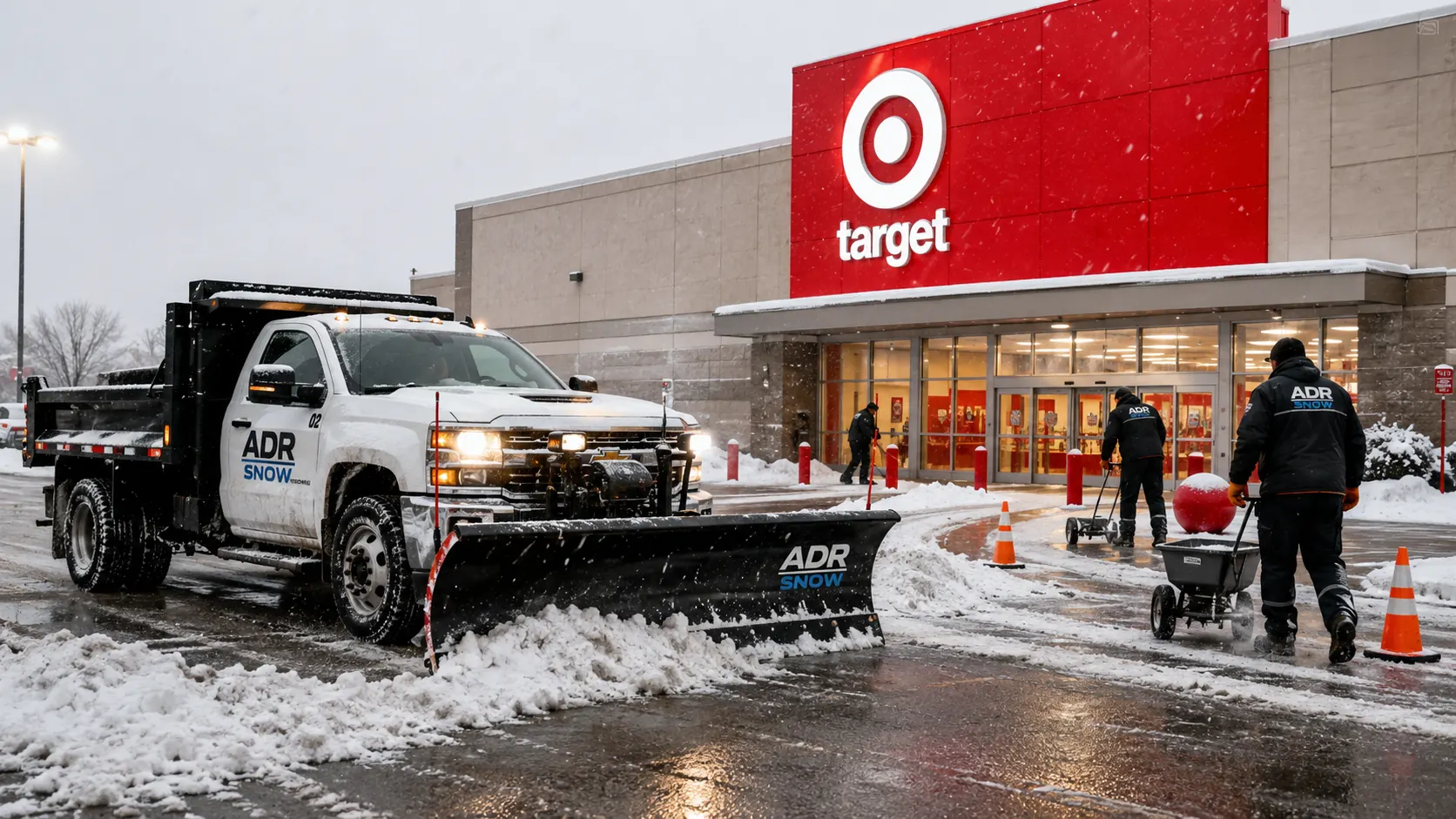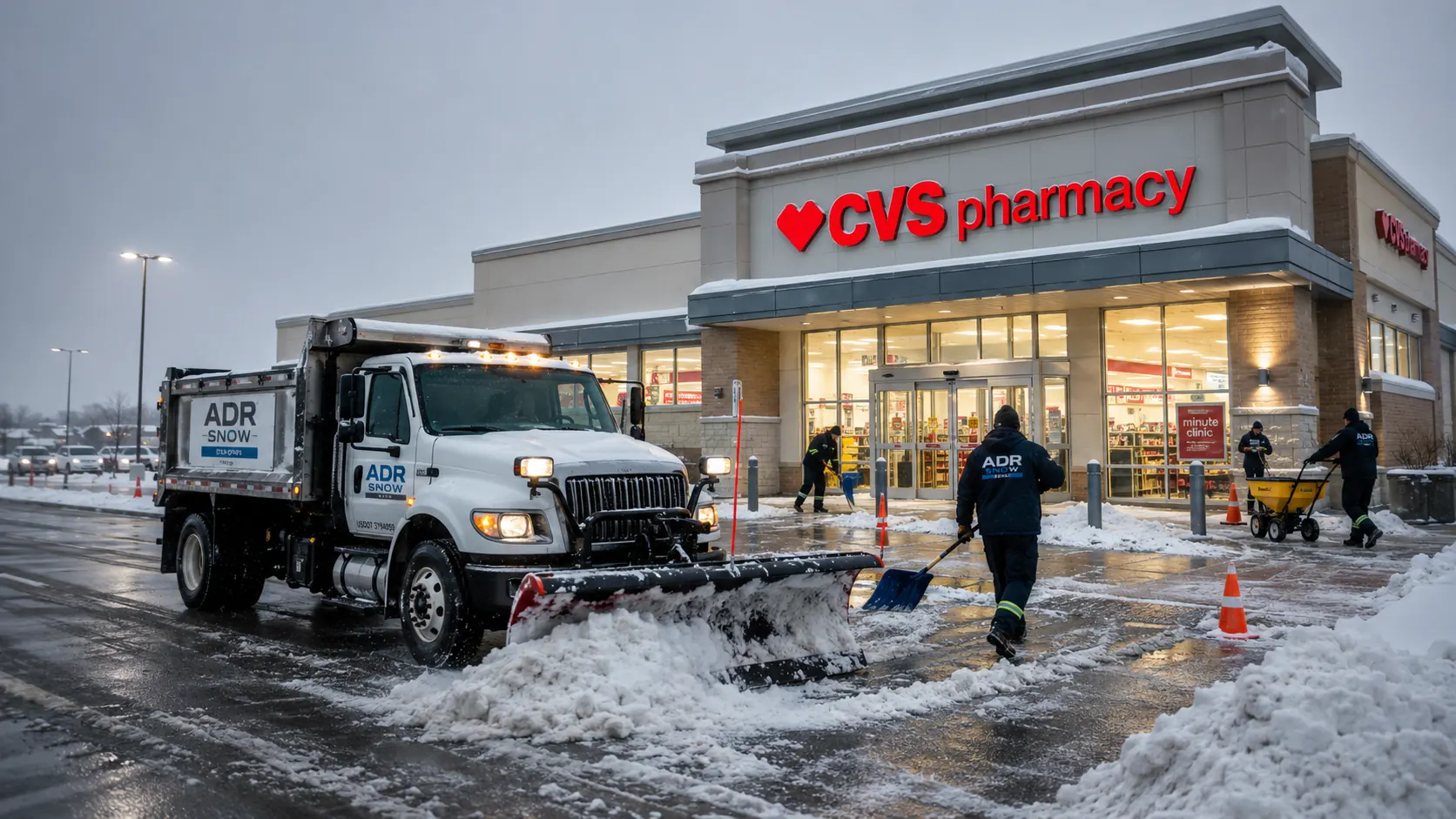

Commercial snow removal looks like a single service from the outside. From the operator side, it is at least five distinct workstreams running in coordinated cycles. Plowing pushes accumulation. Pushers move volume. Shovelers handle walkways. Salters and de-icers prevent bonding and refreeze. Stack zones and disposal logistics manage the volume removed from active surfaces.
This pillar is the operating manual side of the business. It is written for property managers, facilities directors and operations leaders who want to understand what good execution looks like on their property, what to expect from a vendor that runs the protocol well, and where corners get cut by vendors that do not.
What this guide covers
- What snow removal actually means as a service category beyond plowing.
- Best practices for commercial plowing across lot sizes and property types.
- How snow stacking is planned, why it matters, and when it becomes a removal trigger.
- How to operate snow blowers safely on a crew, and the lift this transfers off your insurance file.
- How modern operations are reducing the environmental footprint of de-icing.
Read this pillar before negotiating your next master agreement. The vocabulary alone changes how a vendor scopes your property and how your procurement team scores the response.
What property management groups evaluate during vendor reviews
Operational discipline is what gets scored in vendor scorecards. Property management groups, REITs and procurement teams reviewing snow management vendors evaluate against standardized criteria: response window achievement against contracted trigger depth, documentation cadence completeness, route consistency across the season, equipment availability, crew identification consistency and event report turnaround.
The articles in this pillar describe what good operational discipline looks like in the field. Property managers running internal vendor reviews can use the framework to score current vendors against measurable criteria. Procurement teams running RFPs can use it to define the operational standards new vendors must meet before signing the master agreement.
The same operating discipline applies across property classes and portfolio sizes. A retail anchor with one location and a multi-state REIT with two hundred properties both expect the same documentation cadence, the same single point of accountability and the same procurement-grade reporting. The vendor that delivers this at scale across the portfolio wins the master agreement; the vendor that improvises per property does not.