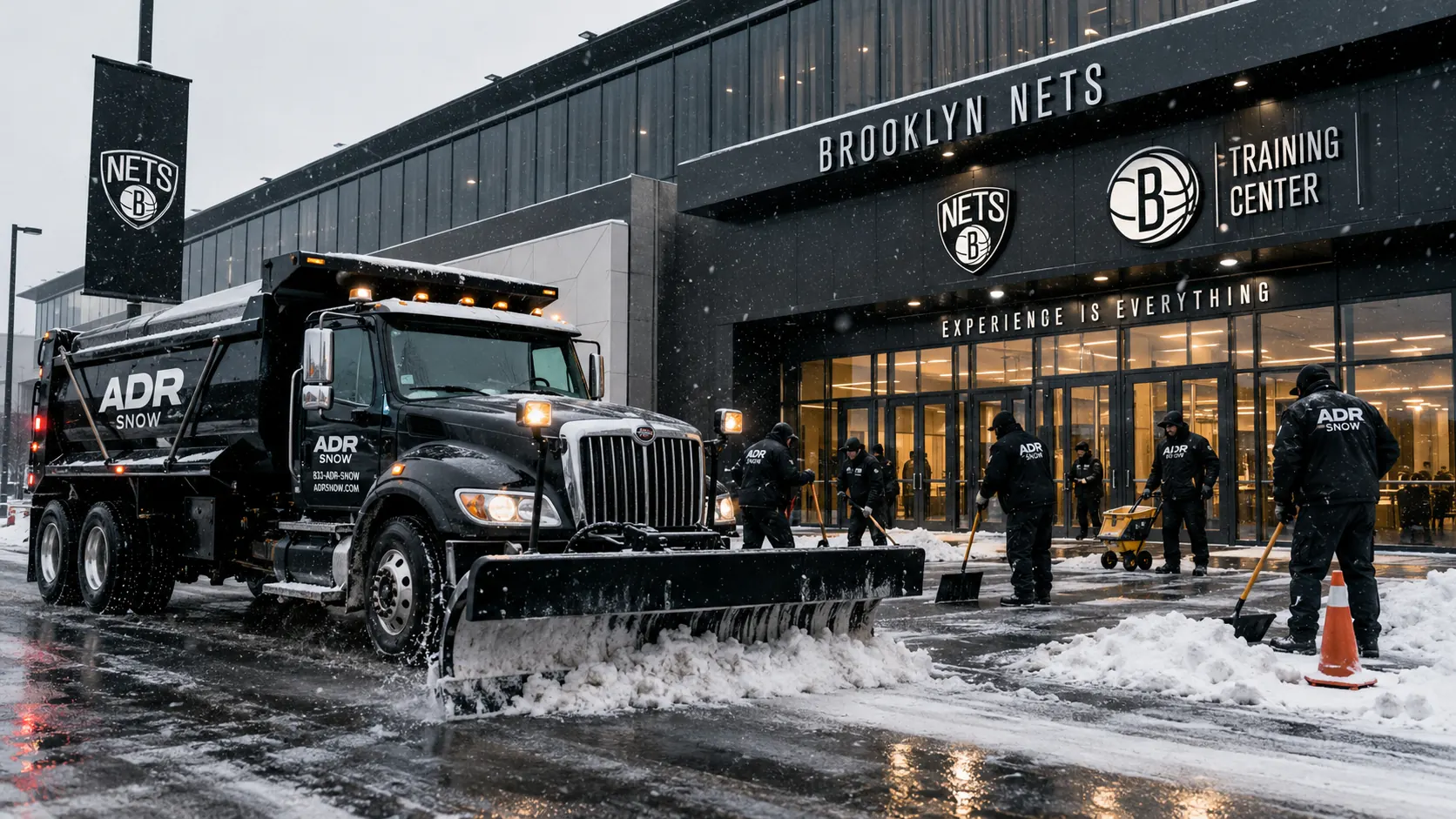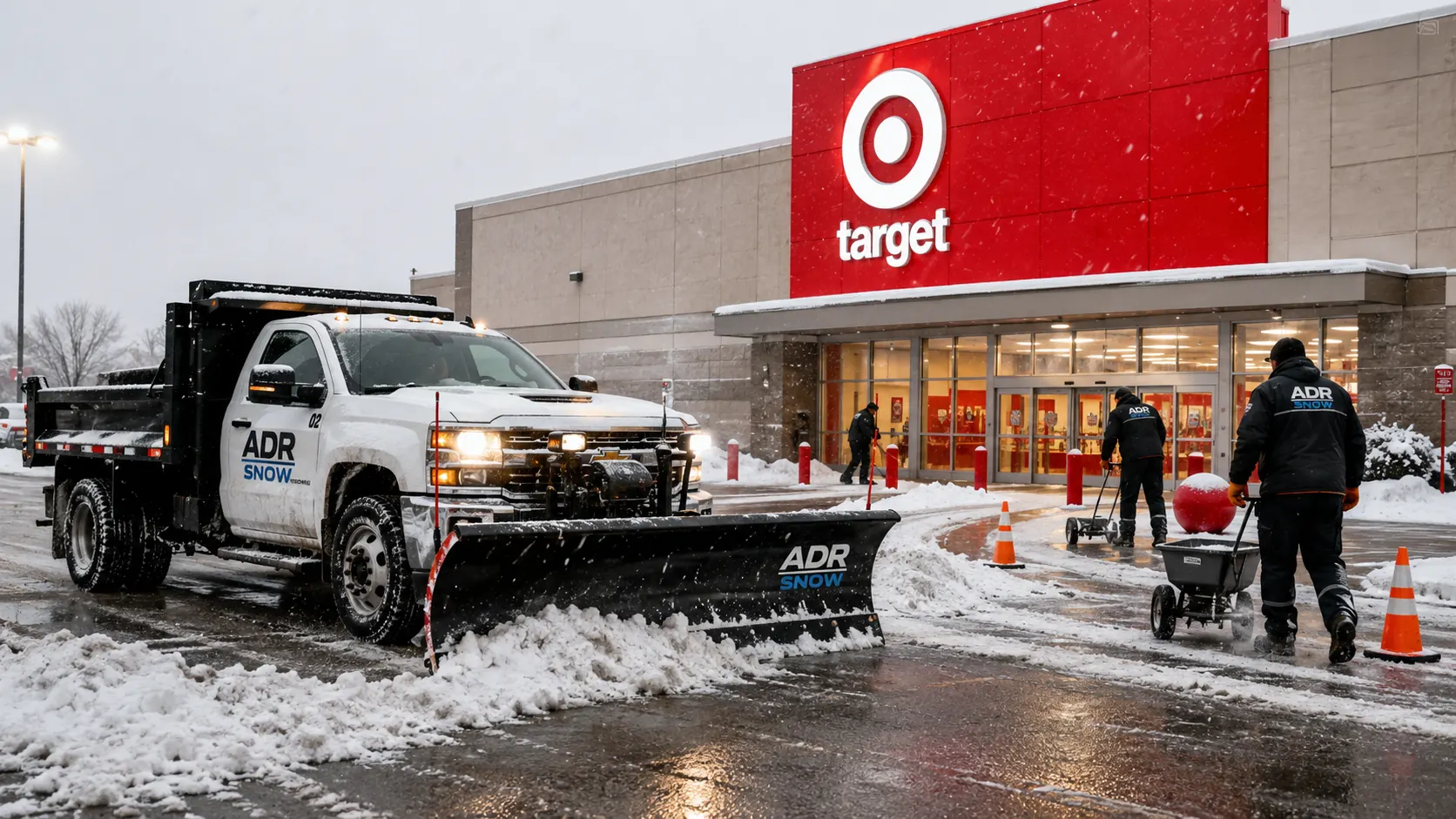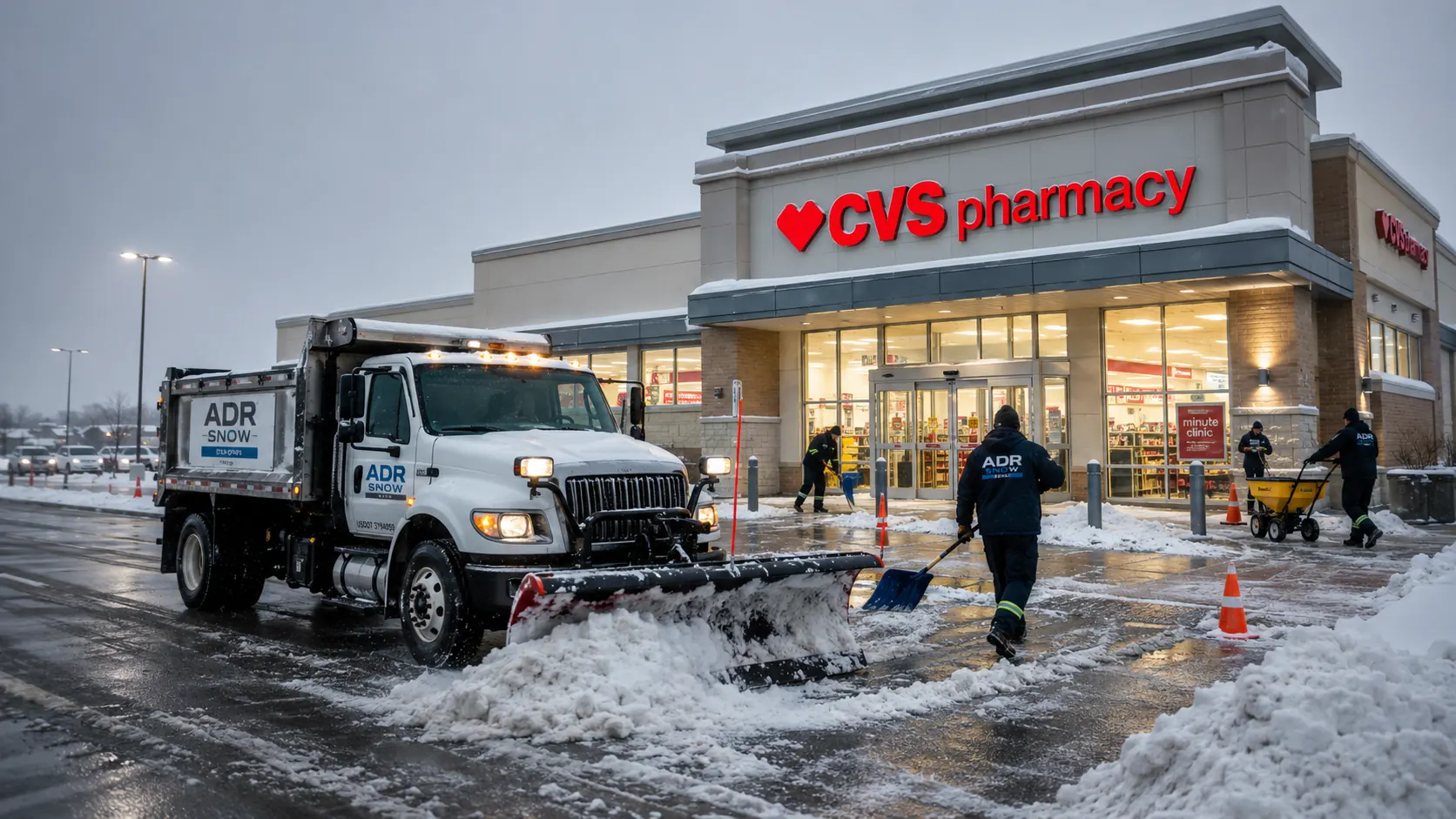

A commercial plowing route is not a truck driving in random patterns clearing space. A serious operator builds the route in October from a property walk-through, executes it with consistency across the season, and updates it event by event as conditions reveal what the original plan missed.
Pre-season route design
The route starts with property geometry. Lanes are walked. Stack zones are defined and marked. Trigger depths are confirmed. Access routes are documented for delivery, emergency and pedestrian traffic. The output is a written plan that a different operator could pick up and execute consistently.
The pre-season walk is also where seasonal staging decisions are made. For larger properties, equipment is positioned at the property before the first forecast event of the year, eliminating deployment delay during the storm.
In-storm execution
Plowing begins at the contracted trigger depth and continues at intervals through the storm. The cadence depends on accumulation rate, property type and contracted service window. Routes are GPS-tracked. Each pass is time-stamped. Photos are captured at intervals.
A common failure pattern is plowing too aggressively early and creating piles that block subsequent passes, or plowing too lightly and letting accumulation establish. Both are scoping failures, not operator failures.
Stack zone management
Where the snow goes is as important as how it gets pushed. Stack zones defined in the pre-season plan get filled in order of priority. When stack capacity exhausts, the property transitions to removal operations. The transition timing is set in the contract.
Post-storm verification
After the storm ends, plowing transitions to clean-up, salt and de-icing transitions to post-treatment, and the property is walked to confirm conditions before the next operational window begins. The event report is produced and filed.
Operational note
ADR Snow Management runs commercial winter operations across New York, New Jersey, Connecticut and Massachusetts. If your property would benefit from a contract structured around the standards described above, the conversation starts with a callback.