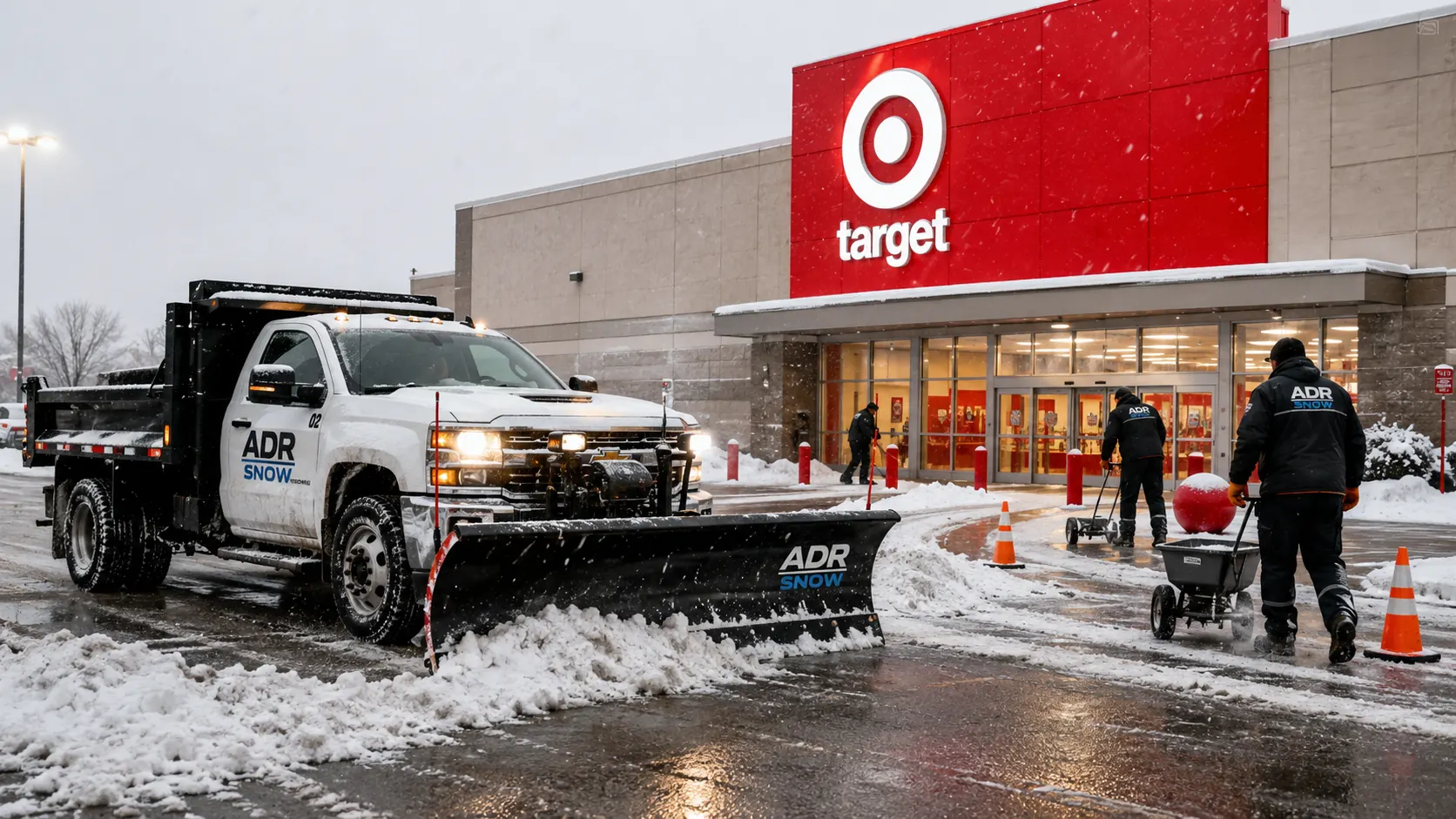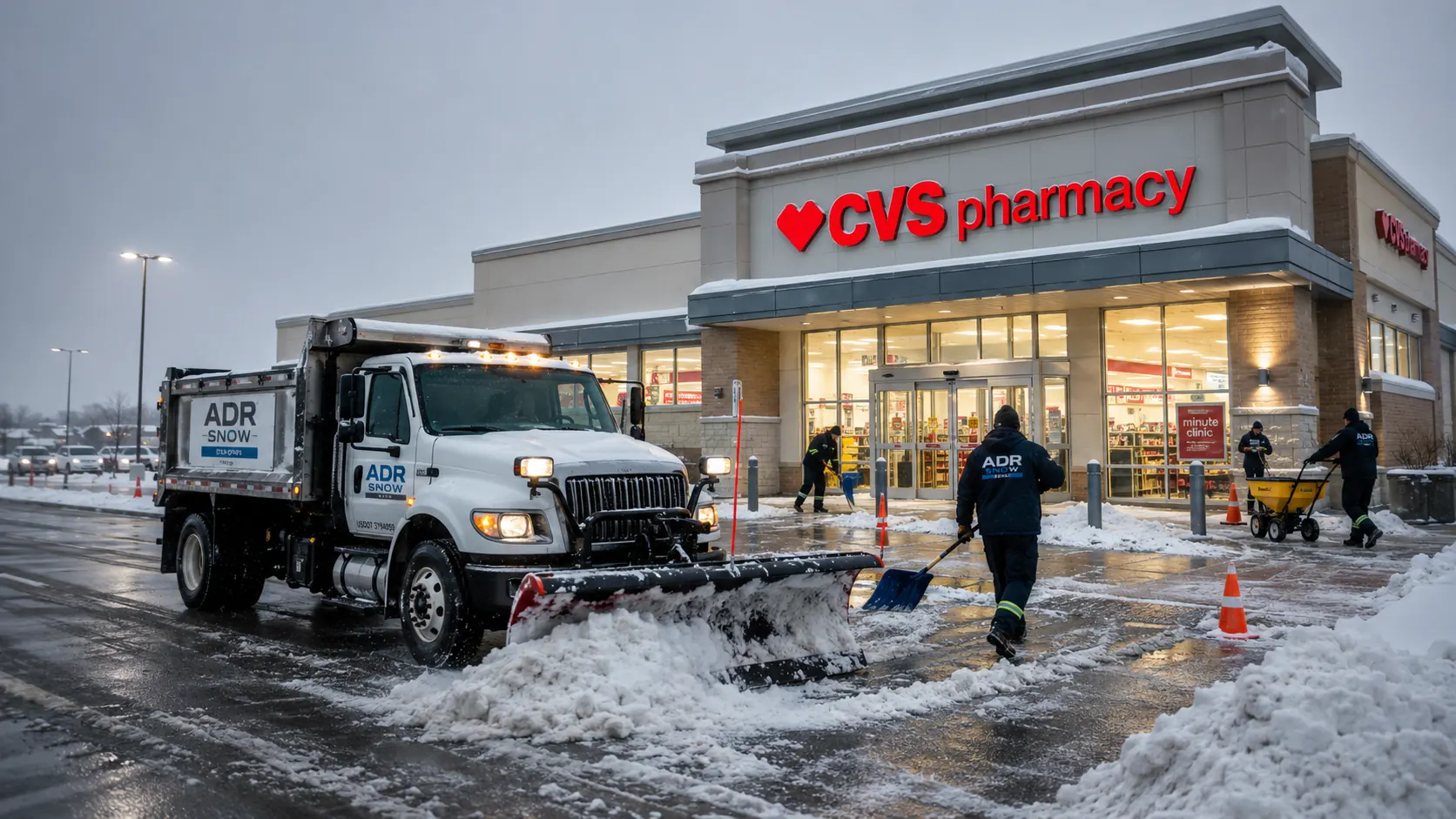
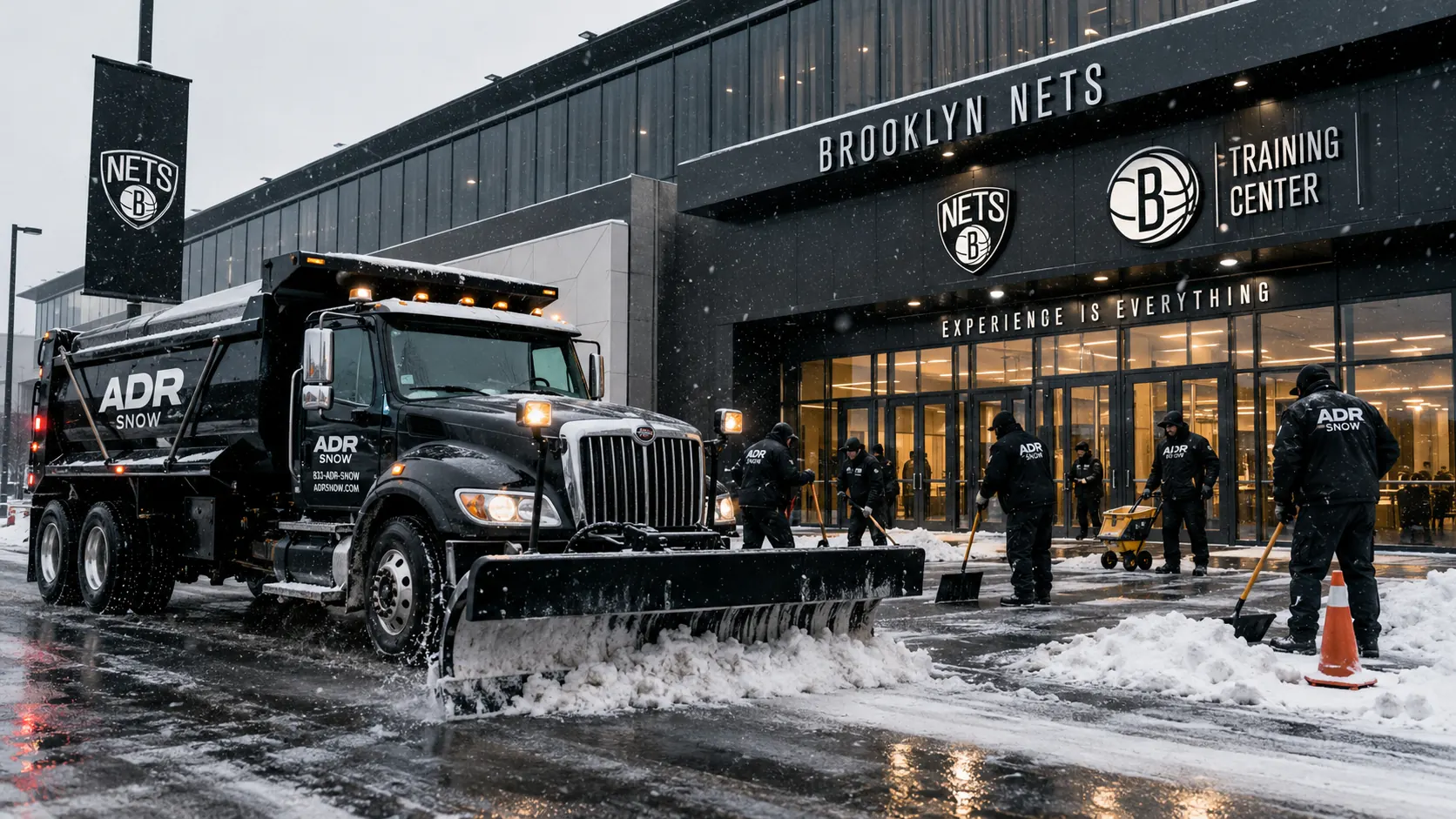
On any commercial property with on-site stacking, the location of the stack zones is the most consequential operational decision made before the season. Stack zones determine which spaces remain available to the property through the winter. They determine drainage as the season ends. They determine when the contract has to switch from plowing to removal.
What good stack zone placement looks like
A useful stack zone is away from drainage paths, away from primary pedestrian routes, away from utility access and away from sightlines that affect property aesthetics. It has enough surface area to absorb the storm volume the property typically receives. And it does not encroach on parking inventory or operational access that the property needs through the season.
Many commercial properties end up with stack zones that were defined by convenience rather than analysis. The result is mid-season stack failures that force expensive removal operations on short notice.
When stacking exhausts and removal begins
No stack zone is infinite. Even well-placed zones reach capacity in a heavy-volume season. The trigger for switching the contract from plowing to removal is defined in the contract. Common triggers are stack zone depth, parking inventory loss, or drainage interference.
A property with a defined removal trigger transitions smoothly to overnight loader-and-truck operations. A property without a defined trigger ends up making emergency removal calls during the season, at premium pricing, with whatever capacity the vendor has available.
The planning takeaway
Stacking is a planning decision, not a cleanup decision. The work done in October to define stack zones and removal triggers is what determines whether the property absorbs a heavy season or scrambles through it.
Operational note
ADR Snow Management runs commercial winter operations across New York, New Jersey, Connecticut and Massachusetts. If your property would benefit from a contract structured around the standards described above, the conversation starts with a callback.