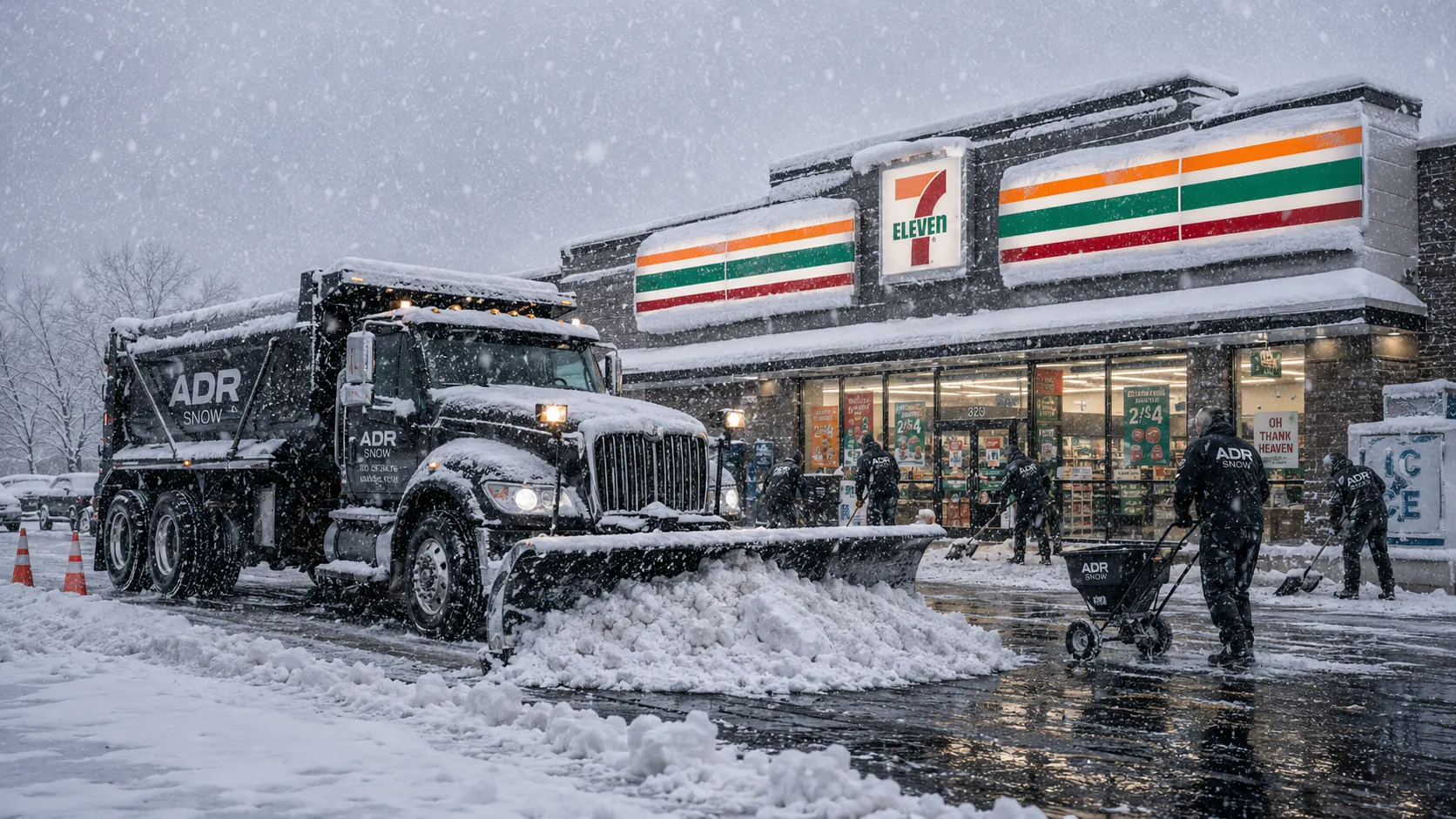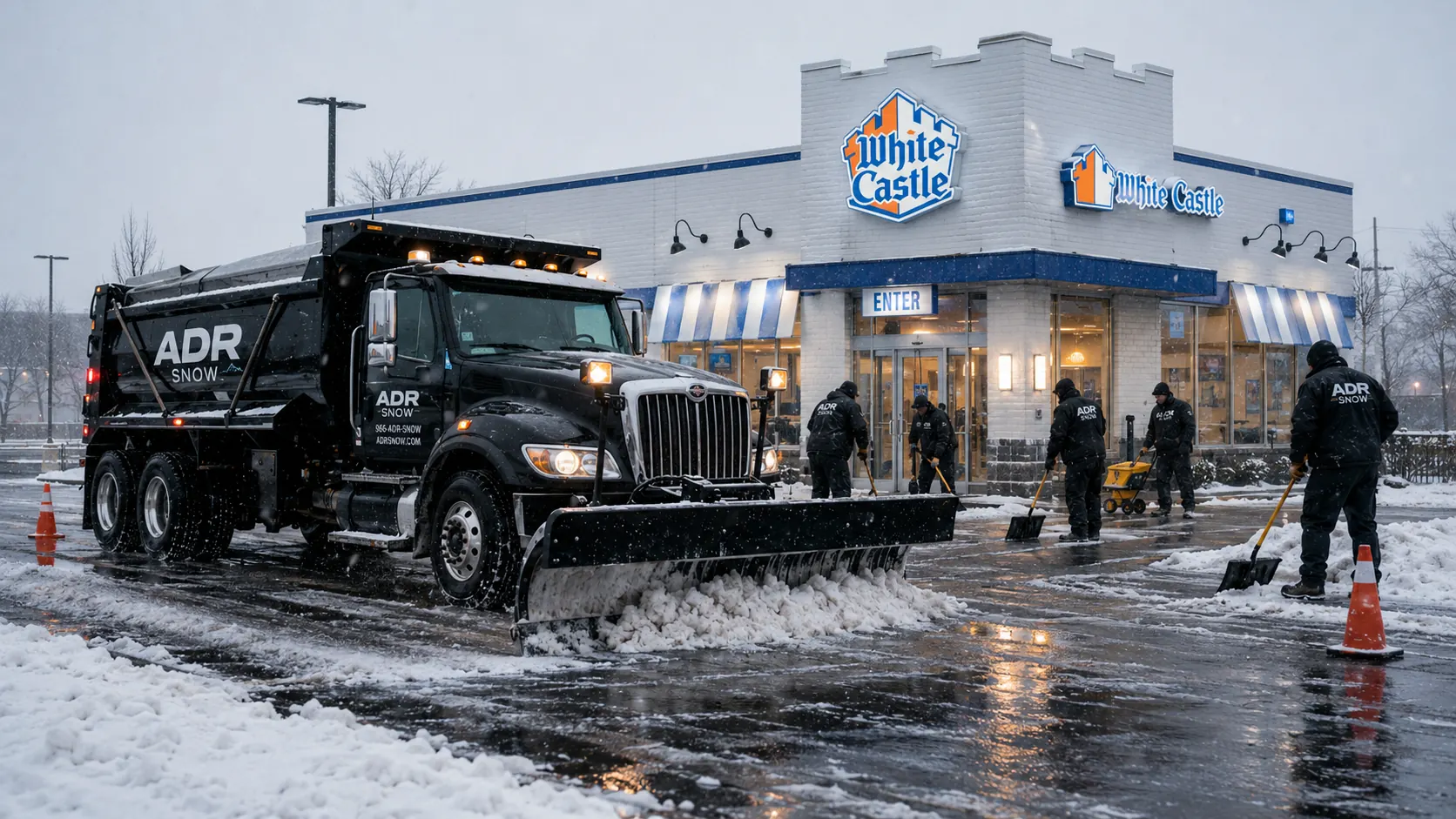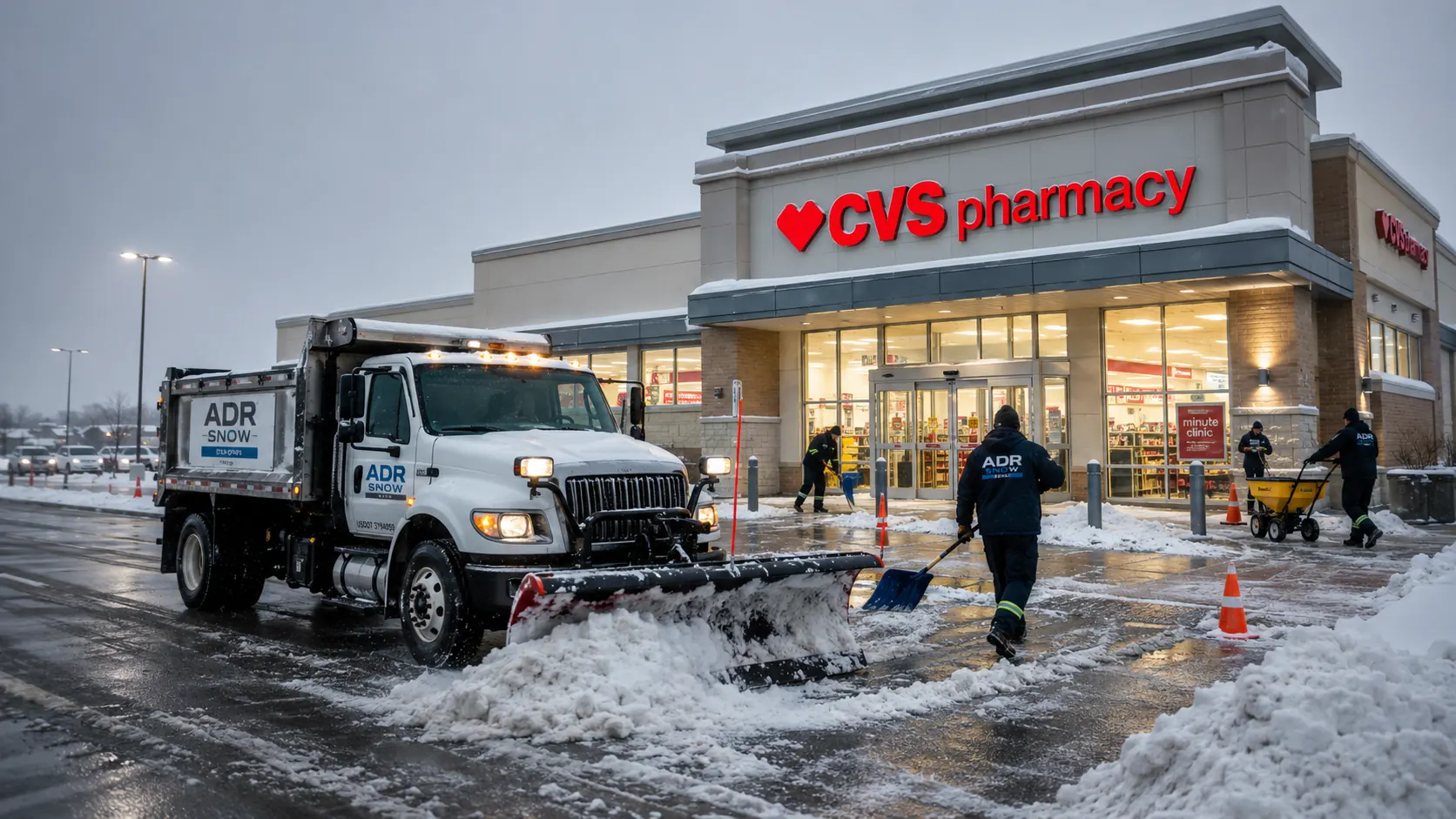
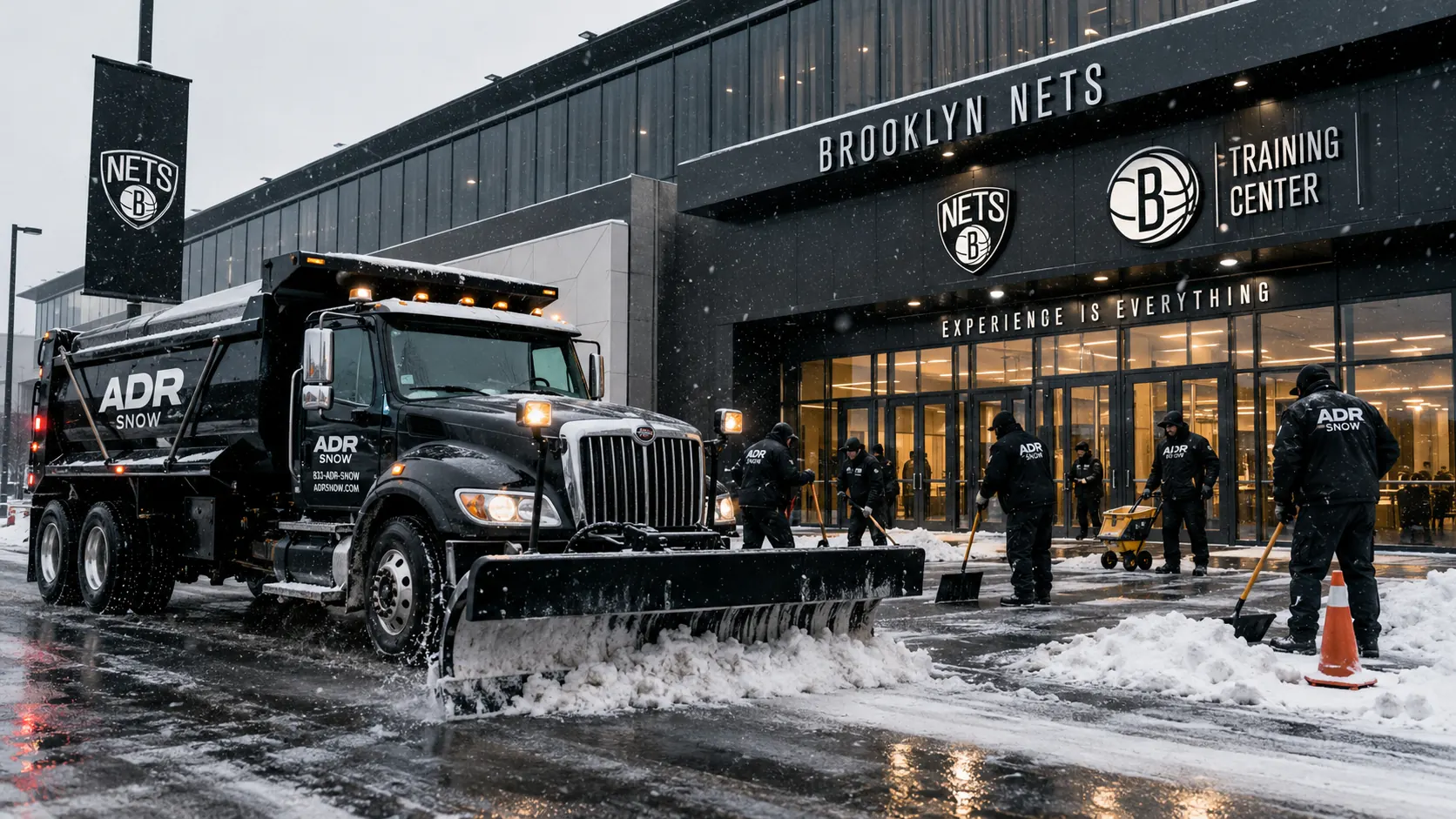
The NYC sidewalk-clearing requirement is codified in the Administrative Code, but the practical question on a commercial property is not what the regulation says. It is how an operational contract translates the regulation into a service window that actually meets it.
How the window works
In simplified terms, the city requires the property responsible for a building to clear adjacent sidewalks within a defined window after snowfall ends. The window is shorter when the snow stops during the day and longer when it stops overnight. The exact mechanics are written into the code.
The practical implication is that the property cannot wait for the storm to stop and then begin scrambling to find a crew. The crew has to be already dispatched, already executing the route, and already prepared to meet the window the moment the storm ends.
How a serious contract handles this
A NYC commercial snow contract built for the regulatory window does not treat shoveling as a single post-storm service. It runs shoveling routes throughout the storm at defined intervals, with the closing pass timed to complete before the regulatory window expires.
Routes are mapped pre-season with the regulatory window in mind. Crews are dispatched at storm start, not storm end. Photo documentation captures the time of service to demonstrate compliance.
What property staff still need to do
Even with a strong contract, property staff have a role. A morning walk-through at storm-end to verify conditions, document any zones the vendor missed, and confirm the regulatory window was met. The staff sweep is the second layer of compliance defense.
Operational note
ADR Snow Management runs commercial winter operations across New York, New Jersey, Connecticut and Massachusetts. If your property would benefit from a contract structured around the standards described above, the conversation starts with a callback.