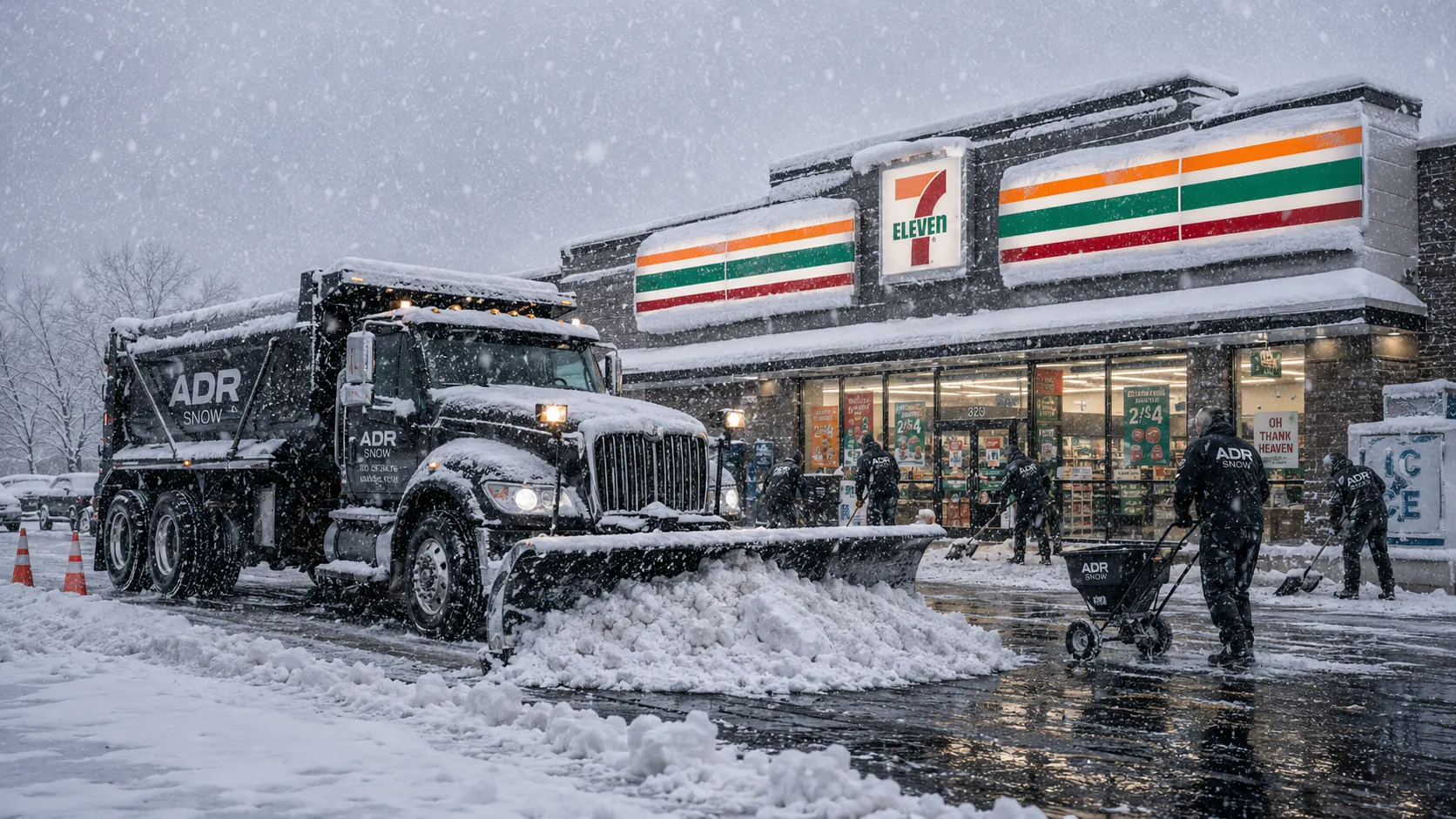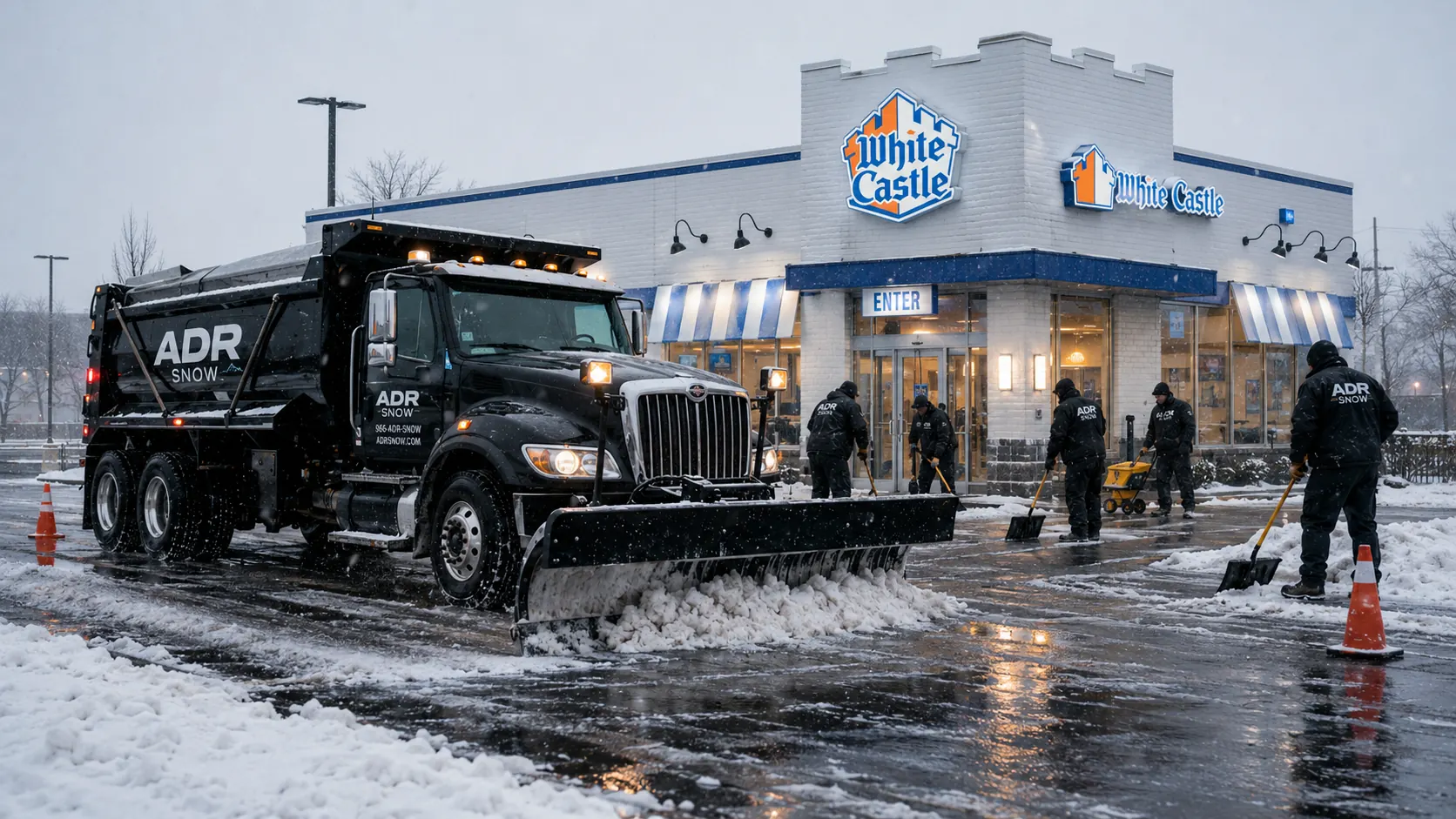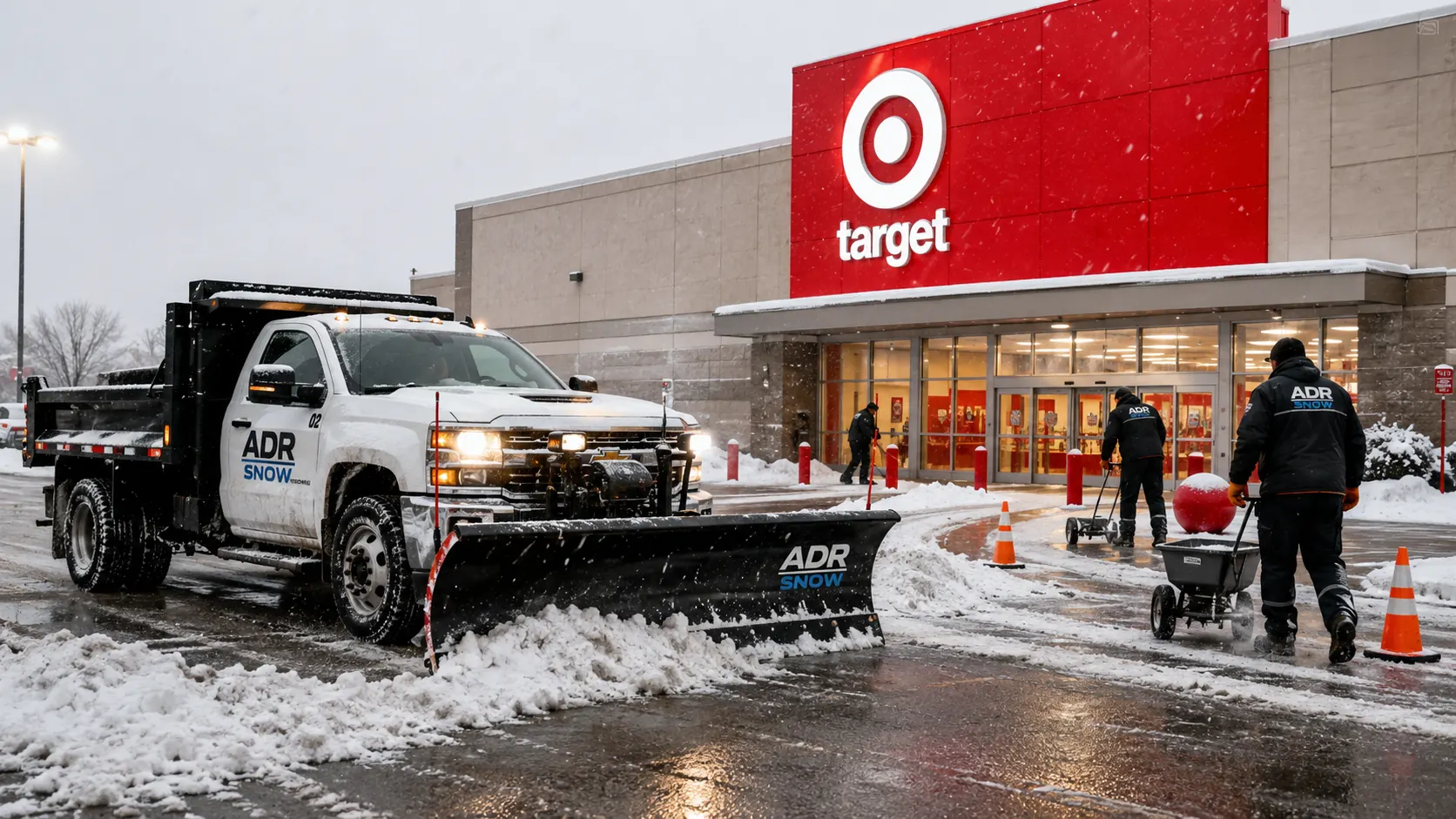
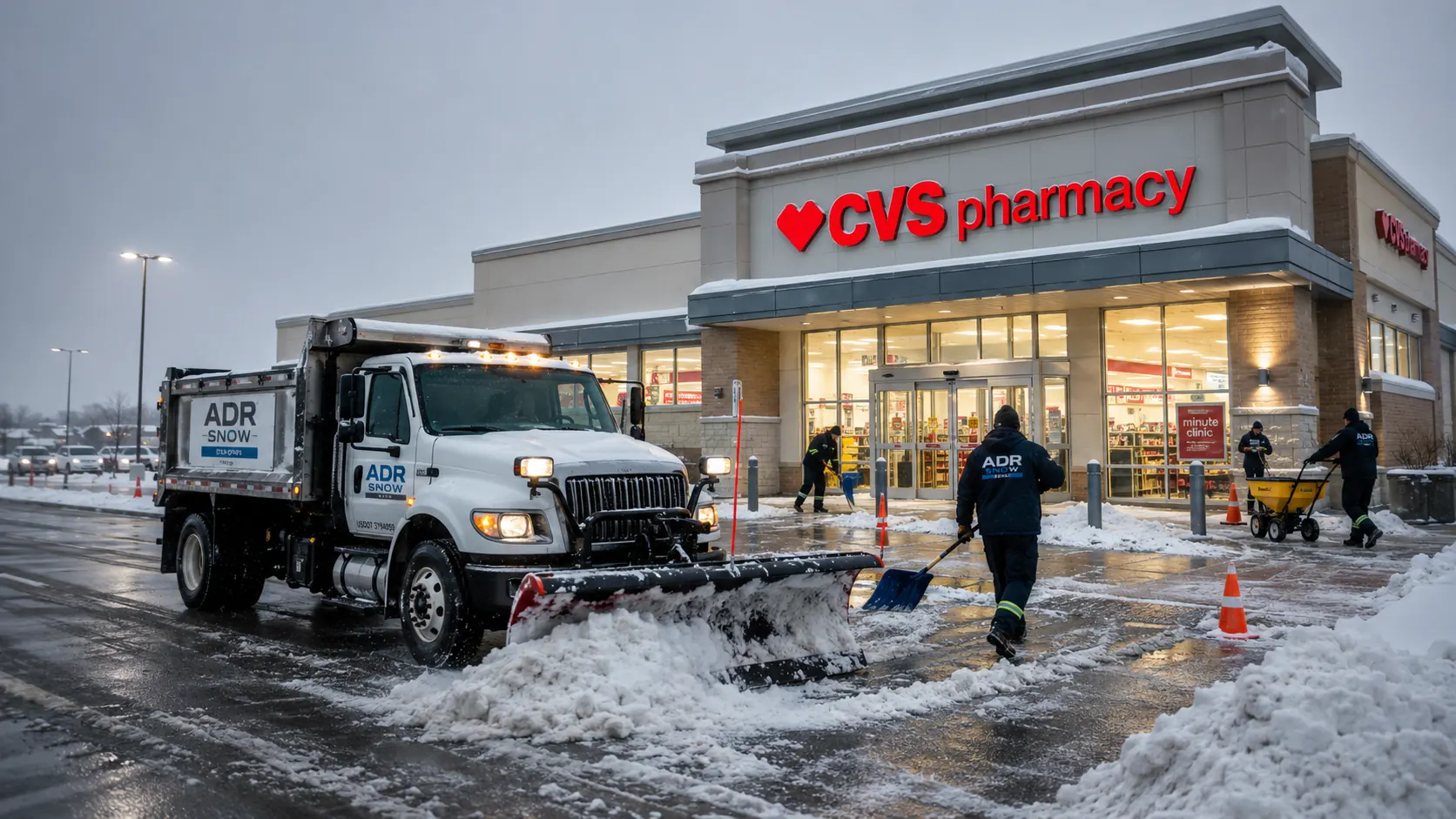
Commercial snow management is usually classified as a facilities cost. From an operating standpoint, the more accurate classification is business continuity. The service determines whether the property opens on schedule, whether staff and customers can access it, and whether revenue flows on the days when weather would otherwise stop it.
What stops when snow management fails
On a retail property, a closed lot means lost foot traffic, abandoned deliveries and damaged customer experience. On a banking property, ATM access disappears and branch transactions move to other locations. On a logistics property, every closed loading dock translates directly into late shipments and missed service-level agreements.
For most commercial properties, the cost of being closed for one full operating day during winter exceeds the cost of an entire season of professional snow management. The math is not even close.
How to measure continuity impact
Property managers serious about positioning snow management as a continuity service tend to track three metrics. First, opening time on event days versus baseline. Second, foot traffic or transaction volume on event days versus the comparable non-event day. Third, internal incident or complaint volume related to property conditions.
Across multi-property portfolios, the data tends to show that properties with stronger snow management contracts maintain a meaningful share of normal operations during winter events. Properties with weaker contracts lose a measurable share of revenue on event days.
The contract structure that supports continuity
A contract structured for continuity emphasizes service window discipline, dedicated crews assigned to the property, and documented coordination with property operations on event days. The cost is higher than a transactional contract. The continuity benefit is the case for the difference.
Operational note
ADR Snow Management runs commercial winter operations across New York, New Jersey, Connecticut and Massachusetts. If your property would benefit from a contract structured around the standards described above, the conversation starts with a callback.