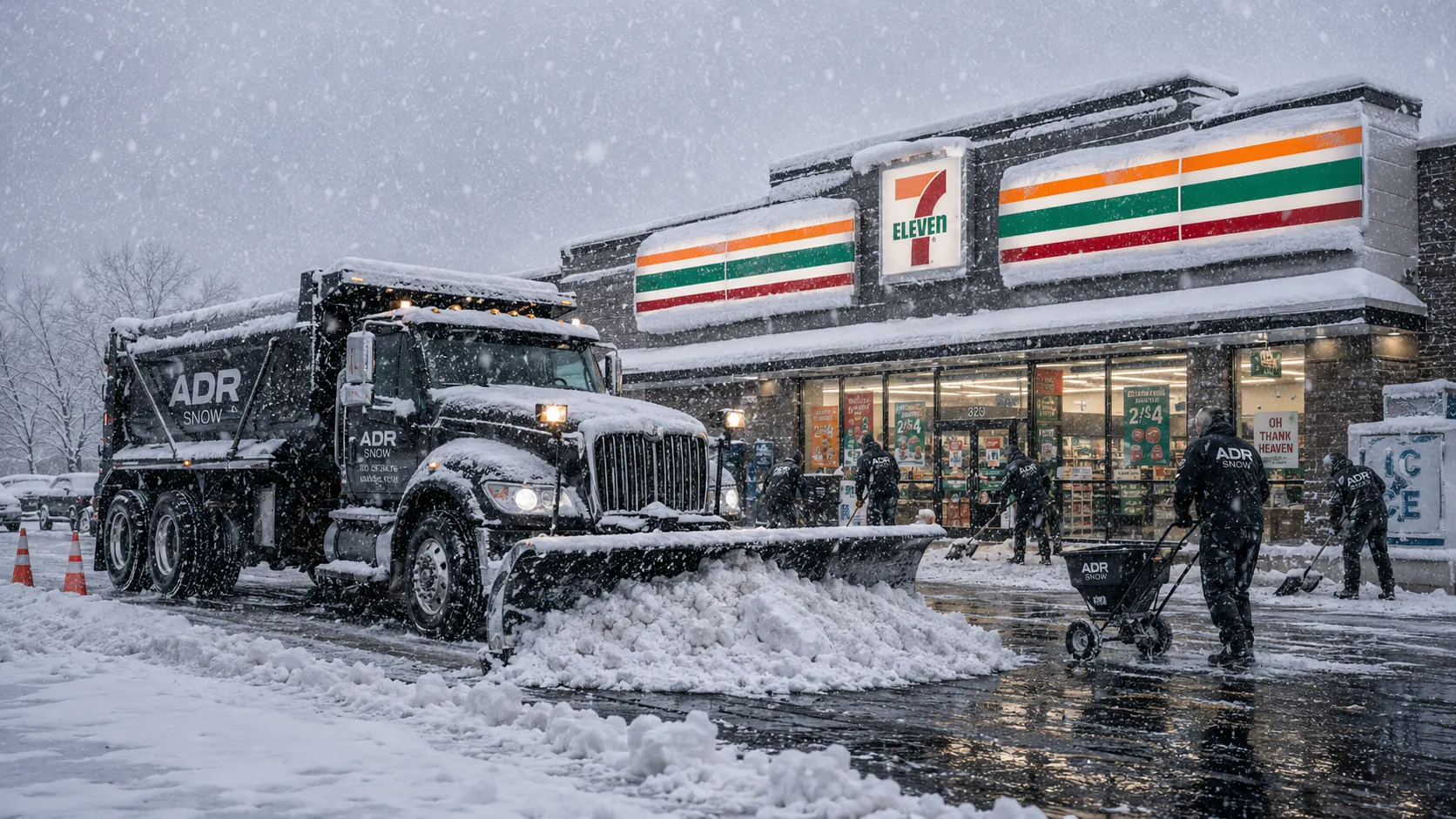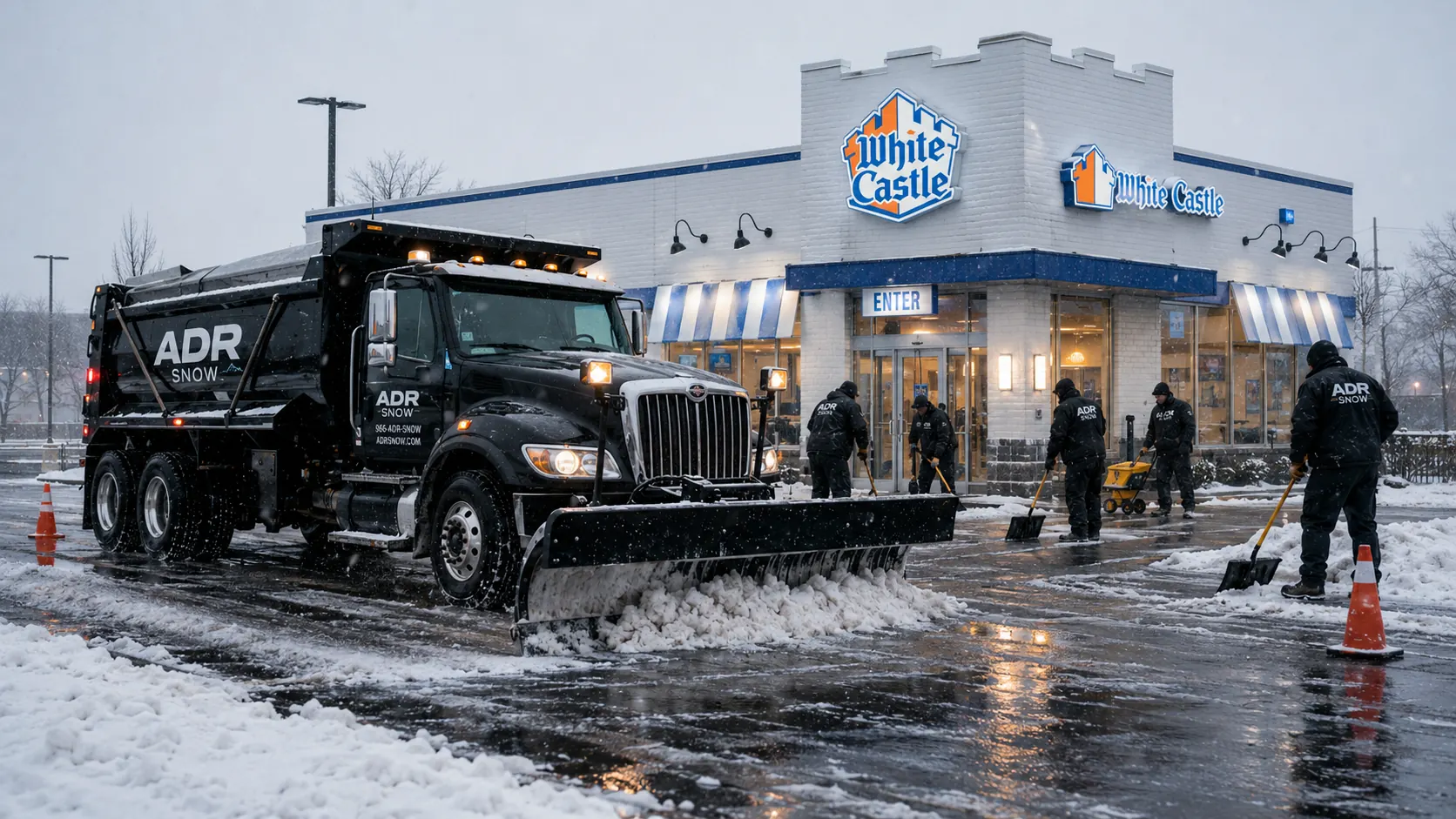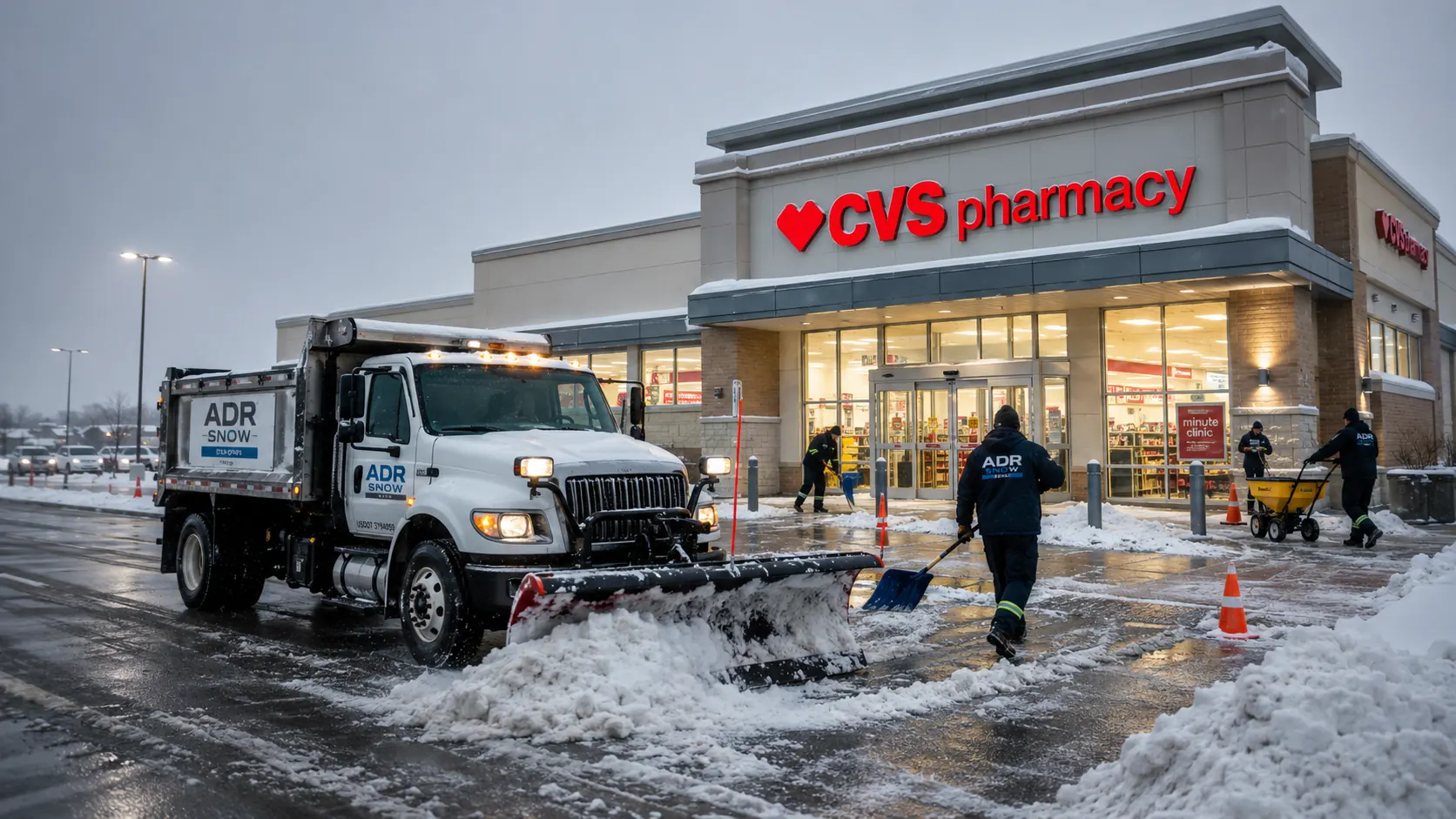
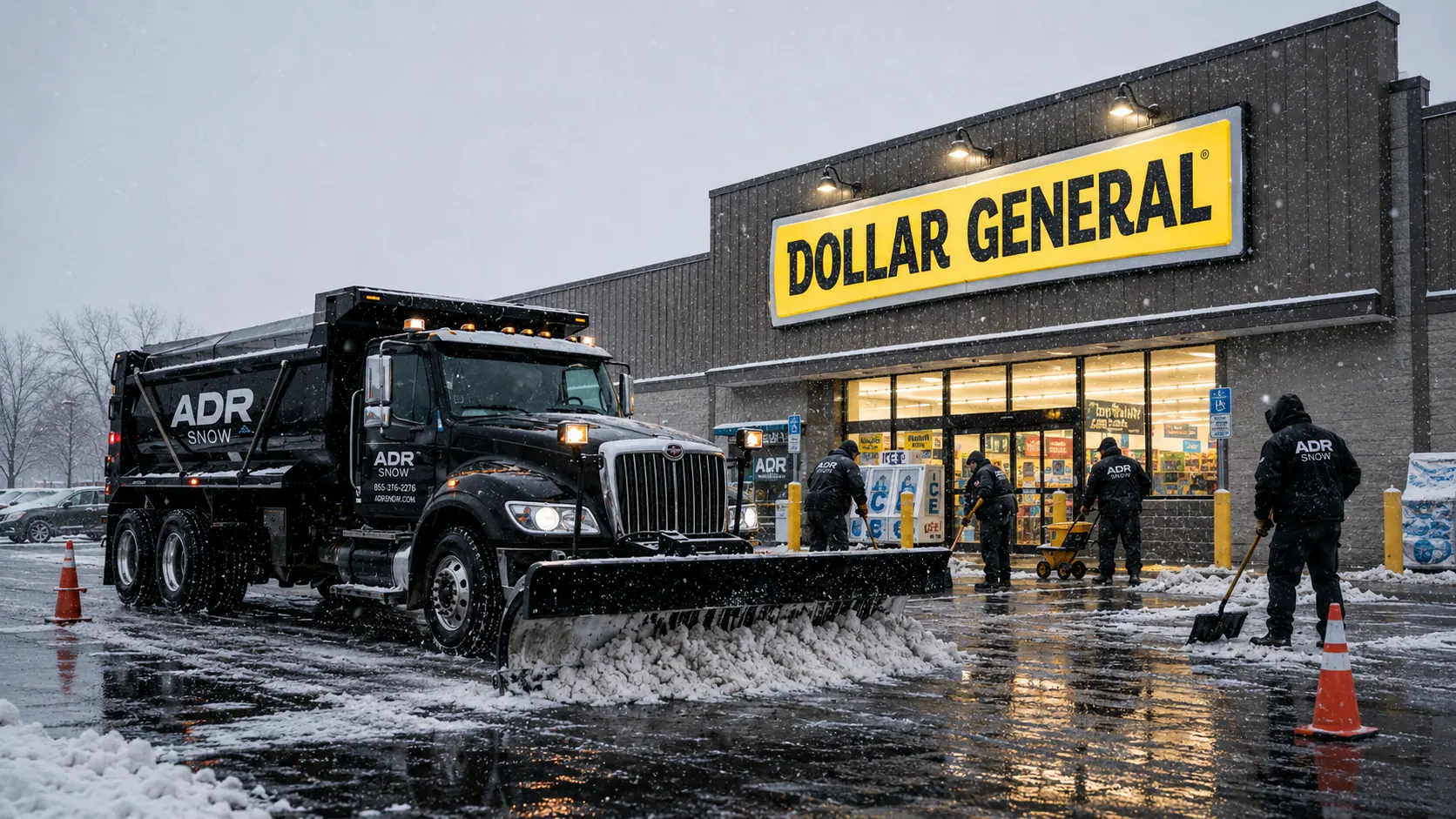
A winter-ready commercial property is not the one that scrambles well during the storm. It is the one that did the planning work in October that made the storm response routine. The October to early-November window is where most of the season actually gets decided.
Questions to answer before mid-October
Is the snow management contract in place, signed and counter-signed? If yes, has the property been walked with the vendor to confirm routes and trigger depths? If no, the property is already late on the planning cycle.
Are stack zones defined, documented and physically marked? Are removal triggers defined in the contract? Are certificates of insurance on file with current dates and proper property naming?
Internal preparation
Property staff briefed on event-day procedures, including how to flag conditions and contact dispatch. Internal supplies (caution signs, indoor matting, hand-held salt for emergencies) stocked. Tenant communications drafted and ready to send. Emergency contact list updated.
What ready looks like operationally
Ready does not mean expecting every event to go smoothly. Ready means knowing in advance what the response is to each scenario. Trigger event response is documented. Stack zone management is documented. Removal escalation is documented. Internal staff escalation is documented.
A property that has done this work absorbs the season. A property that has not done this work spends the season scrambling. The cost difference is one phone call and a property walk in October.
Operational note
ADR Snow Management runs commercial winter operations across New York, New Jersey, Connecticut and Massachusetts. If your property would benefit from a contract structured around the standards described above, the conversation starts with a callback.