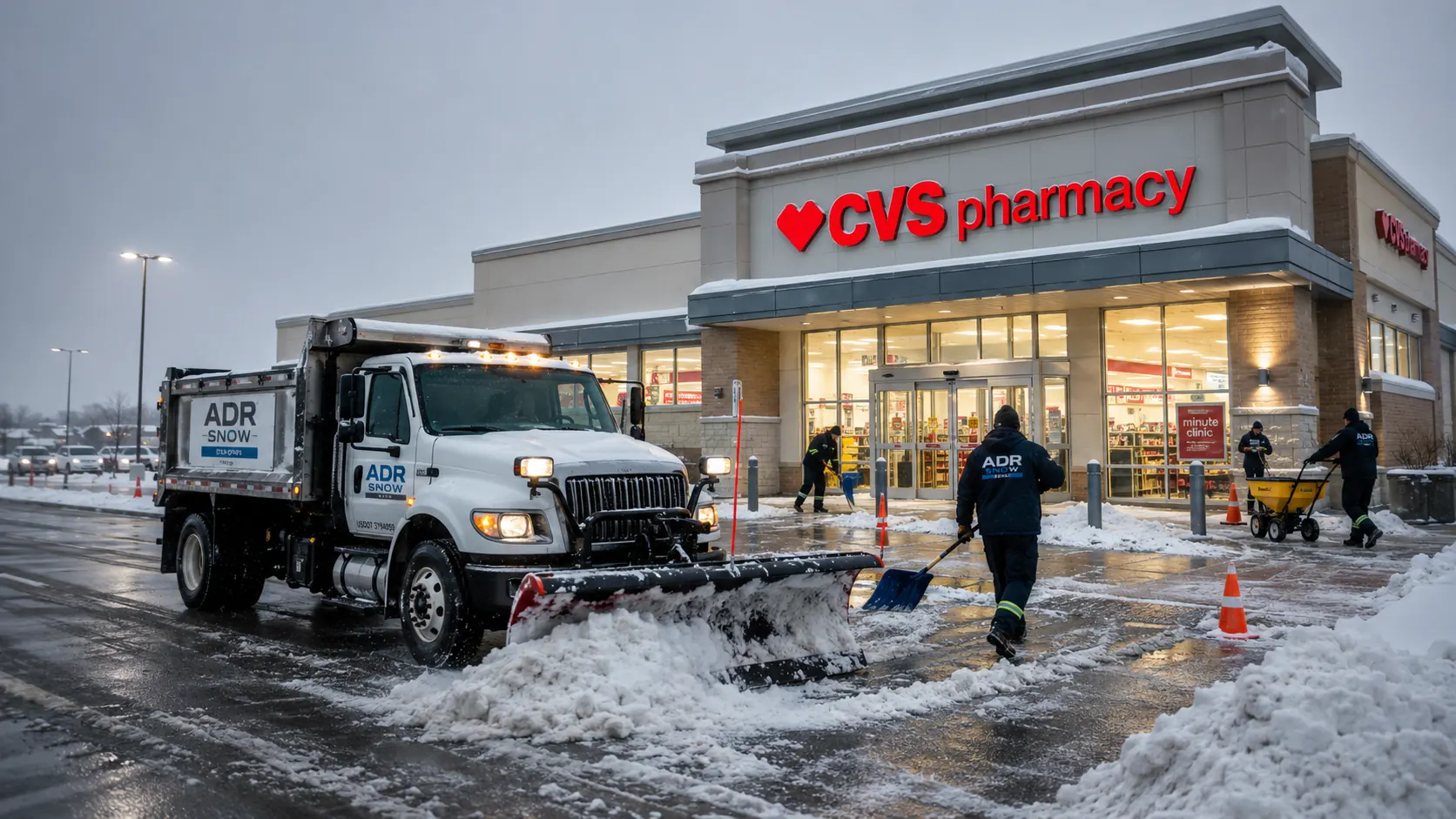
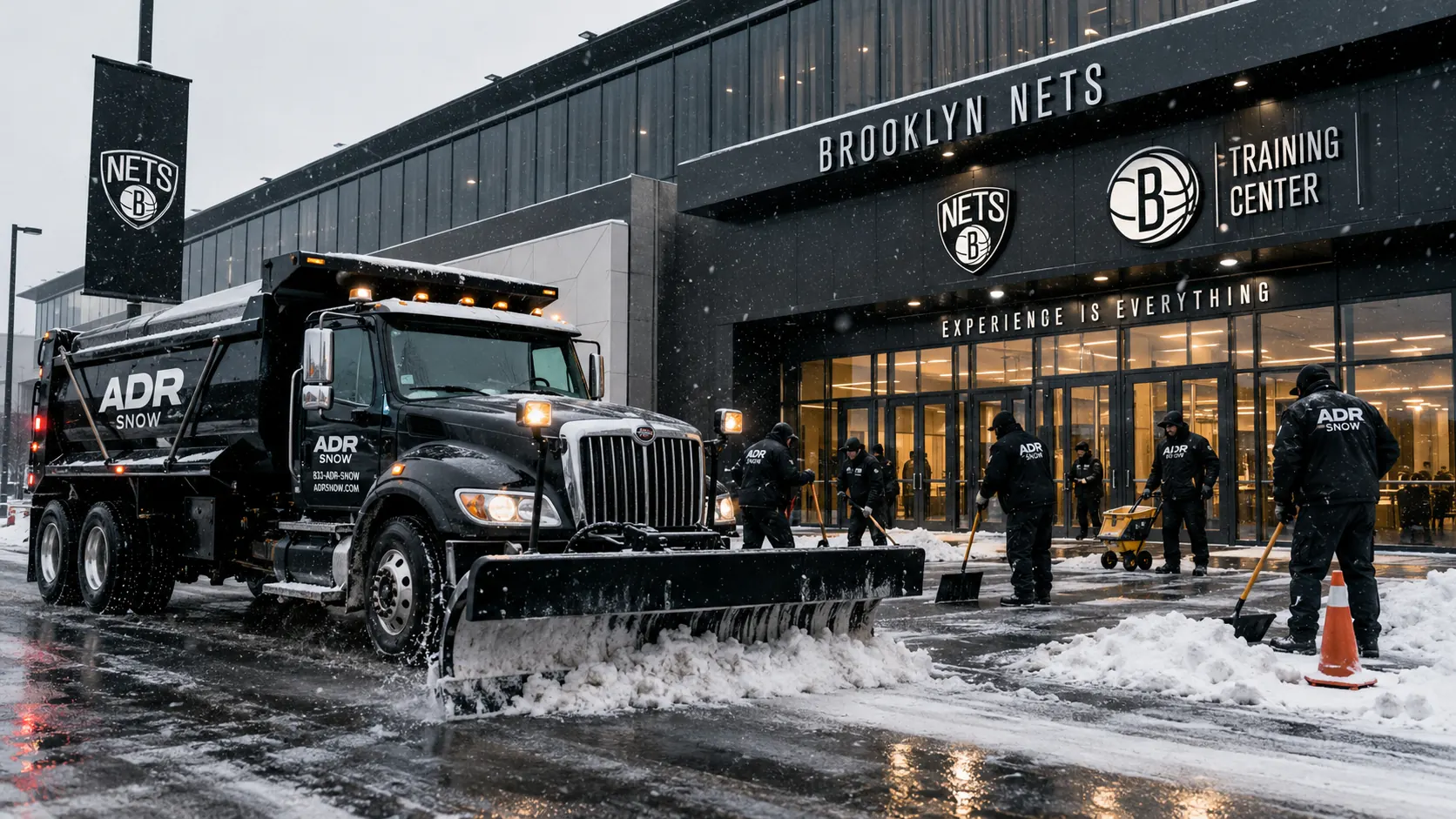
Responsibility for snow removal on New York commercial property is layered. New York City has municipal sidewalk-clearing requirements under the city Administrative Code. New York State adds common-law liability principles for slip-and-fall incidents. And the commercial lease, in most cases, is what actually allocates responsibility between landlord and tenant in practice.
The municipal layer
NYC Administrative Code §16-123 requires the owner, lessee, tenant, occupant or other person responsible for a building to remove snow and ice from sidewalks within a defined window after snowfall ends. The window is shorter when snow stops during the day and longer when it stops overnight. Failure to clear within the window can produce municipal citations and elevate liability if an incident occurs.
The code creates a default responsibility on the property side. It does not, however, dictate which side of the landlord-tenant relationship carries the work in practice. That is left to the lease.
What the lease actually controls
Most commercial leases assign snow removal responsibility explicitly. In a single-tenant lease, the responsibility typically sits with the tenant. In a multi-tenant property with common areas, the landlord usually contracts for common-area snow management and bills the cost through to tenants as a common area maintenance charge. Triple-net leases push more of the operational burden onto the tenant.
When the lease is silent, the default tends to favor landlord responsibility, but only as a starting point. Courts examine the actual conduct of the parties, who held the keys, who hired the vendor, who paid the invoice.
Why coordination still matters even when responsibility is clear
Even properties with clearly allocated responsibility benefit from coordinated execution. A landlord who has contracted common-area snow management and a tenant who has not contracted their own walkways creates exposure for both parties. The cleanest operational arrangement is a unified vendor scope covering both common areas and tenant-specific zones, regardless of who pays.
Operational note
ADR Snow Management runs commercial winter operations across New York, New Jersey, Connecticut and Massachusetts. If your property would benefit from a contract structured around the standards described above, the conversation starts with a callback.